
By Dock Line Magazine | Political Accountability Desk
In political campaigns, apologies are easy. Consistency is harder.
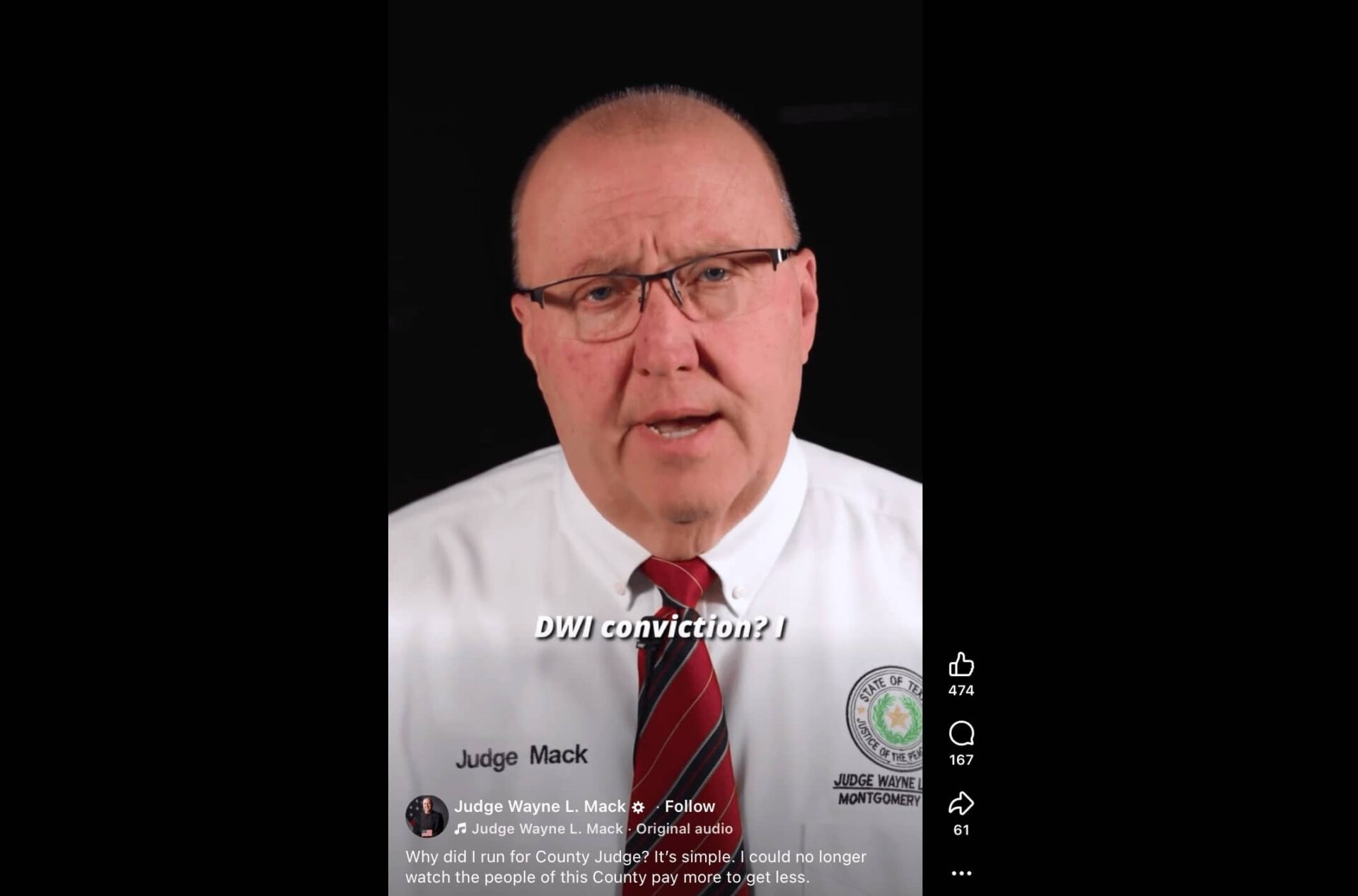
Over the past several weeks, Wayne Mack, a candidate for Montgomery County Judge, has publicly acknowledged that aspects of his campaign had gone too far. In recorded video with Dock Line and in direct comments to Dock Line Magazine reporters—Mack admitted the tone of his campaign was costing him support and pledged to reset, refocus, and move forward with character and integrity his base enjoys.
That moment mattered. For many voters, it signaled self-awareness and created an opportunity for change.
What followed has raised new questions.
The Apology—On Record
In the video and to the reporter, Mack told supporters that his campaign needed to change direction. He expressed regret over the tone, stated it was hurting him politically, and said he intended to get his campaign “back on track” by running it with character people expect from him.
He repeated those assurances during an interview with Dock Line Magazine, where he emphasized the importance of integrity, discipline, and restoring trust with voters.
Those statements set a clear expectation—not imposed by critics, but defined by Mack himself.
The Interview: Addressing Voter Censorship Concerns
In the Dock Line Magazine on-camera interview, Mack went on to address concerns raised by constituents regarding his conduct while serving as Justice of the Peace, Precinct 1—specifically allegations that voters who posted critical or dissenting comments on his public Facebook page had been blocked or restricted.
During that interview, Mack acknowledged the issue and stated he would unblock accounts that had been removed or restricted, signaling a willingness to correct course and engage more openly with constituents.
The interview was intended to clear the air and provide a path forward.
A Promise That Remains Unfulfilled
As of publication, multiple voters who were blocked prior to that interview report that they remain blocked, despite Mack’s public commitment to reverse those actions.
This is not a question of intent. It is a matter of record:
-
The promise was made publicly
-
The corrective action has not occurred
-
The affected voters can independently verify their status
For voters concerned about transparency and open engagement—particularly from a sitting judge—this inconsistency has become a central issue.
The Return of Attack Messaging
Since the promised campaign reset, Mack has released additional attack-focused campaign content, including another mudslinging video and a campaign text message accompanied by a graphic targeting County Judge Mark Keough.
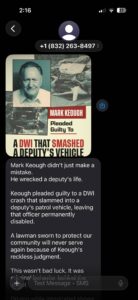
Dock Line Magazine has previously reported on Keough’s DWI-related case, and the facts of that incident matter. Public records show:
-
The incident involved a prescribed medication
-
A blood test confirmed only that medication was present
-
The level detected was consistent with the prescribed dosage
-
There was no evidence of alcohol or illicit substances
Those facts do not minimize the seriousness of the incident, but they are essential context for voters evaluating campaign claims versus verified records.
For critics, the concern is not whether political opponents should be scrutinized, but whether selectively framed messaging aligns with a stated commitment to campaign with integrity.
Voter Fatigue with Constant Conflict
Feedback from local Republican voters suggests growing frustration—not over ideology, but over tone.
Voters have expressed concern that:
-
Campaign discourse remains focused on personal attacks rather than policy
-
Opportunities to pivot toward unity and substantive issues have been missed
-
Promises to elevate the campaign have not translated into consistent behavior
This response reflects a broader pattern seen in modern campaigns: apologies without follow-through often deepen skepticism rather than restore trust.
Character Is Demonstrated After the Apology
Judge Mack’s own words raised the standard when he pledged to run with character. For many voters, character is not measured by acknowledging mistakes, but by whether commitments are honored afterward—especially when political pressure intensifies.
The question facing voters is not whether Mack is capable of recognizing missteps. He has done that publicly.
The question is whether those acknowledgments resulted in meaningful, sustained change.
The Broader Question for Voters
Campaigns are auditions for governance. How a candidate handles criticism, dissent, and adversity during a race often previews how they will lead once in office.
That reality leaves voters with a straightforward question:
If a candidate struggles to campaign with integrity after publicly committing to do so, how can voters trust that same candidate to run an administration with integrity?
For many in Montgomery County, the answer will be shaped not by words spoken during an apology, but by actions taken—or not taken—after it.
Editorial Note
Dock Line Magazine conducted an interview with Judge Wayne Mack to address concerns regarding campaign conduct and voter engagement. Judge Mack has been contacted from multiple of our reporters to weigh in on the matter and provide documentation showing corrective action or to respond to the issues raised in this article. Any response will be published in full.