

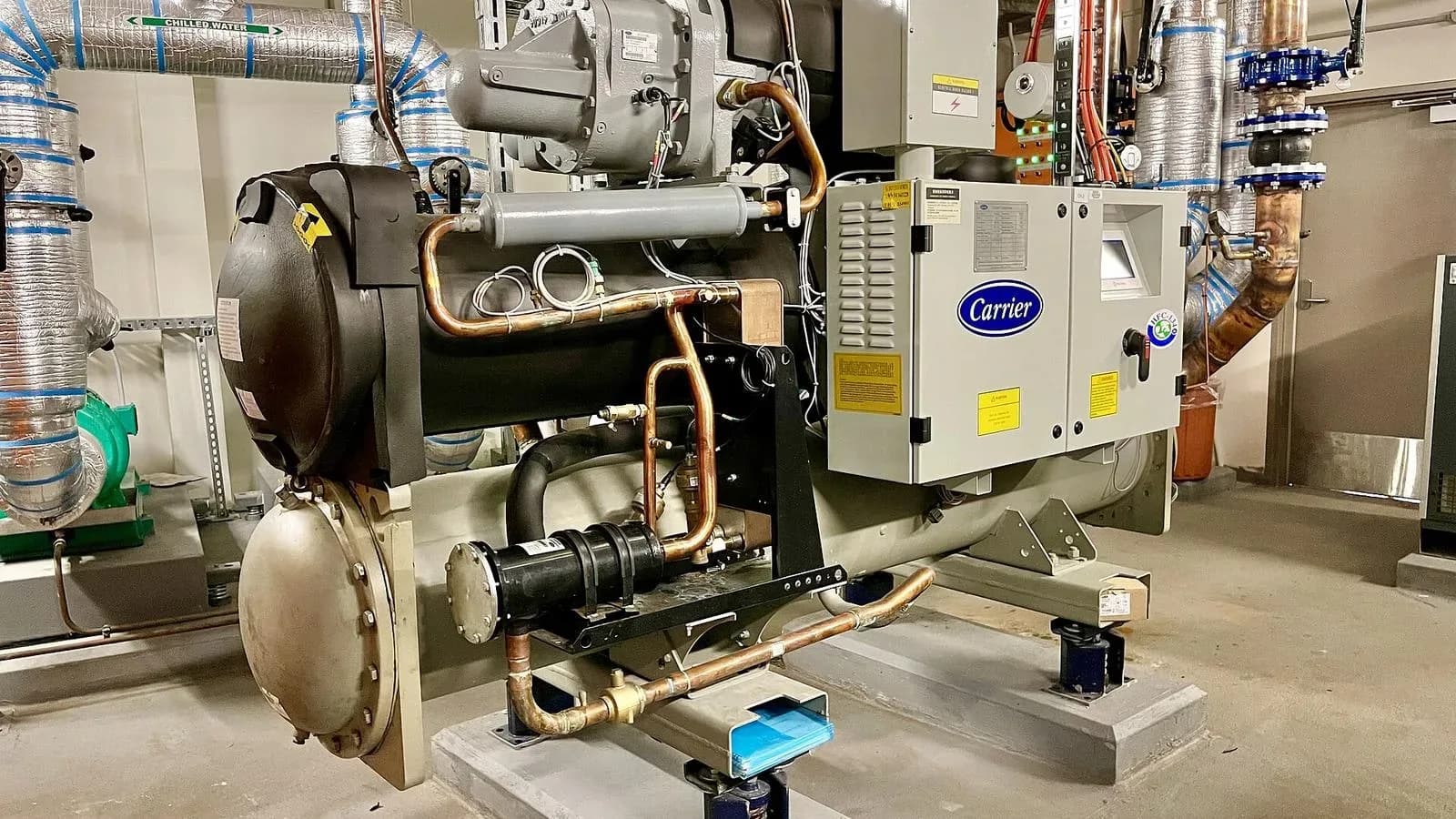
Carrier Picks Fort Worth for a $600 Million Plant and 1,500 Jobs. Data Centers Are a Big Part of the Reason
The HVAC giant will build commercial chillers at AllianceTexas starting in 2027. Fort Worth approved a seven-year tax break to land the project, its largest single-facility investment ever.
One of the biggest names in heating and air conditioning is coming to North Texas, and it is bringing a lot of jobs with it.
Carrier Global Corporation announced Thursday that it will invest more than $600 million over the next three years in a new advanced manufacturing and engineering center in Fort Worth, according to the company's announcement. The plant is expected to create 1,500 manufacturing, engineering and other jobs and to begin operations in 2027.
The Fort Worth Report said it will be the largest single-facility investment in Carrier's history, and that Fort Worth beat out three other cities for it.
What the plant will build
The more than 1-million-square-foot center will make air- and water-cooled commercial chillers, the large machines that cool big buildings. Carrier said the new capacity will serve customers in data centers, health care, education and industry.
The company said its commercial HVAC business has record backlog levels and a growing pipeline of orders. "This investment reflects the strong demand we are securing for high-performance, energy-efficient solutions and underscores our confidence in the future of American manufacturing," said David Gitlin, Carrier's chairman and CEO.
The plant will sit at the Alliance Westport 12 building, 1501 Distribution Drive, in the AllianceTexas development in north Fort Worth, the Fort Worth Report said. It is next to the recently opened Wistron plant, which makes components for data centers. An Oct. 14 filing with the Texas Department of Licensing and Regulation showed a $500 million project at the same address, called Project Jay, with construction slated to start Dec. 1.
What the city put on the table
Fort Worth's City Council moved first. On Sept. 15 it approved a seven-year tax abatement agreement valued at $10.9 million, the Fort Worth Report said. The city also nominated Carrier for a Texas Enterprise Zone grant with an estimated value of $2.5 million.
A city presentation estimated the plant will generate $5.8 million in net new taxes over seven years, after the incentives and inflation are counted.
"With the creation of 1,500 high-quality jobs, this project will add to Fort Worth's manufacturing hub at AllianceTexas while strengthening our energy and technology industries for years to come," Mayor Mattie Parker said.
Ross Perot Jr., chairman of Hillwood and The Perot Companies, which developed AllianceTexas, called it "a significant win for our region." The Fort Worth Report noted that Hillwood is one of its financial supporters.
Why Texas keeps winning these
Carrier said it chose Fort Worth for its skilled workforce, strong manufacturing base and location. The company also said it will partner with local schools and colleges to train workers, and that the site is expected to pursue LEED certification.
The announcement builds on a plan Carrier laid out in May 2025 to invest $1 billion over five years in U.S. manufacturing, which it said would create 4,000 jobs, according to the Fort Worth Report.
It also fits a pattern. Texas factories have been one of the brighter spots in a mixed economy, even as housing and services have cooled. And much of the new demand traces back to data centers, which need enormous amounts of cooling as well as power.
What to watch
Tax abatements are a fair subject for debate. Supporters say a seven-year break is a small price for 1,500 jobs and a long-term employer. Skeptics ask whether cities should compete with each other by giving away tax revenue at all. Fort Worth's own numbers show the plant should still bring in money after the incentives, but those numbers depend on Carrier hitting its targets.
The other question is how long the data center boom lasts. Carrier is betting on years of demand. If it holds, North Texas gets a major plant and steady work.
Either way, this is good news for families who want to build things for a living. Scripture says, "Whatsoever thy hand findeth to do, do it with thy might" (Ecclesiastes 9:10). Skilled factory work is honest work, and a plant that trains young Texans to do it is a gift to the next generation.
More Business Stories
 Yesterday
Trump Lifts Some Canada Tariffs After Collins Lobbies for Maine Farmers. Relief Is Good, Trade by Favor Is Not.
 Yesterday
Ingleside Would Spend $120,000 in Hotel Tax on a Faire Expected to Fill 12 Rooms
 Yesterday