EPA Proposes to Approve Texas Updates to Concrete Batch Plant Air Permits
A Nov. 18 Federal Register notice says EPA is proposing to approve TCEQ's April 2, 2026, updates to Texas' standard air permit for concrete batch plants. Comments are due Dec. 18.
The U.S. Environmental Protection Agency is proposing to approve changes Texas made this year to its air-permitting rules for concrete batch plants, according to a notice published Nov. 18 in the Federal Register (91 Fed. Reg. 74143). The proposal is not a final approval. Written comments are due on or before Dec. 18, 2026.
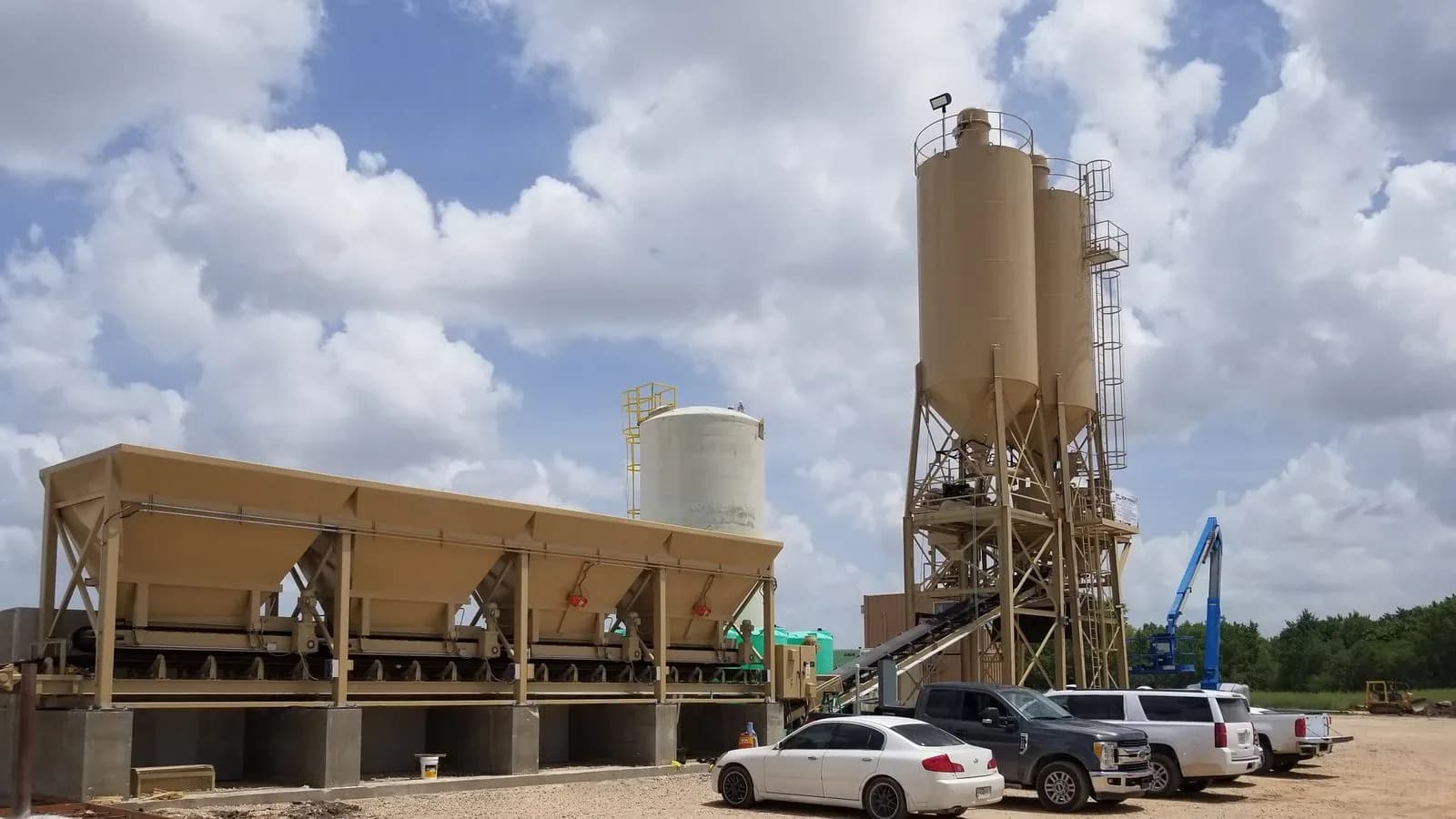
The revisions were submitted to EPA on April 2, 2026, by the Texas Commission on Environmental Quality. They would update the state's standard permit for concrete batch plants that do wet batching, dry batching, or central mixing, and they would be added to the Texas State Implementation Plan, the state's federally approved clean-air plan. The notice is signed by Walter Mason, EPA's Region 6 regional administrator, and is dated Nov. 9. It was filed Nov. 17 and published today.
EPA says the April submittal is meant to implement Texas Senate Bills 763 and 2351, adopted in the 89th Regular Legislature in 2025. Dock Line is reporting the bills' effect as EPA describes it in the notice, not from a fresh reading of the bill texts.
What the State Changed
Under a new requirement at 30 Texas Administrative Code Section 116.605(d)(4), TCEQ would have to conduct a "protectiveness review" of the concrete batch plant standard permit at least once every eight years. EPA says that review would apply to the standard permit for permanent plants that perform wet batching, dry batching, or central mixing, and that adding it "ensures that the Texas [standard permit] program continues to protect the [national ambient air quality standards] through updated control technology and emission limitations as appropriate."
New provisions at Sections 116.605(f)(1) and 116.605(f)(2) address when TCEQ may require operators of planned permanent plants to comply with an amended standard permit. In its summary, EPA says the criteria apply if the operator did not begin construction before the amended permit was adopted or did not file a request for an extension to begin construction. In its evaluation, the agency describes the same sections as applying when the operator did not begin construction before adoption and has filed an extension before the amended permit's effective date. Both descriptions are EPA's. The April submittal also renumbers existing requirements at Sections 116.605(f) and 116.605(g) to 116.605(g) and 116.605(h) to make room for the new language, without other changes to those older provisions, the notice says.
A standard permit is a pre-written authorization for a common type of facility, rather than a one-off permit drafted from scratch for a single plant. EPA approved Texas' standard permit program on Nov. 14, 2003, as part of the state's minor New Source Review program, the notice says, citing 68 Federal Register 64548.
A Proposal, With a Comment Deadline
EPA's role, the notice says, is to approve state choices when they meet the Clean Air Act and the agency's rules. Its analysis, with more detail in an accompanying technical support document, "indicates that the April 2, 2026, SIP revision was developed in accordance with the CAA and the State provided reasonable notice and public hearing." In its statutory review, EPA also says the action "merely proposes to approve State law as meeting Federal requirements and does not impose additional requirements beyond those imposed by State law."
The national ambient standards at issue cover six criteria pollutants: carbon monoxide, nitrogen dioxide, ozone, lead, particulate matter, and sulfur dioxide. Concrete plants are a familiar source of dust and other emissions in Texas towns, and a periodic review of the standard permit is a chance to tighten, or at least re-examine, the controls that apply across many sites. Whether that review actually produces tighter limits will depend on TCEQ's later work, and on whether EPA issues a final approval after the comment period.
Comments, identified by Docket No. EPA-R06-OAR-2026-2878, may be submitted at regulations.gov or by email to the contact listed in the notice, Adina Wiley of EPA's Region 6 Air Permits Section, at (214) 665-2115. The notice warns that comments cannot be edited or removed once submitted, and that EPA may publish them in the public docket. Until a final rule is issued, the proposal should be read as just that: a proposed federal sign-off on rules Texas has already written, not a new EPA mandate and not a finished decision.