Mavria, a Woodlands Startup, Says It Raised $130 Million to Factory-Build Data Centers
The company, which a trade publication said is based in The Woodlands, announced $130 million in funding and a $1 billion valuation. Its first factory-built unit, Terrain 01, is in production in Houston. No customer has been named.
Mavria, a startup that Data Center Dynamics said is based in The Woodlands, says it has raised $130 million and that its first factory-built data-center unit, Terrain 01, is in production in Houston.
In a Nov. 9 announcement signed by co-founder and chief executive Adam Blake, the company said it has raised $130 million "to date across pre-seed and seed rounds." "Our latest round values Mavria at $1 billion and was led by Paradigm, with participation from AMP PBC, Liquid 2, Critical Frontier, and Dream Ventures." Blake wrote that the firm is already using the money to secure supply chains, scale manufacturing and expand its team.
Kirkland & Ellis, which said it advised Mavria on the financing, posted a matching account of the totals, the $1 billion valuation and the investor list the same day. The $1 billion figure is the value the company and its counsel assigned to the latest round. The announcement does not say whether that number is calculated before or after the new money, and it does not break out how much of the $130 million came in that round.
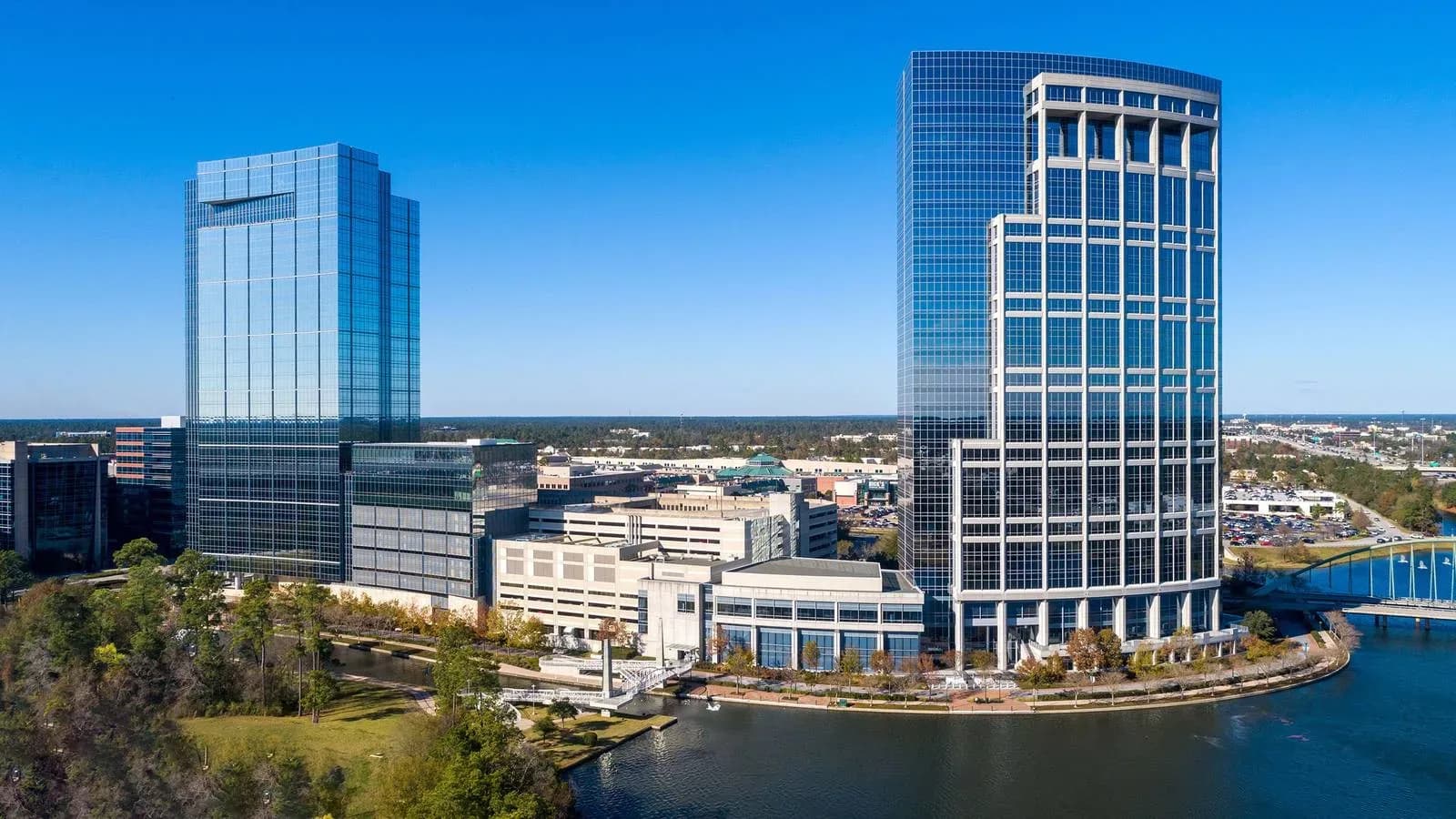
Data Center Dynamics, writing Nov. 9, said Mavria is headquartered in The Woodlands, just north of Houston. Mavria's own pages reviewed here do not list a street address or a hometown.
What Mavria says Terrain is
Blake described Terrain as "a factory-built data center platform designed to bring compute online faster, with more predictable delivery and lower costs." It "replaces custom field construction with repeatable manufacturing," he wrote, and is being built "for frontier labs, cloud providers, and data center developers."
The company's Terrain product page says power, cooling, controls and IT pods "are designed, integrated and tested as a standardized system before deployment." It also draws a line on the business: "We don't operate a cloud, and we don't sell compute. Customer compute runs inside Terrain; Mavria provides the physical infrastructure required to operate it."
Terrain 01 "is in production in Houston right now," Blake wrote, and the product page calls it "the first physical demonstration of Mavria's approach." The same page says, "Full product details are coming soon." In the materials reviewed here, Mavria did not name a customer, a buyer or a site where a finished unit will be installed.
Data Center Dynamics reported that each unit "functions as a 5MW system" and ships integrated from the factory. Dock Line is relying on that trade report for the five-megawatt figure; it does not appear in the company announcement or product page reviewed here. The same article, citing the Wall Street Journal, wrote that the company said testing is slated for early 2027, with assembly lines expected to scale output by mid-2027. Dock Line has not reviewed that Journal article, and Mavria's own pages do not give those dates.
Data Center Dynamics also reported that the company claims a unit can plug into local distribution power lines to "soak up" excess capacity and thereby bypass grid delays. That wording does not appear on the Mavria pages reviewed here, and Dock Line has not seen a utility interconnection agreement.
The founders, as they describe themselves
Blake, Poradek and Cohen wrote that they worked together at the U.S. Department of Energy. On the company homepage, Blake is described as a former advisor to the secretary of energy who "built 1,000+ energy projects" and sold a software company to Vista Equity Partners. Poradek is described as a manufacturing and supply-chain operator who sold a manufacturing company to Liberty Energy. Cohen is described as a former DOE, NRC and NASA nuclear-policy official. Those are the company's biographies. Dock Line has not independently verified the resumes.
What has been shown, and what has not
Texas already has a live argument over large data-center loads, power plants and tax breaks, including the Starbase proposal we covered in SpaceX Seeks Starbase Tax Breaks for a $24 Billion Power Plant and Super-Compute Facility. A factory-built box may turn out to be faster or cheaper than pouring a custom hall. It may not. Faster delivery and lower costs are the company's goals, not results it has published from a customer deployment.
Land, water, substations and who pays for new power are still the questions neighbors and lawmakers will ask, whether the equipment arrived on a truck or was built in place. A $1 billion valuation is a bargain struck by investors around a first demonstration unit still being built. It is not a completed megawatt on the Houston grid.
Proverbs 27:1 says, "Boast not thyself of to morrow; for thou knowest not what a day may bring forth." The test will be a working unit, a named customer and power that is actually there.