Tesla Built a Flying Car in Texas. Nobody Knows Who Is Supposed to Approve It.
Tesla's Roadster flew at a SpaceX site in McGregor, Texas. The machine worked — but road and aviation regulators still do not agree on what it is.
Tesla's Roadster flew at a SpaceX site in McGregor, Texas. The machine worked — but road and aviation regulators still do not agree on what it is.
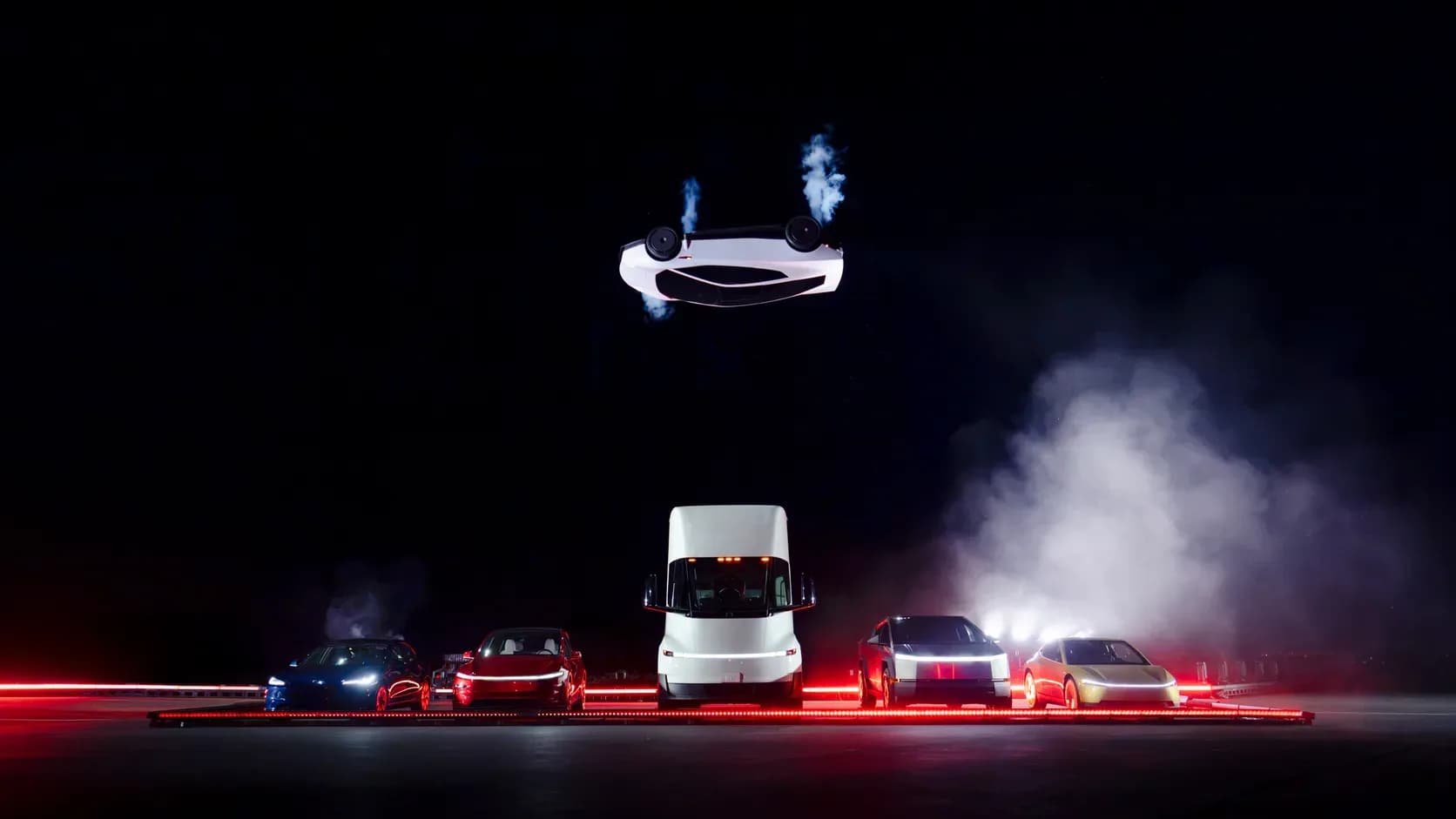
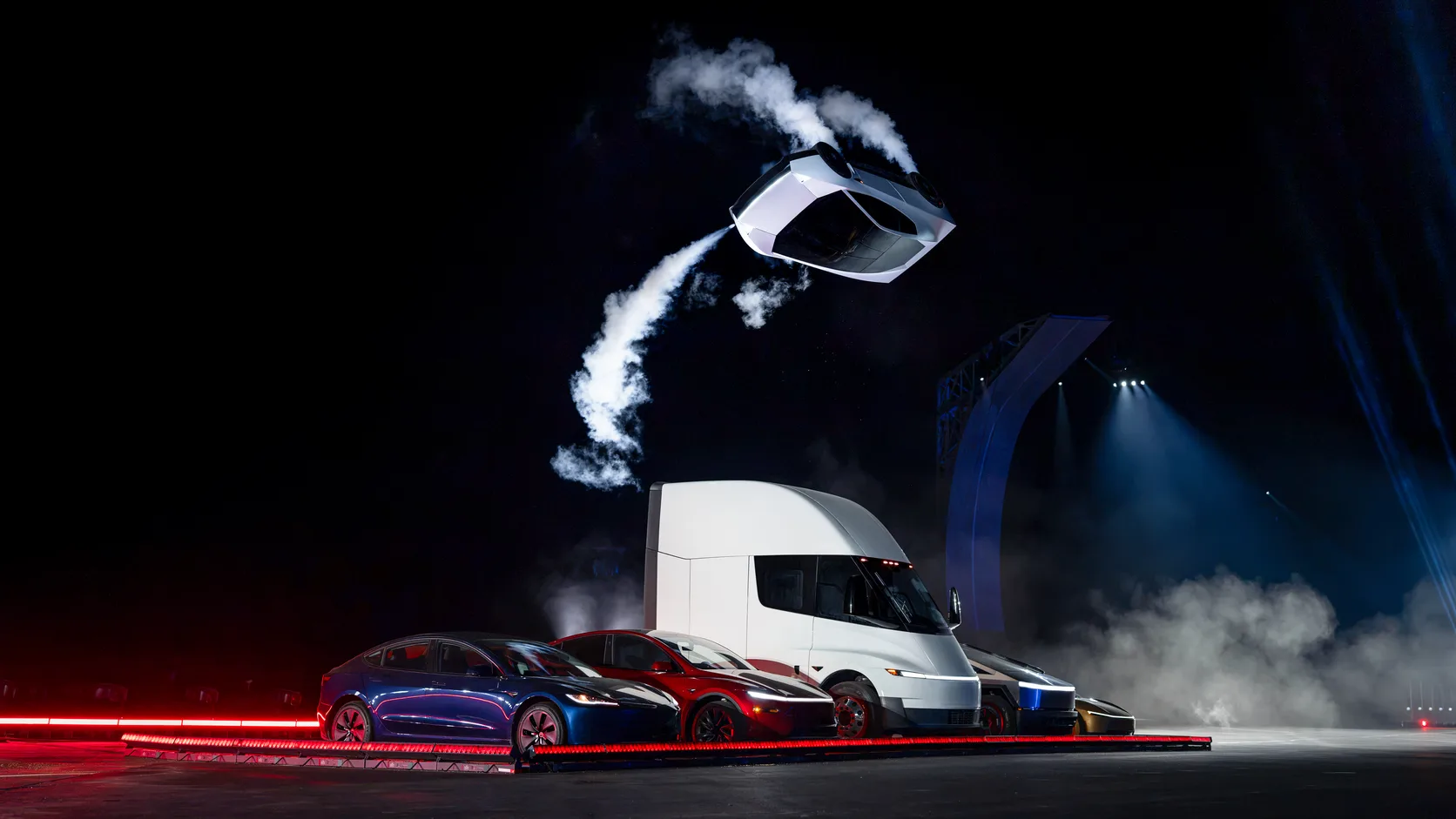
At SpaceX's rocket development and test facility in McGregor, Texas, a silver Tesla Roadster climbed a steep ramp, followed the curve until it was driving upside down, left the end of the structure, rolled through the air and landed on its wheels. There was no driver inside. Tesla said that was a safety decision for the October 15 demonstration.
There was also no clever camera cut hiding the important part. The prototype really left the ramp, remained controllable in the air and used cold-gas thrusters to help put itself back on the ground.
The demonstration answered one question: Tesla and SpaceX engineers built a car-shaped machine that can fly, at least for a short, carefully planned trip. It created another question that may be harder to answer: Who is supposed to approve it?
It Used Two Different Tricks
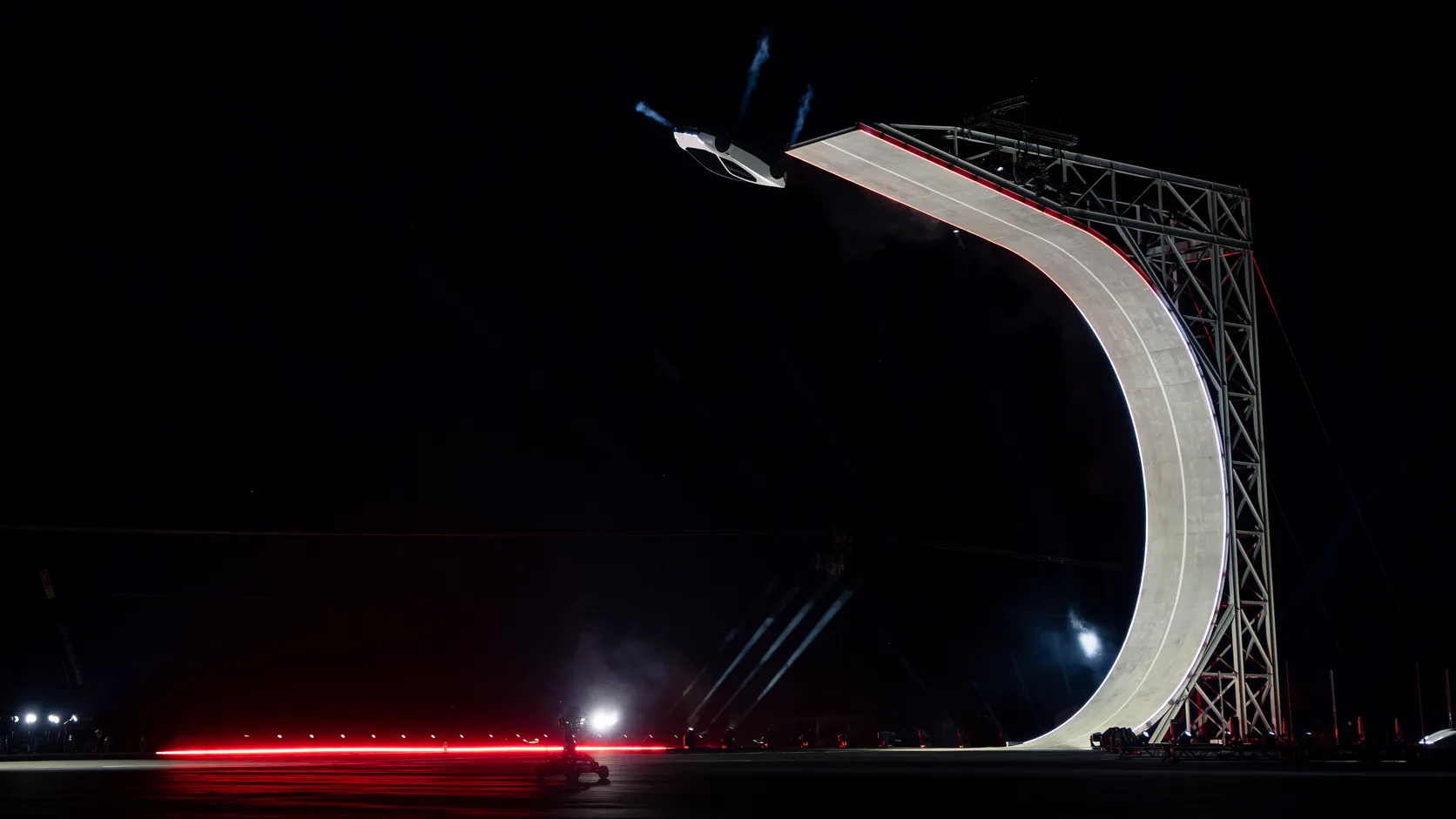
The Roadster did not climb the ramp and fly with one magic system. It used two very different pieces of engineering.
Four 20-kilowatt fans and deployable skirts underneath the car created suction. By lowering the air pressure under the chassis, the system pulled the tires against the ramp even when the car was vertical or upside down. The same idea can create added grip in ordinary corners at speeds too low for wings and other aerodynamic surfaces to be fully effective. That suction system kept the Roadster attached to the curved ramp.
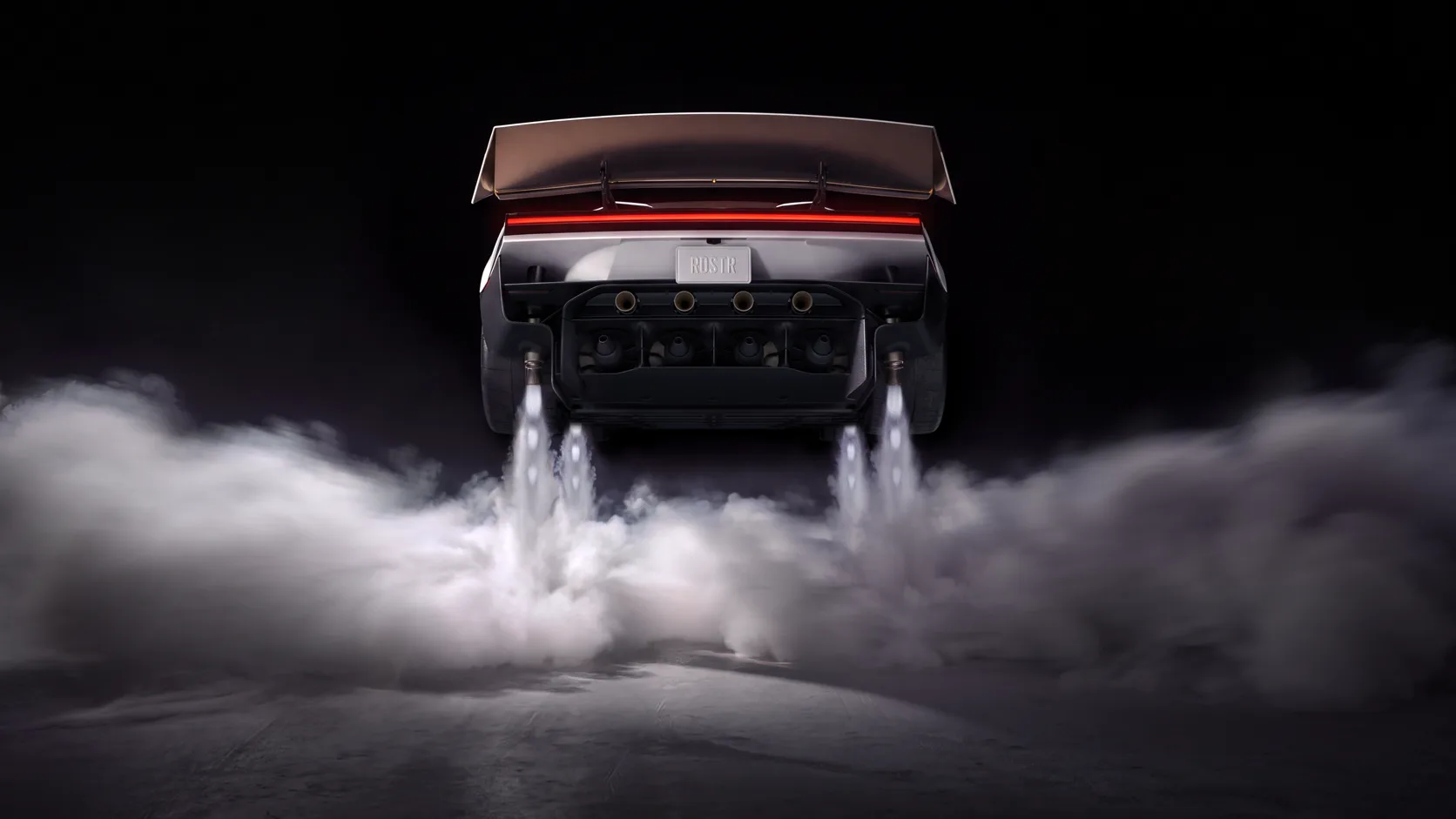
It did not keep the car in the air after the ramp ended. For that, Tesla used the system developed with SpaceX: high-pressure cold gas released through thrusters. Rear-facing nozzles can add forward acceleration. A larger flight system adds thrusters around the vehicle so it can rise, rotate and control its descent.
In other words, the electric motors drive the wheels, the fans make the car stick and the thrusters make it leave the ground. The Texas demonstration combined all three.
Tesla Is Really Describing Three Roadsters
The word "Roadster" now covers three proposed versions, and the differences matter.
The Performance model is the road-ready version. Tesla says it will seat two people and use active aerodynamics and the multi-mode suction system, but it will not have the cold-gas thrusters.
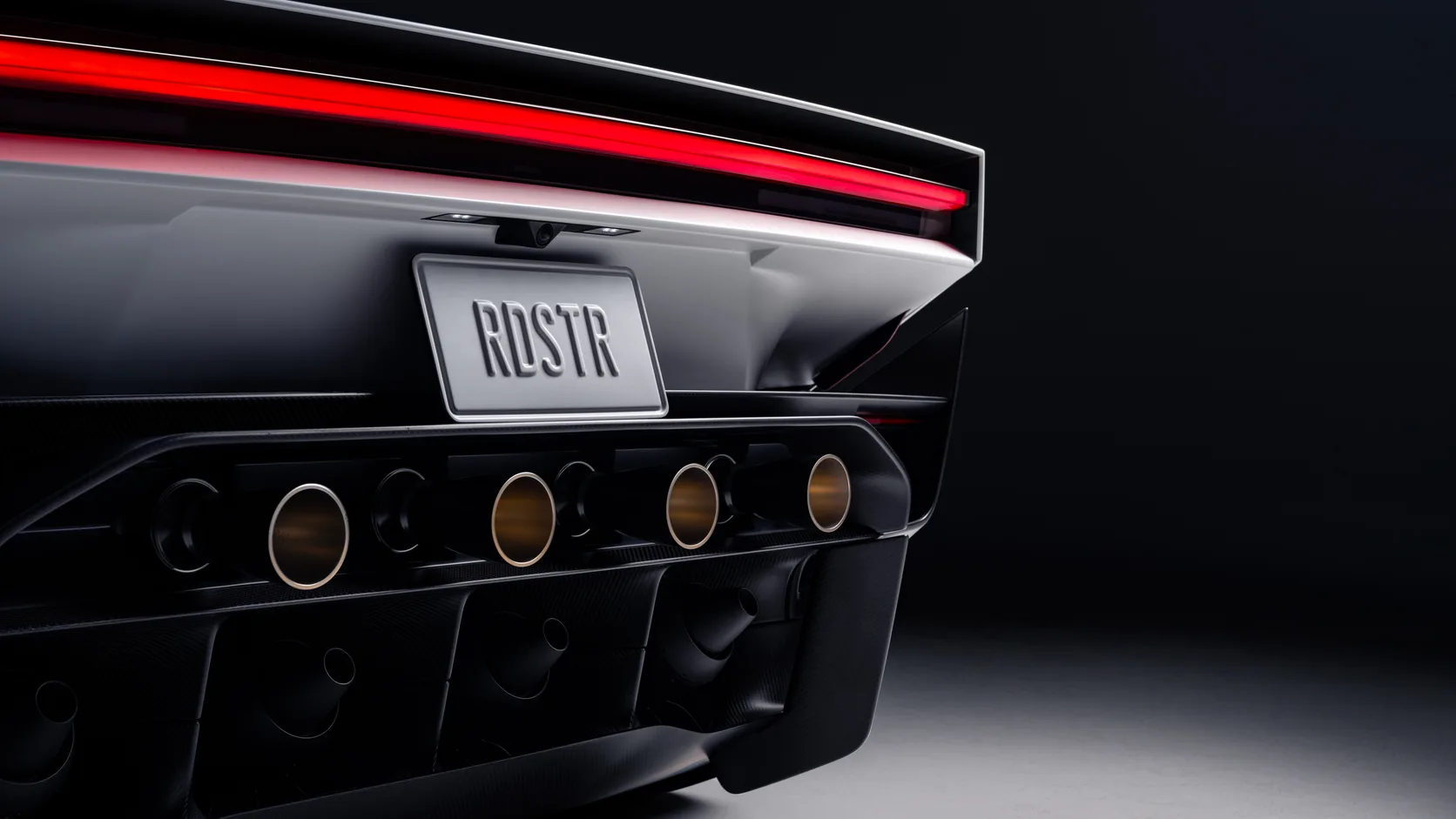
The limited-release Thrust model keeps two seats and adds rear thrusters. Tesla claims that combination can push the car from zero to 60 mph in under one second.
Then there is the invitation-only Rocket model. It gives up the passenger seat for a larger pressure tank and adds thrusters around the perimeter for upward movement, forward acceleration and control in the air. Tesla's own description says, "So yes, it can fly." The same page carries an important warning: The Rocket is not approved for public-road use.
That last sentence may be doing more work than anything else on the page.
A Car Until It Leaves the Road
The National Highway Traffic Safety Administration regulates motor vehicles. Federal law generally defines one as a mechanically powered vehicle manufactured primarily for use on public streets, roads and highways. Federal aviation rules define an aircraft much more broadly: a device used or intended to be used for flight in the air.
A street-legal Roadster fits comfortably inside the first definition. A machine deliberately equipped with upward-facing and directional thrusters so it can fly seems to invite the second. Yet the answer is not that simple.
CBS News asked the Department of Transportation which agency would oversee a production version. A senior department official acknowledged that there was no clear answer. NHTSA said manufacturers must comply with applicable federal motor-vehicle safety standards and drivers must obey local traffic laws. The Federal Aviation Administration told CBS that the Tesla vehicle shown in Texas does not meet its definition of an aircraft.
That leaves a remarkable gap. One part of the federal government sees a vehicle that still has to follow the rules of the road. The aviation regulator does not currently consider the prototype an aircraft. Meanwhile, Tesla openly describes a future version as capable of flight and says that version is not approved for the road.
The final decision could depend on what Tesla eventually builds, how high and how far it can travel, whether a person controls it, and where the company says owners may use it. A demonstration on a private test site is one thing. A production vehicle launching near traffic, buildings or other people would be another.
The Flight Was Real. The Delivery Date Is Still a Promise.
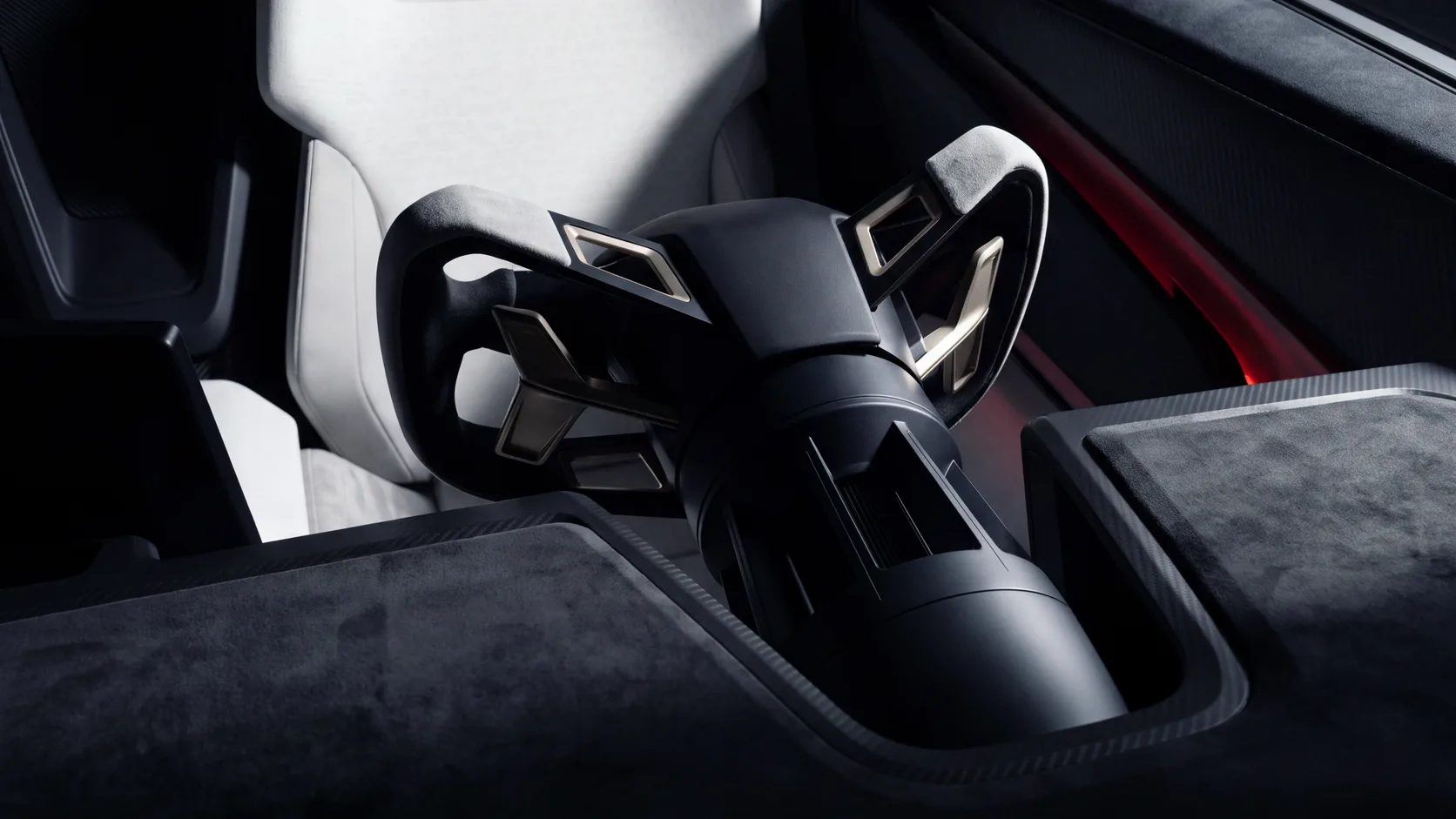
The Roadster shown in Texas was a working prototype, not a customer-ready car. Tesla says production is planned for 2028. That date deserves caution. The second-generation Roadster was first unveiled in 2017, and deliveries were once promised for 2020. The latest prototype is proof that the engineering program is alive. It is not proof that buyers will receive these cars on the current schedule.
There are practical limits too. Cold-gas tanks contain a finite amount of thrust, and refilling them takes time. The Rocket configuration sacrifices a seat for additional pressure storage. No one has shown how a flying Roadster would fit into ordinary traffic, insurance, driver licensing, emergency response or airspace management.
None of that makes the demonstration meaningless. It makes it more interesting. For generations, the "flying car" has usually been an airplane with folding wings or a computer rendering attached to an ambitious promise. Tesla approached the problem from the other direction. It started with a very fast electric car and added enough suction and rocket technology to make the machine do something a normal automobile cannot.
Texas got the first public look at the result. The Roadster crossed the edge of the ramp. The rulebook has not crossed with it.