The Loan Is Gone. The Payments Aren't.
Paying off a loan once meant the biggest household payment was finished. Today, taxes, insurance, medical coverage and maintenance keep creating new monthly obligations for working families, retirees and nearly everyone between them.
Texas has cut part of the property-tax bill. Some homeowners rate requests have begun to flatten. Yet for many households, the cost of keeping a home and a vehicle is still rising faster than the feeling of owning them outright.
There was a time when paying off a house came with a small ceremony. The last check was mailed. The mortgage papers were put away. Maybe somebody burned a copy of the note in the backyard, which was probably not covered by the homeowners policy. The point was simple: the largest payment in the family budget was finally gone.
That idea still lives in our heads. It just does not live in the mailbox.
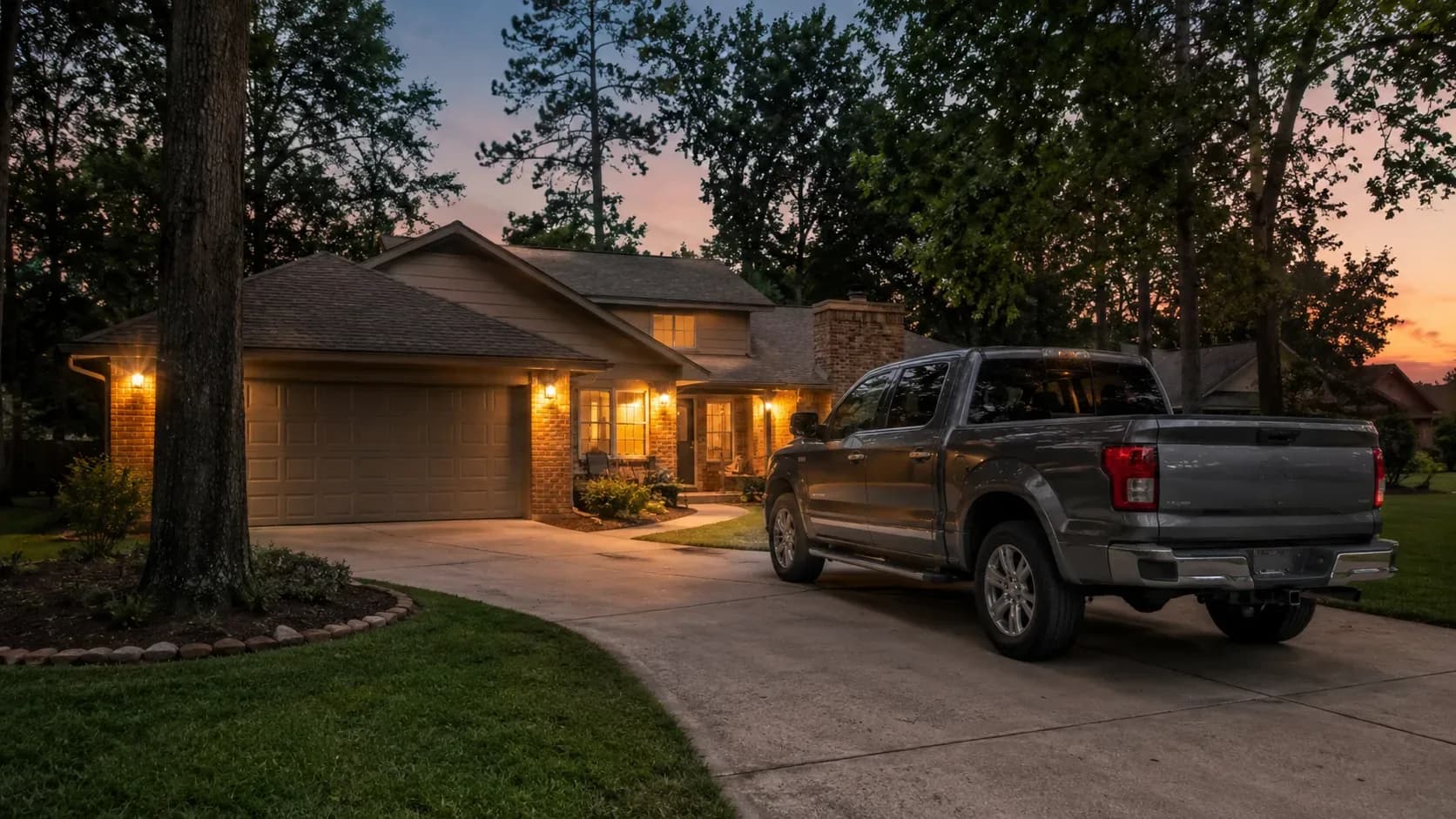
One Texas household recently bought a new truck and watched the insurance bill rise by $1,200 a year. Then the homeowners policy increased another $900. Together, that is $2,100 a year, or $175 every month, before the truck moves an inch or the front door opens. Nothing disappeared. Nothing mysterious happened. The newer truck costs more to repair and replace. The house sits in a state where hail, wind, water and construction costs have rewritten the insurance math. Every increase can be explained. The family still has to find the money.
The Payment That Changes Its Name
A mortgage is easy to recognize because it arrives every month with the same purpose. It is the price of buying the house. The payments that follow are harder to see as one obligation. Property taxes arrive under one name. Homeowners insurance arrives under another. There is maintenance, an occasional roof, an air-conditioning system that chooses August to retire, and a deductible large enough to make a homeowner study the clouds personally.
Pay off the mortgage and the lender leaves. The carrying cost stays.
Vehicles have developed the same habit. A paid-off car or truck still brings insurance, registration, repairs and increasingly expensive parts. Buy a newer one and the monthly note may be only the beginning. Cameras, sensors and electronics that make a vehicle safer can also make a relatively ordinary collision expensive to repair.
We still talk about affordability as if it is settled on the day of purchase. Can the buyer make the mortgage? Can the buyer make the truck payment? Those questions matter. But they do not answer the question that follows: Can the owner afford to keep it?
Texas Lowered One Column

Texas has made a serious attempt to reduce property taxes. The mandatory school-district homestead exemption is now $140,000. Homeowners who are 65 or older or disabled may qualify for an additional $60,000, bringing the school-district exemption to $200,000.
That is real relief, but it is easy to describe it more broadly than it works. Texas has no state property tax. Local school districts, cities, counties and special districts levy property taxes, and the large statewide homestead exemptions apply to the school-district portion. Local exemptions vary. A lower school tax bill also does nothing to reduce the price of insurance, repairs or utilities.
The tax debate usually happens under bright lights. Legislators hold press conferences. Voters approve constitutional amendments. The savings appear on a statement where everybody can see them. Insurance moves more quietly. A renewal notice comes in the mail or appears online. The homeowner sees the new number, calls an agent, raises the deductible, checks two other companies and eventually decides which version of the increase hurts least.
Texas Department of Insurance data show why the pressure feels so different from the speeches. The average annual homeowners premium in Texas rose from $1,782 in 2015 to a preliminary $3,506 in 2025. That is nearly double in a decade. The rate picture has improved recently — average homeowners rate requests were slightly negative during the spring of 2026. That is welcome news, but a flattening line at a high level does not return a household to the price it paid five or ten years ago. A pause is not a refund.
The Weather Is Part of the Bill
Insurers are not inventing Texas weather. In 2025, companies paid $8.74 billion in Texas homeowners losses from wind and hail, water, fire, theft, liability and vandalism. Wind and hail have accounted for an average of 62 percent of homeowners losses since 2019. That risk is spread across policyholders. A family can go years without filing a claim and still receive a higher renewal. Insurance is priced around the possibility of what could happen to one property and the reality of what has already happened across many others.
The same pooling happens with auto insurance. Your own driving record matters, but it is not the only thing in the calculation. The vehicle, location, repair prices, claim trends and cost of medical care all join the ride.
This is where the conversation becomes frustrating. The reasons can be legitimate while the result is still unaffordable. Explaining a bill does not pay it.
The Raise That Was Already Spent

People living mainly on Social Security feel this first, but they are not the only ones living with little room to move. Social Security benefits received a 2.8 percent cost-of-living adjustment for 2026. The average retirement benefit rose by about $56 a month. At the same time, the standard Medicare Part B premium increased by $17.90 a month, from $185 to $202.90. That increase alone takes nearly a third of the average COLA. It arrives before changes in prescription coverage, supplemental insurance, copayments or the price of anything outside the doctor's office.
For many retirees, medical coverage gets first claim on the cost-of-living increase. Home and auto insurance do not politely wait their turn.
But the same arithmetic reaches younger households from another direction. A working family may receive a raise and watch it disappear into health coverage, childcare, insurance and the escrow account. A small-business owner may earn more on paper while paying more to insure the building, the work vehicle and the family. A homeowner in the middle years may still be helping children, supporting a parent and trying to repair a roof at the same time. The income may not be officially fixed. The available money often is.
When Saving Money Means Accepting More Risk

The standard advice is to shop around, and it is good advice. Texas regulators encourage consumers to compare companies, policies, complaint records and financial ratings. Discounts, bundling and a different deductible can make a meaningful difference.
But every cheaper premium needs a second question: What changed? A higher deductible lowers the price by moving more of the next loss onto the homeowner. Reduced coverage can lower the bill by leaving more things uncovered. Dropping comprehensive or collision coverage on an older paid-off vehicle may make sense for one family and create a crisis for another. A paid-off home without insurance has no lender demanding a policy, but one fire or storm can erase the largest asset the family owns.
Sometimes people are not reducing the cost. They are agreeing to carry more of the danger themselves.
That does not mean households are helpless. They can compare equivalent coverage instead of shopping by premium alone. They can confirm that every homestead exemption has been applied, read appraisal notices, question errors and protest an appraisal when the evidence supports it. They can ask about discounts before the renewal arrives and look at the full annual cost before replacing a vehicle. Those steps matter. They also have limits. You cannot comparison-shop your way out of every statewide storm loss, medical increase or rising replacement cost.
What Does Ownership Cost After You Own It?
Texas leaders are right to pay attention to property taxes. A family should not be taxed out of a home simply because the land around it became more valuable. But a tax bill is only one part of the pressure, and solving one column can hide what is happening in the others.
The better measure of affordability is not merely whether someone can buy a house or drive a truck off the lot. It is whether that person can still afford the home, vehicle, insurance, health care and upkeep five years later. That question does not belong only to retirees. It belongs to the young couple buying their first house, the family replacing a worn-out vehicle, the small-business owner with three policies, and the longtime homeowner who did everything right and finally mailed the last mortgage payment.
The loan is gone. The payments are not.