Del Rio Was Built on a Spring. Its Name Came From a Mass Said There in 1635.
San Felipe Springs turned dry Southwest Texas into farmland and gave Del Rio its start. Here is the history of the Val Verde County seat.
In the dry country of Southwest Texas, water decides where towns grow. Del Rio, the Val Verde County seat, 154 miles west of San Antonio, grew because of San Felipe Springs. Its story is told in Robert C. Overfelt's Handbook of Texas entry on Del Rio.
Water first
The Handbook says the springs near the Rio Grande and San Felipe Creek produced millions of gallons of water. After the Civil War, developers bought several thousand acres beside the creek. In 1868 they formed the San Felipe Agricultural, Manufacturing, and Irrigation Company and built a network of irrigation canals, completed in 1871. They then sold small tracts of farmland to settlers, who started truck farms.
A name with a Mass behind it
Residents called the growing townsite San Felipe del Rio. Local lore says the name comes from Spanish explorers who offered a Mass at the site on St. Philip's Day in 1635. In 1883, after the first post office opened, postal officials asked that the name be shortened to Del Rio to avoid confusion with San Felipe de Austin.
It is fitting that a town born of a spring in the desert should trace its name, at least in local memory, to an act of worship. The settlers knew where their water came from, and they named the place accordingly.
County seat, railroad and soldiers
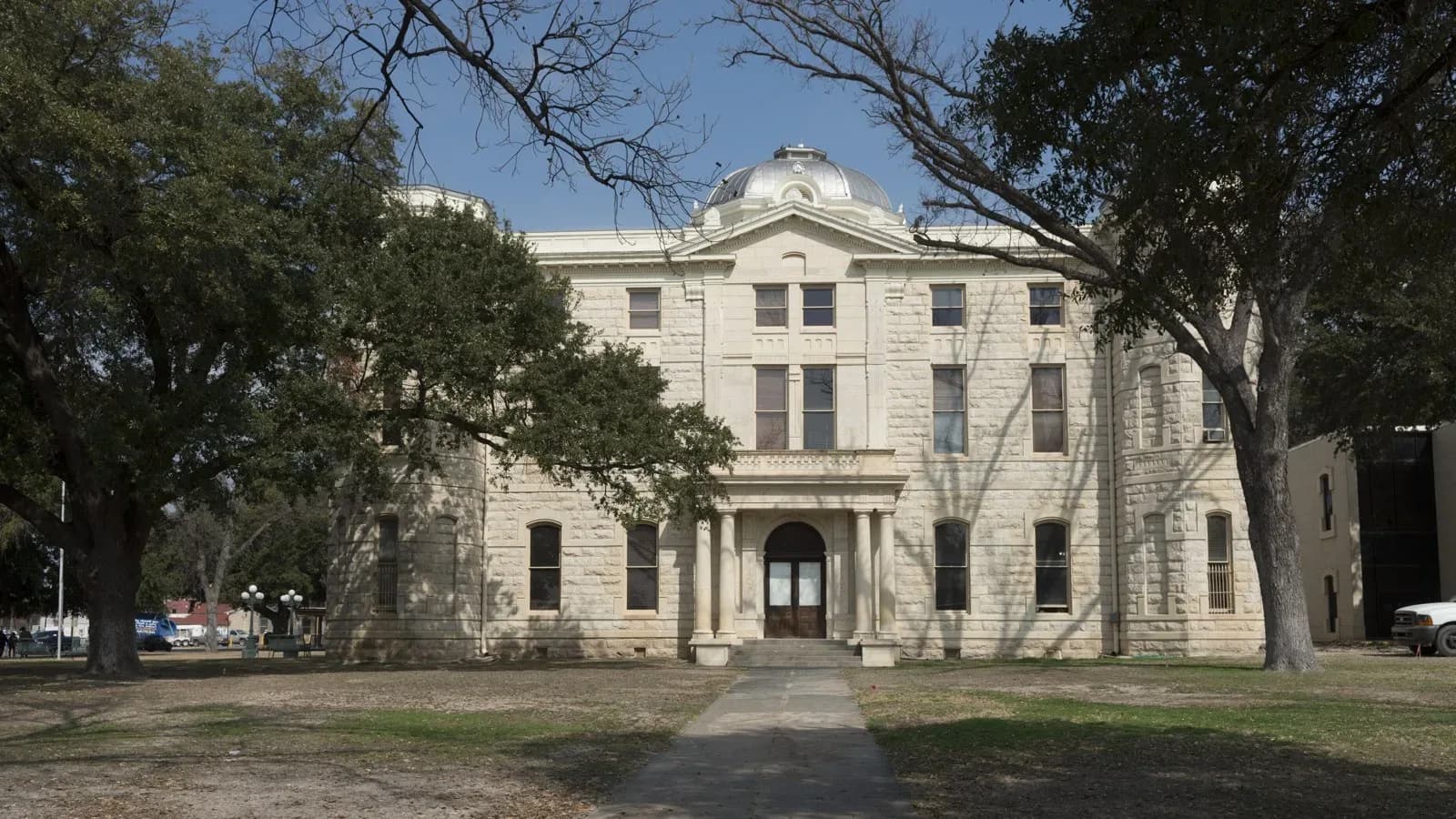
Val Verde County was organized in 1885 with Del Rio as its seat. In the 1880s, the Southern Pacific and the Galveston, Harrisburg and San Antonio railroads linked up 40 miles west of town. The railroad boosted sheep and goat ranching, and for many years Del Rio was a center of the wool and mohair trade.
The military has shaped the town since frontier days. After the Mexican War, patrols and camps were set up at Del Rio and at Camp Hudson on the Devils River. During World War II the Army opened Laughlin Field for pilot training. It later became Laughlin Air Force Base.
Growth
Del Rio incorporated on Nov. 15, 1911. It grew from 50 residents in 1880 to 2,000 by 1890. The population rose 40.8 percent during the 1970s and was 33,867 as of 2000, according to the Handbook. Amistad Dam and Reservoir, built on the Rio Grande in the 1960s, drew new housing. The town's first school opened in 1874.
Today Del Rio is a binational, bicultural border city with ties to its sister city, Ciudad Acuña. It is also still a place that depends on its water and has never forgotten where its start came from.
Hero photo: Carol M. Highsmith / Library of Congress, via Wikimedia Commons, public domain.