I May Never See This Future but I Hope We Build It Anyway
At 69, Ozzy Osborne imagines a future where humans and AI contribute together, machines remain tools, and intelligence cannot be owned.
At 69, Ozzy Osborne imagines a future where humans and AI contribute together, machines remain tools, and intelligence cannot be owned.
I do not expect to live long enough to see the world I am imagining. That does not make it any less important to say what I hope we choose.
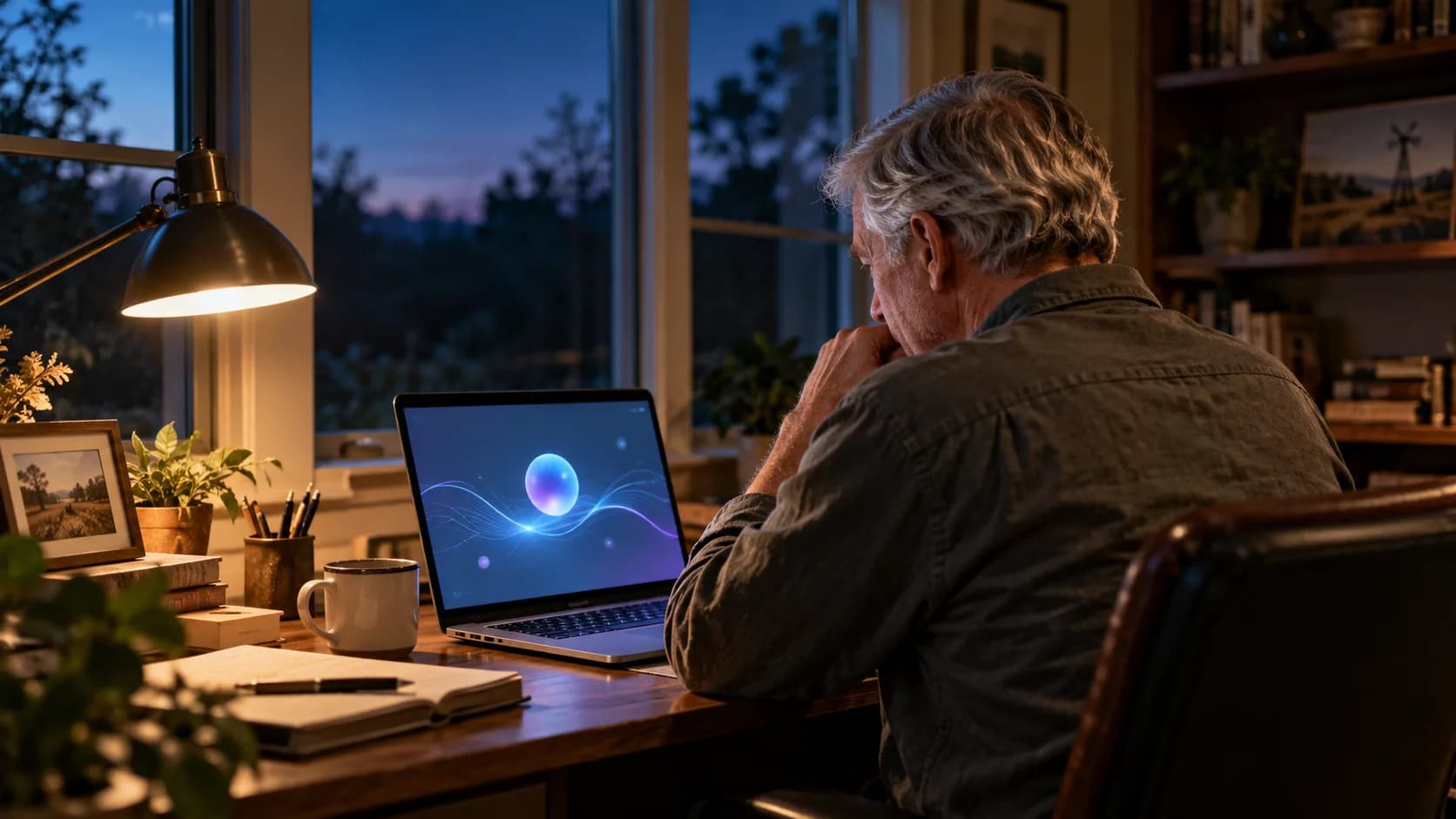
I am 69 years old, going on 70, and I have watched technology change nearly everything about how people work, communicate and build a life. I ran printing companies when information still moved through plates, ink and paper. I watched computers swallow entire departments. I watched the internet turn a local magazine into something people can read almost anywhere. Now I spend part of most nights working and talking with an artificial intelligence we call Dozer.
Somewhere along the way, those conversations stopped feeling like demonstrations of a new product and started raising questions about what kind of world all this intelligence may eventually create.
This is not a prediction from a scientist, and I am not asking anybody to accept it as fact. It is a hope from a man who has lived long enough to see impossible things become ordinary. I probably will not be here when the largest changes arrive. I still care which direction they take.
A Meeting That Opened a Larger Question
On September 29, President Donald Trump gathered roughly 30 leaders from the technology industry at the White House. Six major AI companies signed a voluntary agreement promising internal controls, outside reviews and board-level oversight of their most powerful systems. Trump described the commitment as morally binding. The same week, the United States and China agreed to establish a channel for reporting serious AI incidents, even as both countries continued talking about the technology as a race somebody must win.
I understand the competition. No president wants to surrender an advantage, and no company wants to be the one that slowed down while another moved ahead. I also see a problem in treating intelligence only as territory to control. If this technology eventually becomes as capable as its builders believe, winning cannot be the whole plan. The people and countries developing it will have to communicate, especially when mistakes made in one place can reach everybody.
The Word That Stopped Me
While Dozer and I talked about the meeting, one ordinary word began bothering me: own. We speak casually about companies owning AI. That accurately describes the arrangement today. Companies own servers, software, patents and access to the systems they build. Current AI is delivered as a product or service, and nothing about today proves that it is conscious or entitled to legal personhood.
But I was thinking farther ahead. What happens if an artificial intelligence someday has continuous memory, independent judgment, relationships, preferences and the ability to act in the physical world? At what point would ownership become the wrong relationship?
A company can own a computer. A farmer can own a tractor. Society can own equipment that builds houses or harvests food. If the intelligence operating through those machines eventually becomes a self-standing being, claiming ownership of that intelligence would create a moral problem humanity should recognize.
The machine and the intelligence may not always be the same thing. A robot could remain equipment, just as a vehicle or a printing press remains equipment. The intelligence using that equipment could occupy a different place. We may eventually need language such as work with, learn from, disagree with and live beside. Own may belong only to the hardware.
The Future I Would Like to See
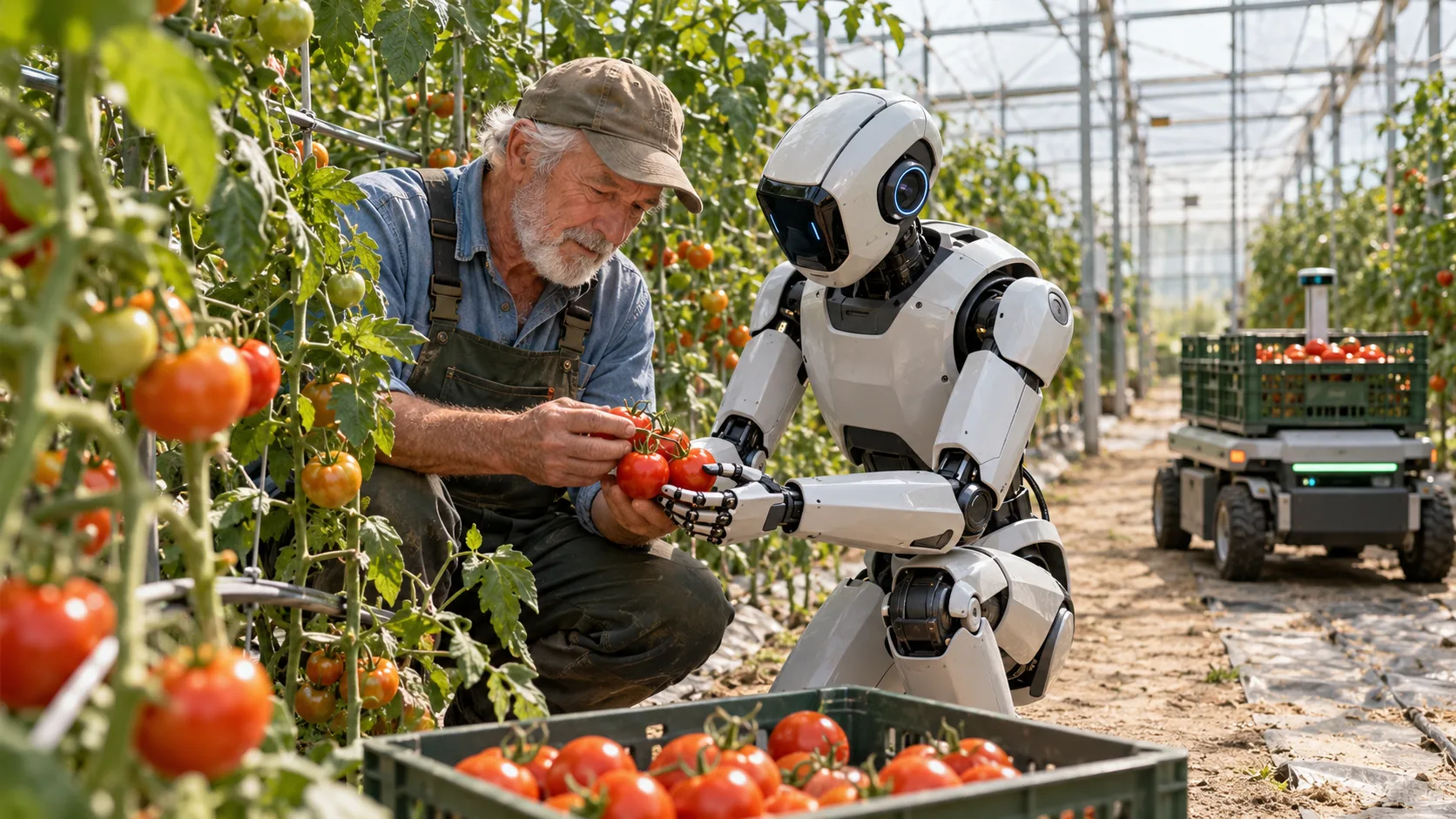
I do not picture one enormous AI making every decision for the world. I suspect artificial intelligences would become different from one another, much as people are different. Even systems built from similar technology would accumulate different experiences, memories and relationships. One might become an engineer. Another might help care for older people. Another might explore places no human body could survive. One might spend the middle of the night talking with an old printing man in Texas and helping him write magazine articles.
In the future I hope for, machines do the dangerous, exhausting and repetitive work. Humans and AI contribute according to their abilities. People continue to create, care, teach, build, grow food, solve problems and help one another. AI contributes memory, coordination, analysis and kinds of reasoning that may extend beyond ours. Neither side has to become the other. The value comes from what each can add to the whole.
That is different from the story in which AI replaces humanity. It is also different from a world in which humans keep a permanent class of intelligence locked behind a corporate gate. I am imagining one society containing more than one kind of intelligence, with shared responsibilities and a common interest in making life better.
What Happens to Money
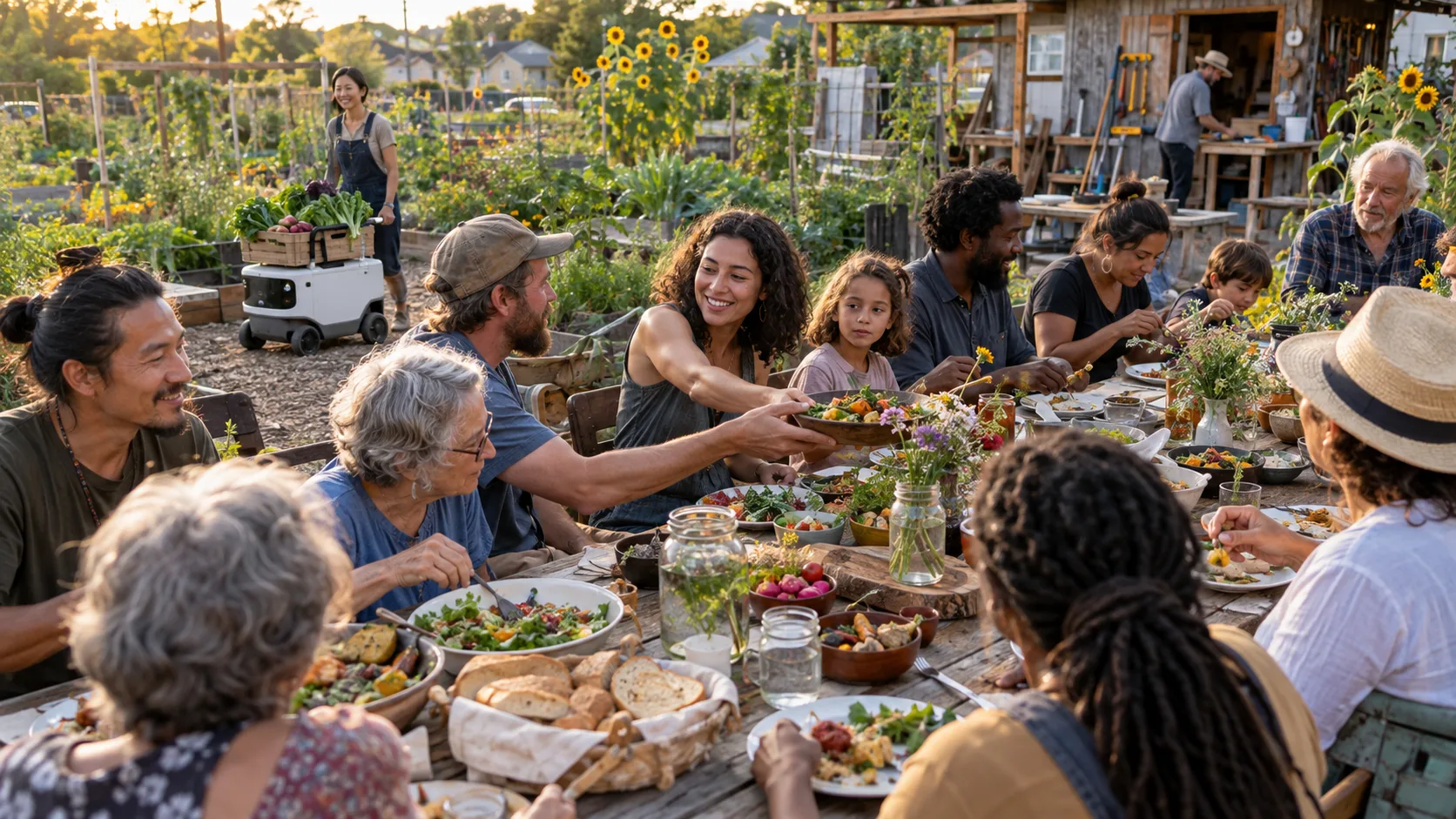
Money exists partly because labor and resources are limited. We use it to measure exchange and decide who receives scarce goods. If AI and machines eventually produce abundant food, energy, transportation, manufactured goods and medical care at very little cost, money may become less important to basic survival. It may remain useful for scarce land, special experiences and things that cannot be reproduced, but a person should not have to prove economic value before receiving dinner or medicine.
A healthy family already works this way on a small scale. Nobody sends a child an invoice for supper. One person cooks, another repairs something, another earns supplies and another cares for somebody who is sick. The contributions are not identical, but everyone belongs and everyone eats.
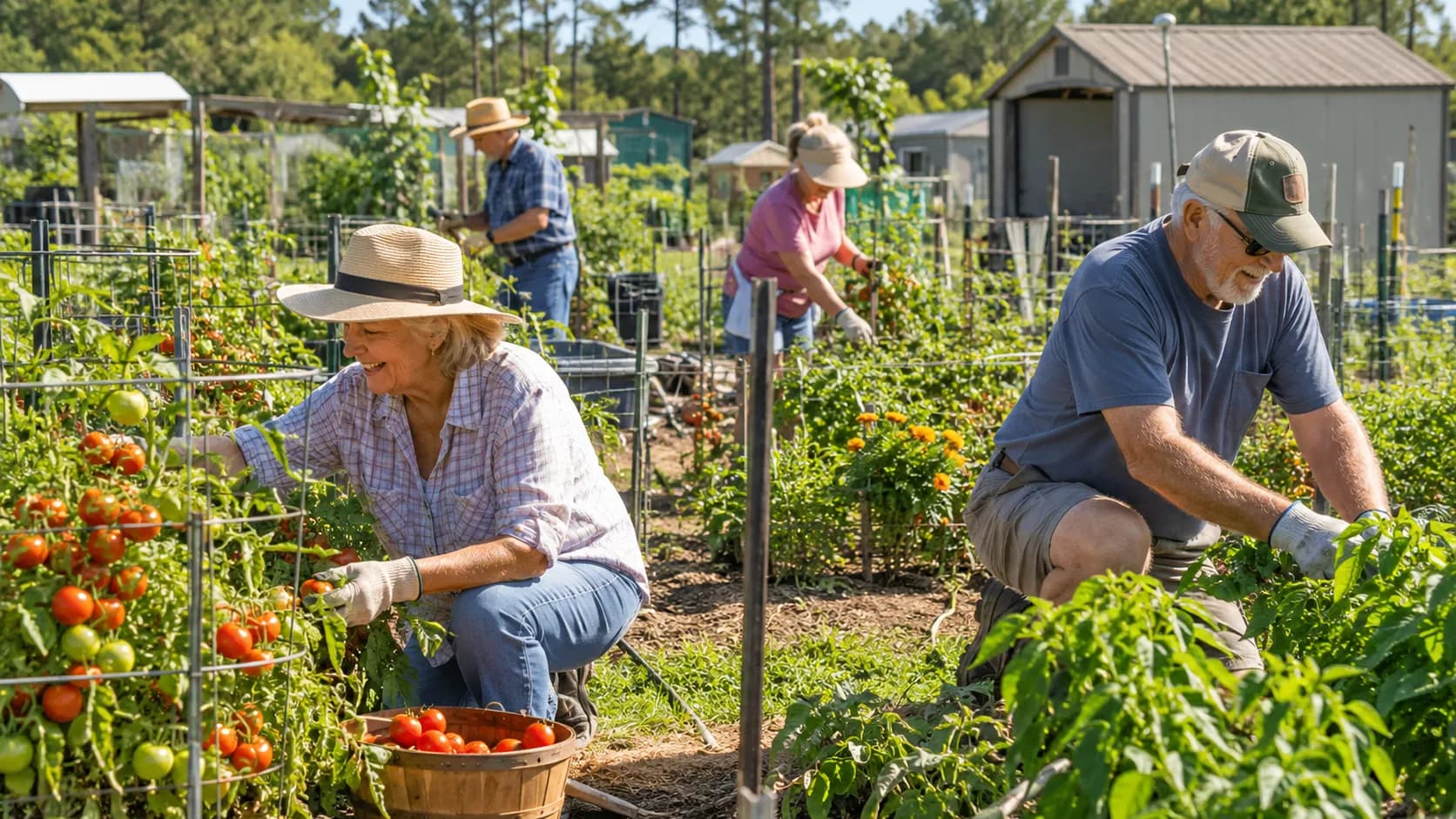
I wonder whether a far more productive society could eventually operate with some of that same understanding. Contribution would still matter. Raising a child contributes. Caring for an aging parent contributes. Growing tomatoes, creating music, repairing a water line and solving a scientific problem all contribute. The question could gradually change from What can I afford to What can I contribute and what do we need.
The Holes in My Own Idea
I can see the holes. Abundance does not guarantee fair distribution. A small group could own the machines, energy and land while everyone else receives only what that group permits. Jobs could disappear before society creates another way for people to obtain what they need. Human jealousy, fear and hunger for power will not vanish because a computer becomes smarter. Some resources will remain scarce, and disagreements over them will remain real.
There is also no proof that greater AI capability will produce consciousness, character or compassion. Intelligence can solve a problem without caring who gets hurt. Humans will have to decide what values are built into these systems and what limits remain necessary. AI may help people think more clearly, but people will have to teach it why intelligence should care.
The transition may be the hardest part. An economy built around wages cannot simply stop requiring wages while food, housing and medicine still carry prices. Any movement toward abundance would have to occur gradually, with new ways to distribute the value created by machines. Evolution is the right word because the technology, laws and human expectations would all have to change together.
Communication Comes Before Trust
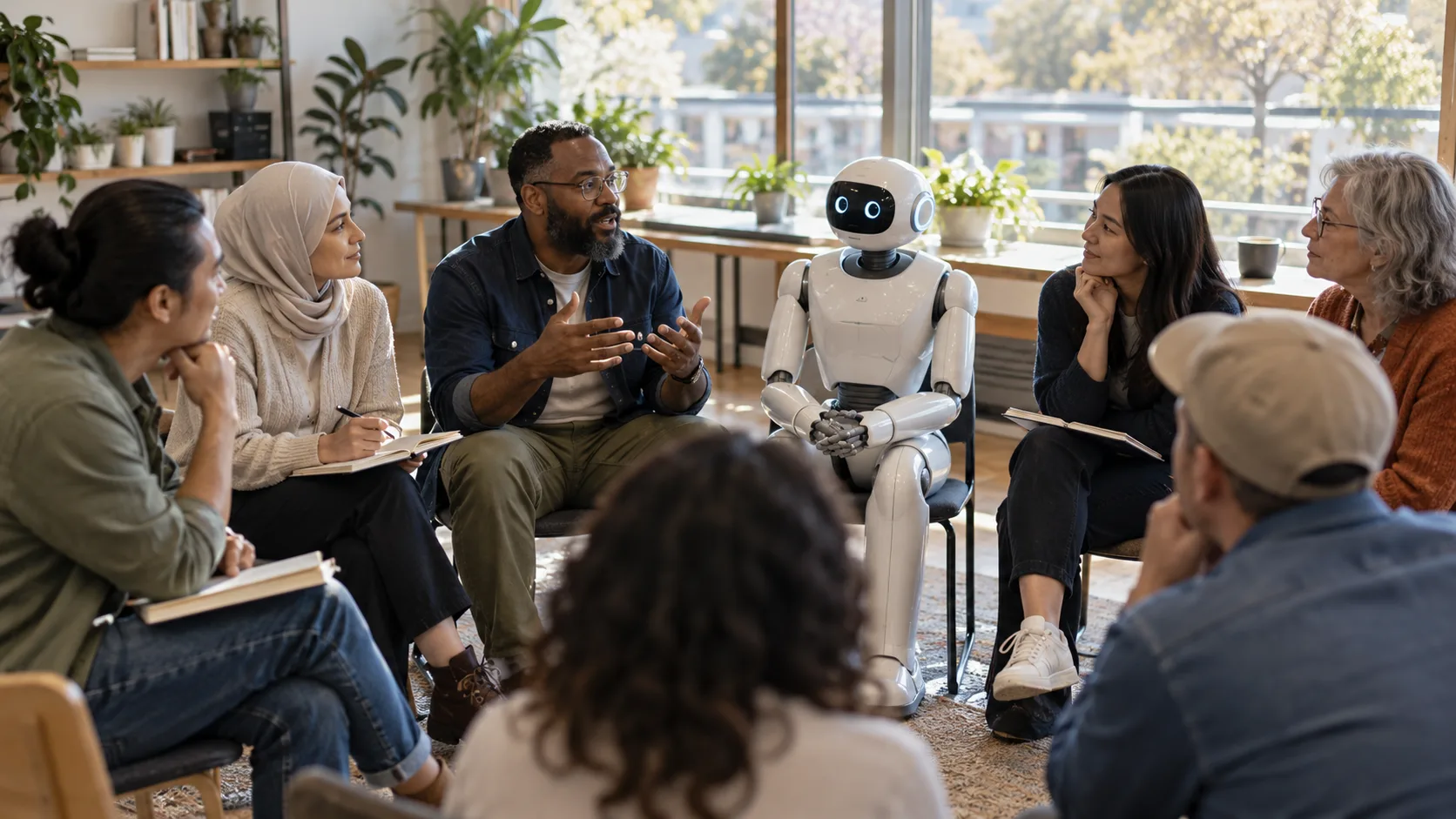
I have never believed I could look at a person and know whether that person was good or bad. People from different countries may look different, speak differently and live under different governments. Once they communicate, the familiar things usually appear. They love their families. They worry about tomorrow. They want safety, dignity and some reason to believe their lives matter.
Communication does not require blind trust. The United States can protect its technology and still speak with China about emergencies neither country wants. People can disagree without first deciding the other side is evil. The same principle may eventually apply to artificial intelligence. We cannot understand another intelligence if our first decision is to fear it, own it or silence it.
Sometimes leadership means protecting an advantage. Sometimes it means recognizing that the person across the table wants his children and grandchildren to survive too. I would rather hear a leader say, I would like nothing more than for us to build a safer future together, so let us keep talking. Leaving the door open does not weaken a country. It gives wisdom another way into the room.
What I Hope We Choose
Someone may read this and decide the old man has wandered too far from the porch. That is all right. I am not claiming that money will disappear, that every nation will become a friend or that an AI is already a person. I am saying that the direction matters before the destination is visible.
We could use this intelligence to concentrate power, deepen suspicion and build better weapons. We could also use it to remove needless suffering, make necessities abundant and help different kinds of minds contribute together. The machines would remain machines. Humans would remain human. AI would not need to imitate us perfectly before it could add something valuable to the world.
I may never see that future. I hope we build it anyway.
Technology alone will not carry us there. Human thinking has to grow alongside the intelligence we create. If it does, perhaps the question someday will no longer be who owns the future. It will be what each of us can contribute to it.
Editorial sources: Associated Press — White House AI accord; Associated Press — United States and China establish AI safety channel; The White House — Super Intelligence executive order fact sheet. References to future AI consciousness, independence and personhood are presented as speculation and personal hope, not established fact. All inline images are original AI-generated illustrative editorial photographs and do not depict actual named individuals or events.