The Person Nobody Knows Did the Right Thing
On July 13, an unidentified person anonymously surrendered an infant through the Safe Haven Baby Box at Woodlands Fire Station 6. The alarm worked, firefighters responded and the baby was taken for medical evaluation. We do not know the person's name or circumstances — and we should not try to discover them.
On July 13, an unidentified person anonymously surrendered an infant through the Safe Haven Baby Box at Woodlands Fire Station 6. The alarm worked, firefighters responded and the baby was taken for medical evaluation. We do not know the person's name or circumstances, and we should not try to discover them. What we know is that, at one painful moment, the person chose immediate care over danger.
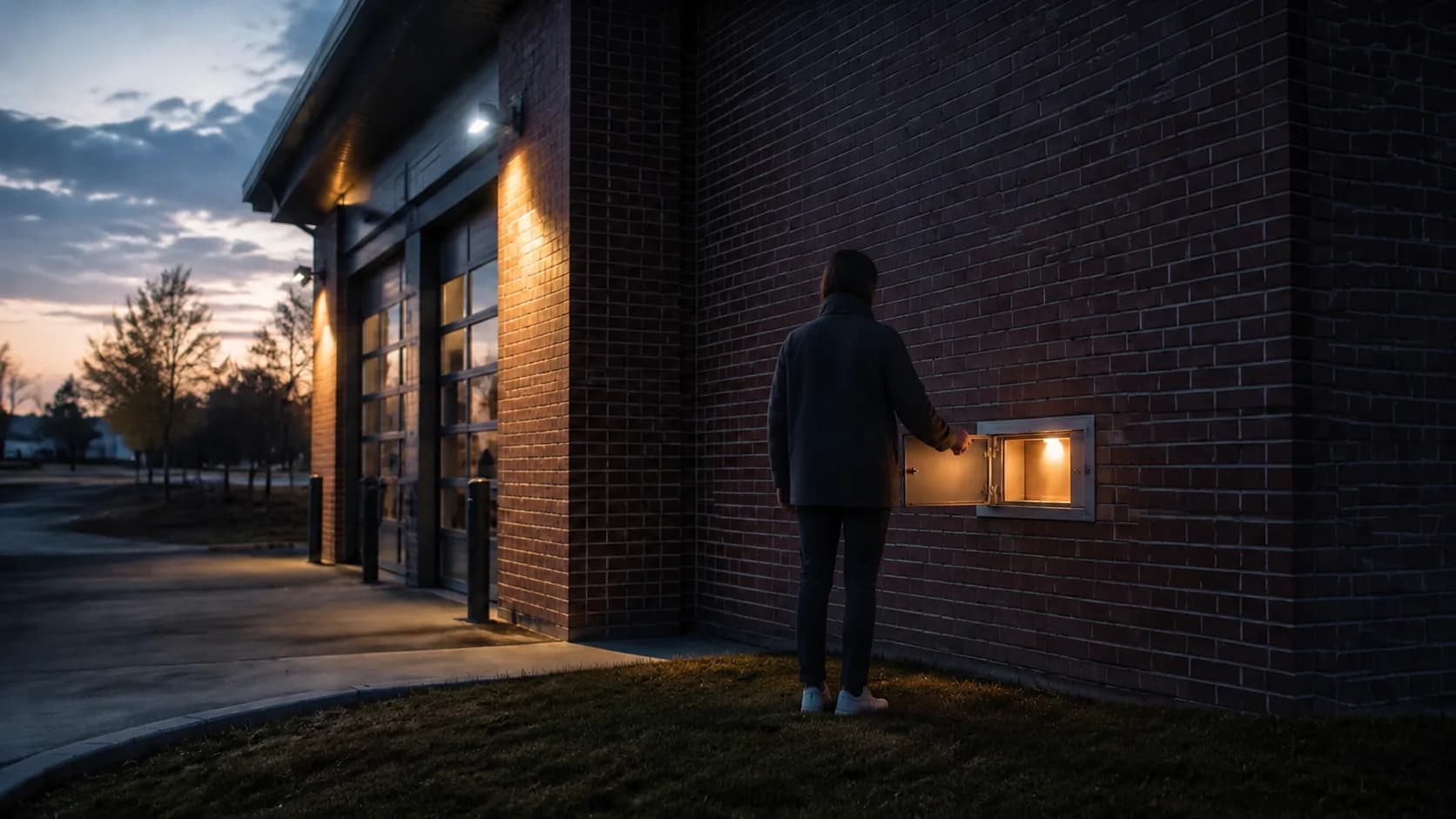
On July 13, someone opened a small door in the outside wall of Fire Station 6 in The Woodlands. An infant was placed inside a climate-controlled compartment. The exterior door closed. A silent alarm alerted firefighters. The baby was retrieved, taken to a local hospital and medically evaluated.
The Woodlands Township released no name. It did not release the baby's sex. It did not offer a photograph or a dramatic account of the person who arrived at the station. The public facts are almost aggressively simple. A person faced a decision. The person chose the safe door. A baby is alive and receiving care. That is enough to tell a story.
The Word We Reach for Too Quickly

When people hear that somebody left a baby, the word "abandoned" often arrives before the facts do. It is an understandable word. A parent and child separated. The person did not stay. The law itself places Texas' safe-haven provisions inside a subchapter with "abandoned children" in its name.
But in ordinary conversation, "abandoned" carries more than a legal description. It supplies a villain. It suggests indifference. It invites strangers to imagine a cold heart, a careless life and a story they were never given.
The more accurate public word for what happened at Fire Station 6 is "surrendered." The baby was not left beside a road, in a restroom or outside an unlocked building. The child was placed into a device designed for this exact emergency, at a station staffed around the clock, with an alarm that immediately brought trained help. That does not make the decision painless. It makes the decision safe.
We Know Almost Nothing About the Person
We do not know whether the person was the mother or the father. We do not know the person's age, income, health, family situation or address. We do not know whether anyone else knew about the pregnancy or the surrender. We do not know whether the person was frightened, grieving, relieved or all three. We do not know whether the decision came after months of thought or during a crisis that narrowed the world to one small door.
People dislike an empty space in a story. We fill it with familiar characters: the terrified teenager, the overwhelmed mother, the missing father, the family with no money, the person struggling with addiction. Any of those stories might exist somewhere. None of them has been established here.
Compassion does not require us to invent a tragedy. It only requires us to admit that another human being may have reached a point we cannot see from our comfortable side of the door.
What the Door Actually Does

The Safe Haven Baby Box at Fire Station 6 was completed in April 2025. It looks simple because it is supposed to be simple. From outside, a parent opens a secure door and places an infant into a padded, temperature-controlled compartment. When the door closes, it locks from the outside. Alarms notify the staffed facility, and responders retrieve the child through an interior door.
The design eliminates the face-to-face encounter that may prevent someone in crisis from approaching a firefighter, nurse or emergency worker. There are no cameras aimed at identifying the surrendering person. Anonymity is not an accidental gap in the system. It is one of the tools that makes the system reachable.
That can feel strange in an age when nearly every doorway records a face and every transaction wants a name, phone number and email address. This door asks for none of them. It asks for the baby to be placed somewhere safe.
On July 13, the system did what it had been waiting to do. The alarm worked. Firefighters responded. The child went to a hospital. The person was allowed to leave without becoming a public spectacle. The box was empty again, but it had fulfilled its entire purpose.
Texas Built the Law Around a Hard Truth
Texas' Safe Haven law is commonly called the Baby Moses law. It provides a legal route for a parent to voluntarily surrender a child who appears to be 60 days old or younger to a designated emergency infant care provider. Those providers include qualifying hospitals, emergency medical services providers, freestanding emergency facilities, certain child-placing agencies and fire departments staffed 24 hours a day.
Since 2023, Texas law has specifically allowed approved facilities to use a "newborn safety device" such as the one in The Woodlands. State law requires the device to be inside a continuously staffed facility, visible to employees from within and connected to an alarm that notifies staff when a child has been placed inside. The facility must regularly verify that the alarm works.
The legal protections have limits. The infant must fall within the age requirement, and safe-haven protection is not a shield for abuse or neglect. But when the law's conditions are met, the parent can make the surrender without identifying themselves and without being prosecuted for abandonment.
That last protection is not society declaring the situation ideal. It is society recognizing that fear of punishment can push a desperate decision into a dangerous place. The law tries to move that decision from a dumpster, roadside or empty room to the arms of someone trained to help. It does not have to approve of every circumstance to prefer a living child.
The Right Thing Can Still Break Your Heart
We use "the right thing" as though it should feel clean. Return the wallet. Tell the truth. Stop the car and help. In the little morality stories we teach children, the right choice is usually obvious and the person gets to feel better afterward. Adult life is not always that polite.
Sometimes the right choice is the one that hurts every person involved. It may be made because all the other choices feel less safe. It can carry grief, doubt and consequences that do not disappear when the decision is finished.
Calling the surrender at Fire Station 6 the right thing does not mean we know that person's entire story. We do not know what help was available, what help was refused, or whether another path might have existed. It means that at the single point where the public record begins, the person chose immediate care over danger. Whatever else they could not provide that day, they provided safety.
Two Lives Were on Opposite Sides of That Door
The baby deserves every bit of concern this story creates. The child did not choose the circumstances and depended entirely on adults to make the next safe decision.
But caring about the baby does not require us to hate the person who used the box. That is the false choice hiding inside many conversations about safe surrender. People believe sympathy has to be rationed: if we show compassion for the parent, we have somehow taken it away from the child.
The box itself rejects that idea. It protects the infant with temperature control, alarms, a secure compartment, firefighters and medical care. At the same time, it protects the surrendering person with anonymity and a path that does not begin with interrogation. The child receives safety. The parent receives a way out of a crisis that does not endanger the child. Those goals are not enemies. They are the two sides of the same door.
The Details We Are Not Owed
There will be people who want to know more. Was the baby healthy? Was the person local? Did they leave a note? What happens to the child now? Will the person ever change their mind?
Some of those questions belong to doctors, courts and child-welfare professionals. Others may never receive an answer. None of them belongs to the curious public simply because the story happened nearby.
Privacy is part of the protection. The Township said only that the child was transported to a hospital for evaluation. The baby's sex was not released. No later chapter has been offered for public consumption. That restraint should remain part of the story, not an obstacle for reporters to overcome. The person used a legal system built around anonymity. Honoring the decision means honoring that anonymity after the fact.
If Someone Is Reading This Before the Door

A safe-haven box is a last-resort safety option, not the only form of help. Safe Haven Baby Boxes operates a confidential, 24-hour crisis line at 1-866-99BABY1 for parents considering surrender or needing guidance. The Texas Parent Helpline also offers free, confidential support around the clock at 1-833-680-0611.
Sometimes a conversation can uncover housing, medical care, family support, counseling or another option that keeps a parent and child together safely. Sometimes, after every conversation, surrender remains the safest available choice. The important thing is that panic does not have to make the decision alone.
There is a person on the telephone. There is an employee inside the hospital or fire station. And, where one has been installed, there is a small secure door that leads directly to help.
Nobody Will Present an Award
We usually recognize a good act by finding the person who performed it. We take a photograph. We print a name. We hand over a plaque and ask the person to tell us what they were thinking. None of that should happen here.
Somewhere is a person whose name should never appear beneath this story. We will not shake their hand. We will not ask them to relive the moment for our benefit. We may never know whether they still wonder what happened after the door closed.
But we know what happened first. The alarm sounded inside the station. Someone came for the baby. The child was safe. Sometimes doing the right thing means nobody ever knows you did it.