What SpaceX Dragon Is Bringing Home From Space—and Why It Matters
More than 6,300 pounds of cargo—including experiments on 3D-printed blood vessels, tumor models, antibiotic-resistant bacteria, and astronaut lighting—are scheduled to depart the International Space Station Friday and splash down off California on Saturday.
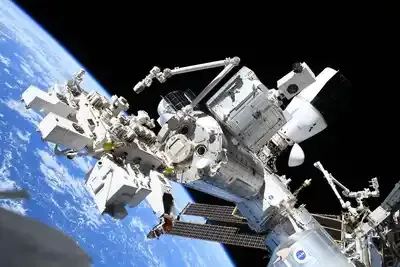
More than 6,300 pounds of cargo—including experiments on 3D-printed blood vessels, tumor models, antibiotic-resistant bacteria, and astronaut lighting—are scheduled to depart the International Space Station on Friday, Nov. 20.
NASA plans to begin live coverage at 10:45 a.m. Central Friday. The SpaceX Dragon cargo spacecraft is scheduled to undock at 11:05 a.m. Central, weather and operations permitting.
A return trip for research
Much of the science aboard the space station can be monitored remotely, but some answers only become possible after samples return to laboratories on Earth. Researchers can then examine how tissues, microbes, and equipment changed after months in microgravity.
The Dragon spacecraft can bring experiments back intact rather than leaving scientists to rely only on readings transmitted from orbit. This return includes several studies aimed at questions that matter both to astronauts and people on Earth.
Blood vessels printed in three dimensions
One returning experiment includes a 3D-bioprinted blood-vessel construct used to study vascular aging and cardiovascular disease.
Microgravity changes the way fluids move through the body and removes many of the physical forces tissues experience on Earth. By comparing the returned construct with ground-based samples, researchers may better understand how blood vessels age and how cardiovascular disease develops.
Tumor models and personalized cancer treatment
Frozen tumor organoids treated aboard the station are also coming home. Organoids are small laboratory-grown models that reproduce some features of actual tumors.
Researchers will examine how the models responded to treatment in microgravity. NASA says the work could help identify better cancer treatments and advance personalized medicine, in which treatment decisions are tailored more closely to an individual patient.
How resistant bacteria adapt in space
The cargo also contains frozen microbial samples used to study antibiotic-resistant bacteria. Researchers want to learn how those organisms survive, adapt, and evolve in the space environment.
Understanding those changes is important for protecting crews during long missions, when medical options are limited. The results may also add to what scientists know about antibiotic resistance on Earth.
Three years of testing astronaut lighting
A lighting system will return after more than three years aboard the station. Researchers tested whether different lighting conditions could support astronauts' sleep and well-being during long-duration missions.
That question becomes increasingly important as NASA prepares for longer journeys where crews cannot depend on a normal sunrise-and-sunset cycle or quickly return home.
When Dragon is expected home
NASA and SpaceX are targeting splashdown off the California coast no earlier than 4:04 p.m. Central Saturday, Nov. 21. The schedule depends on weather in the recovery area and may change.
NASA will stream Friday's undocking and departure at nasa.gov/live. The agency does not plan to stream the splashdown but will post timing updates on its space-station blog at nasa.gov/blogs/spacestation/.
The Dragon arrived at the station Oct. 15 after launching two days earlier from Cape Canaveral Space Force Station in Florida. Its return closes the flight portion of NASA's 35th SpaceX commercial resupply mission and begins the next stage of work for scientists waiting on the ground.
Source: NASA, "NASA to Cover 35th SpaceX Resupply Mission Space Station Departure," updated Nov. 18, 2026.
Photo: A SpaceX Dragon cargo spacecraft docked to the International Space Station on May 1, 2025. NASA photograph by astronaut Nichole Ayers; archival image.