'The Chosen' Is Using AI to Speak 600 Languages. Keep the Humans in Charge.
Come and See is using an AI tool with human review to translate "The Chosen" toward a goal of 600 languages, including hundreds with no dubbing industry.
"The Chosen," the donor-funded series about the life of Jesus, is trying to do something no television show has done: speak to nearly every person on earth in his own language. The tool helping it get there is artificial intelligence, and the people behind it say the most important part is the human check at the end.
Six hundred languages
Come and See, the nonprofit that funds the show's production and translation, says on its website that it aims to translate "The Chosen" into 600 languages and reach 95% of the world "in their heart language." It also says it is committed to keeping the show free in The Chosen app.
That goal is far from met, but progress has been quick. The Deseret News reported in May that Guinness World Records recognized the series in February as the most-translated season of a television series in history, with 125 languages, and that another 260-plus translations were in progress. More than 500 of the languages on the list are minority languages with no existing dubbing infrastructure, according to the Deseret News.
How the machine and the people divide the work
A fact sheet Come and See provided to Movieguide, reported Tuesday, lays out the process. For subtitles, AI produces a first draft. Then a trained subject-matter expert reviews each line for accuracy, "biblical fidelity" and cultural relevance, and checks that viewers are not asked to read too many words at once. After the subtitles are embedded, the expert reviews them again. Dr. Wendi Lord, Come and See's vice president of localization, and a team of more than 200 experts oversee the work, according to the fact sheet.
Subtitles do not help people who cannot read, so the app also has a speech-to-speech feature. A speaker records the dialogue in the local language, and the software overlays the original actor's vocal qualities on that recording. Come and See says the method also helps protect translators in high-risk regions by masking their voices.
Major languages with existing dubbing industries, including Spanish, French, Italian and Hindi, still use professional human dubbing teams, Lord told the Deseret News.
"I believe AI will do to translation what the microwave did to the stove," Lord told China Christian Daily in June, as quoted by Movieguide. "We have an obligation to not just take it out in the written word, but in the spoken word," she told the Deseret News.
An old mission with new tools
Christians have been carrying the story of Jesus across language barriers since the day of Pentecost, when the crowd in Jerusalem was amazed "because that every man heard them speak in his own language" (Acts 2:6). The Bible's last book pictures worshipers "of all nations, and kindreds, and people, and tongues" standing before the throne (Revelation 7:9). Missionaries, Bible translators and printers have spent centuries working toward that picture. Using a new tool to speed the same work is nothing to fear.
But the caution in Come and See's own process is the right one. Machines produce plausible words, not necessarily true ones, and when the subject is the words and works of Christ, plausible is not good enough. Keeping a qualified human reviewer between the software and the screen is not a formality. It is the whole point.
There is one more caution worth stating plainly, for the show as much as the technology. "The Chosen" is a dramatization. It invents dialogue, backstories and scenes that are not in the Gospels, as nearly every Bible film does. That can draw viewers toward Scripture. It cannot replace Scripture. Families who watch it in any language would do well to keep the Gospels open alongside it, the way the Bereans in Acts 17:11 "searched the scriptures daily" to test what they heard.
Faith-based storytelling is having a strong season. Dock Line wrote this week about the Kendrick Brothers' Brazilian remake of "Flywheel", which opens in U.S. theaters Friday. Stories like these are traveling farther than their makers imagined. The best of them will send viewers back to the source.
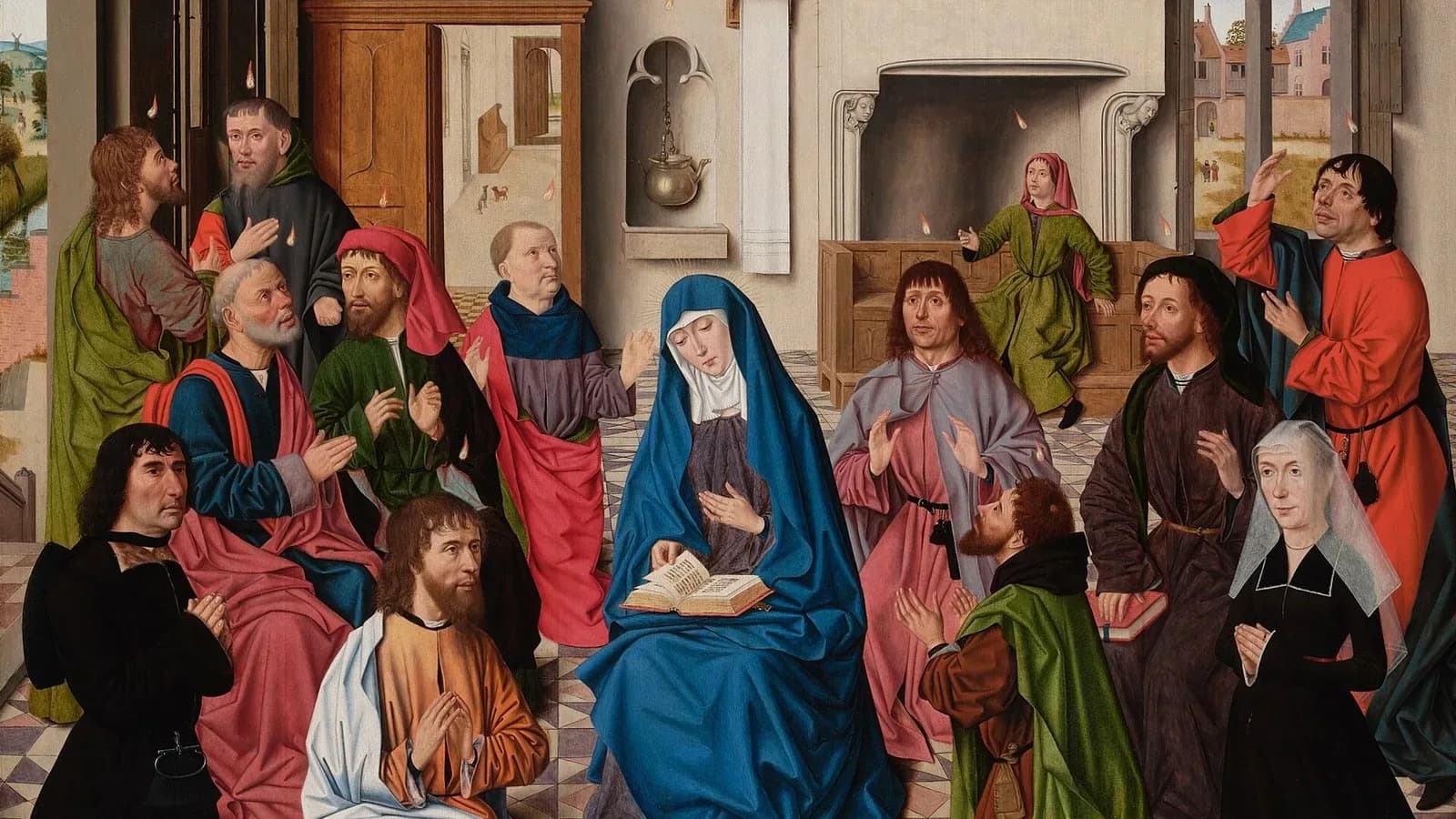
Hero image: "Pentecost," Master of the Baroncelli Portraits, about 1490, via Wikimedia Commons, public domain. Illustrative; not an image from "The Chosen."