

An Ohio Church Opens Its Stage to Survivors of 'Tranq' and Fentanyl. Hope Is Still the Best Thing It Hands Out.
At a Columbus church, overdose survivors share their stories as xylazine and medetomidine, known as tranq, make the fentanyl crisis more dangerous.
The facts come first below. My reflection follows in the section marked as opinion.
Every week at Glenwood Church in Columbus, Ohio, men and women who have survived overdoses climb onto the stage at the front of the sanctuary and tell their stories. They are members of the Hope Dealer Community, a recovery group, and their meeting was the centerpiece of a BBC report by international correspondent Quentin Sommerville on how a new wave of synthetic drugs is changing America's overdose crisis.
A drug supply that keeps changing
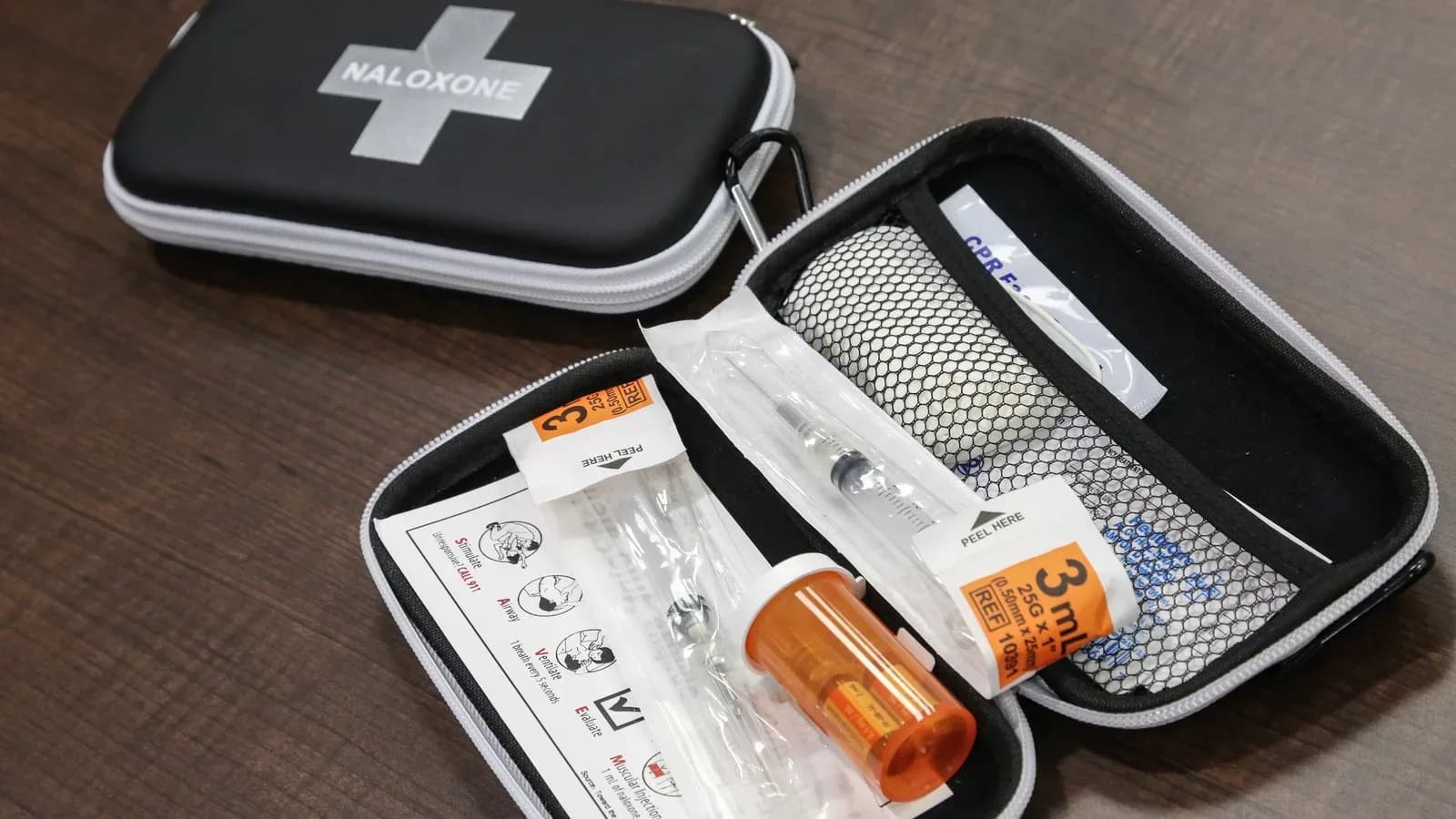
Fentanyl, which is entirely man-made, is 50 to 100 times more powerful than heroin, and it is now often cut with synthetic tranquilizers that make reviving overdose victims more difficult, the BBC reported. Two of those additives, xylazine and medetomidine, are both known on the street as "tranq." Both are animal tranquilizers. They prolong the high from fentanyl but slow breathing, and naloxone does not work against them, according to the BBC.
The federal government confirms the danger. The Centers for Disease Control and Prevention says xylazine, also called "tranq" or "tranq dope," is a non-opioid sedative that is not approved for use in people, and that "Naloxone will not reverse the effects of xylazine." The CDC adds a point every reader should remember: because xylazine is often used with opioids like fentanyl, naloxone should still be given in any suspected overdose, and 911 should be called.
The BBC reported that overdose deaths peaked at 110,000 Americans in 2022 and have dropped since, to around 70,000 last year. Xylazine also causes necrotic skin ulcers, wounds that can reach the bone, the BBC reported.
What happens at Glenwood Church
At the meeting, one man described his overdose in July 2022. Paramedics gave him the opioid reversal three times without success. One medic was ready to stop, but the other insisted on one more try, and that saved his life, the BBC reported.
A woman named Tonya told how her nephew died of an overdose while she was overdosing at the same time from crack cocaine spiked with fentanyl. "It's not luck. I'm supposed to be here," she said, according to the BBC.
Scott Sanders, who runs Hope Dealers and is almost 10 years sober, told the BBC that the crisis has moved toward stimulants. "In the last 12 months in Franklin County , 78% of fatal overdoses are from stimulants," he said. "The tragedy is stimulant users who are purchasing crack think that's what they're getting, and they're not." His group works with the CDC on a drug sampling program, sending swabs from needles and pipes to a CDC laboratory, the BBC reported.
In Chicago, Cook County Sheriff Tom Dart told the BBC that enforcement alone will not win. "Front and centre there's got to be huge substance abuse treatment," he said. "You can reduce the market if you can address people's issues with substance abuse," Dart told the BBC.
Opinion: The church is the right place for this
It is fitting that this work happens in a church. The people on that stage are not statistics. Each one is a soul made in the image of God, and each one has a family that has prayed and wept over them. Jesus described the shepherd who leaves the ninety and nine and goes "after that which is lost, until he find it." A congregation that opens its doors every week to people fighting addiction is doing exactly that.
There is good news here, and it should be said plainly. If overdose deaths have fallen from about 110,000 in 2022 to around 70,000, as the BBC reported, tens of thousands of Americans who might have died are alive. Naloxone, recovery groups, and families who refused to give up all played a part. But 70,000 deaths a year is still a staggering number, and new additives that naloxone cannot reverse mean nobody should relax.
Enforcement matters. Cartels and dealers who sell poison deserve to be stopped and punished. But a sheriff who has run one of the nation's largest jails for 20 years says enforcement alone is not working, and conservatives should take his word seriously. Treatment and recovery are not soft options. They are how a person stops buying, and every person who stops buying shrinks the market.
Churches can do what government cannot. They can offer a seat, a meal, a sponsor, and the gospel. Scripture says the Lord came "to bind up the brokenhearted, to proclaim liberty to the captives." Addiction is captivity, and the church has been in the business of liberty for two thousand years.
If your congregation wants to help, start small. Learn how to use naloxone and keep it on hand. Find out who runs recovery meetings nearby and offer them a room. For Texans, our guide Texas Fentanyl Awareness Month: How to Get Free Naloxone explains how to get it for free. And pray, by name, for the people in your town who are still out there. Tonya was right. It's not luck.
More Faith Stories
 Yesterday
Pope Leo Will Return to His Wednesday Audience a Week After Cancer Surgery. Pray for Him, and for Every Patient He Named.
 Yesterday
Denver's Archbishop Asked a Famous Exorcist to Take a Year Away From the Microphone. Father Ripperger Said Yes.
 Yesterday