Supreme Court of Canada Upholds Quebec Religious-Symbol Ban
Canada's top court dismissed appeals against Quebec's Bill 21 on Nov. 27. Catholic bishops said they remain deeply concerned about religious freedom.
The facts come first below. My opinion follows in the section marked as opinion.
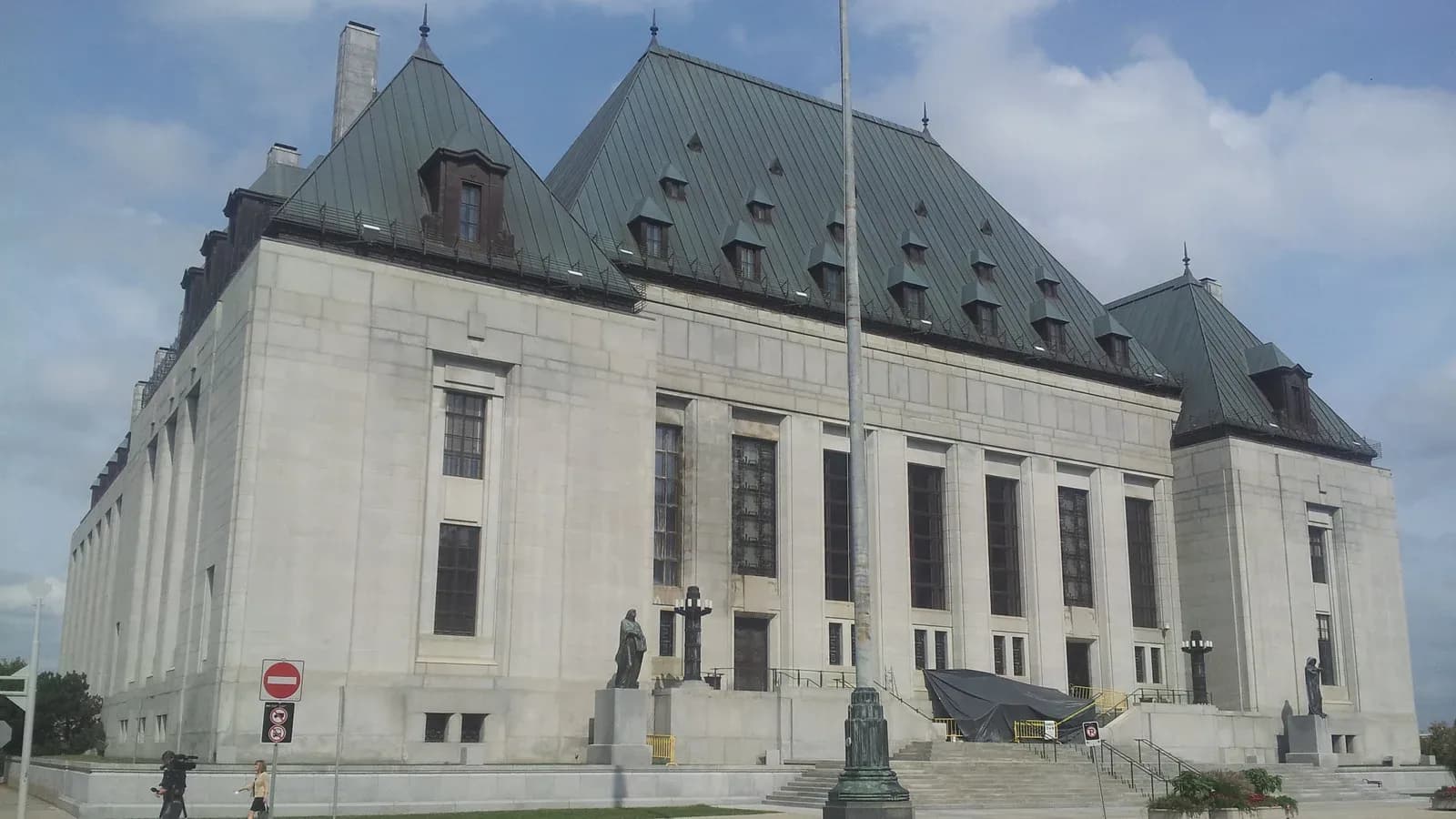
Canada's highest court on Friday, Nov. 27, dismissed appeals against Quebec's law barring certain public employees from wearing religious symbols while they work, according to the official case record of English Montreal School Board, et al. v. Attorney General of Quebec, et al., No. 41231. The Canadian Conference of Catholic Bishops, in a statement the same day, said the court had upheld Quebec's Act respecting the laicity of the State, known as Bill 21, and that the bishops remain "deeply concerned about the future of religious freedom and the full participation of persons of faith in public life, both in Québec and across Canada." EWTN News, in a report published Saturday, also described the ruling as largely upholding the ban and quoted the bishops' response.
The Supreme Court of Canada's case record states that the appeals and the cross-appeal from a Feb. 29, 2024, judgment of the Court of Appeal of Quebec "are dismissed without costs." The official entry lists a seven-judge panel and records partial dissents. Justices Karakatsanis, Kasirer and O'Bonsawin, "dissenting in part, would declare that ss. 6 and 8 of the Act respecting the laicity of the state" unjustifiably infringe sections of the Canadian Charter of Rights and Freedoms and the Quebec Charter of Human Rights and Freedoms. Other partial dissents, also recorded on the official docket, concerned minority-language education rights and the Charter's guarantee of equal rights to both sexes.
An official summary on the same Supreme Court case page, prepared by the Office of the Registrar, says the Act's purposes include "affirming the laicity of the state in Quebec," "prohibiting the listed persons from wearing religious symbols in the exercise of their functions" and requiring those persons "to perform their functions with their face uncovered." The summary says the Act also contains provisions through which the legislature "exercises the override power granted to it by s. 52 of the Quebec Charter and s. 33 of the Canadian Charter and permits the Act to apply notwithstanding certain rights and freedoms." The appeal was heard March 23 through 26, 2026.
EWTN News reported that the law bans public servants from wearing religious symbols such as hijabs, turbans, kippahs and crucifixes. The bishops' conference was one of the intervenors in the case, EWTN News and the CCCB statement both said.
The bishops' statement said the Catholic Church "recognizes the legitimate autonomy of civil authority and the distinction between religious and political institutions," but added that "the religious neutrality of the State should not entail the exclusion of religious expression from public life." "No person should be required to choose between the faithful expression of his or her religious convictions and the opportunity to serve society," the statement said. It called religious freedom "a fundamental human right rooted in the dignity of the human person" and said, "The protection of religious freedom is not a matter of privilege for religious communities; it is a shared responsibility and an essential foundation of a free, just, and democratic society."
The same tension between public authority and visible faith is before courts in other countries, including in a British case in which a Christian woman faces trial for silently praying near an abortion clinic.
Opinion:
A government that tells a teacher, a police officer or a lawyer to hide a cross, a kippah or a turban is not being neutral. It is teaching that visible faith is unwelcome in public service. The Canadian bishops are right. Religious freedom is not a private hobby to be left in a drawer at the office door.
Quebec's law uses a constitutional override to keep the ban in force even where it limits Charter rights. Legal power is not the same thing as justice. A parliamentary majority can write a statute. It still has a duty, as the bishops said, to protect minorities and to allow people of faith to serve their neighbors without erasing who they are.
Christians should be clear-eyed about this. The same rule that hides a crucifix will hide a hijab or a turban. The issue is not which faith is fashionable. It is whether a free country will let believers work in public with a clean conscience, or whether it will treat a quiet sign of devotion as a threat to the state.