The Spring Garden Starts Now. So Does the Last Harvest of the Year.
August may look like the end of the garden in Southeast Texas, but it is actually the handoff between three gardens. Around Conroe, Montgomery and Coldspring, the last summer harvest, the fall planting window and next spring's soil preparation all overlap right now.
August may look like the end of the garden in Southeast Texas. It is actually the handoff between three gardens: the summer plants still producing, the fall vegetables waiting for their turn and the soil that will determine what happens next spring.
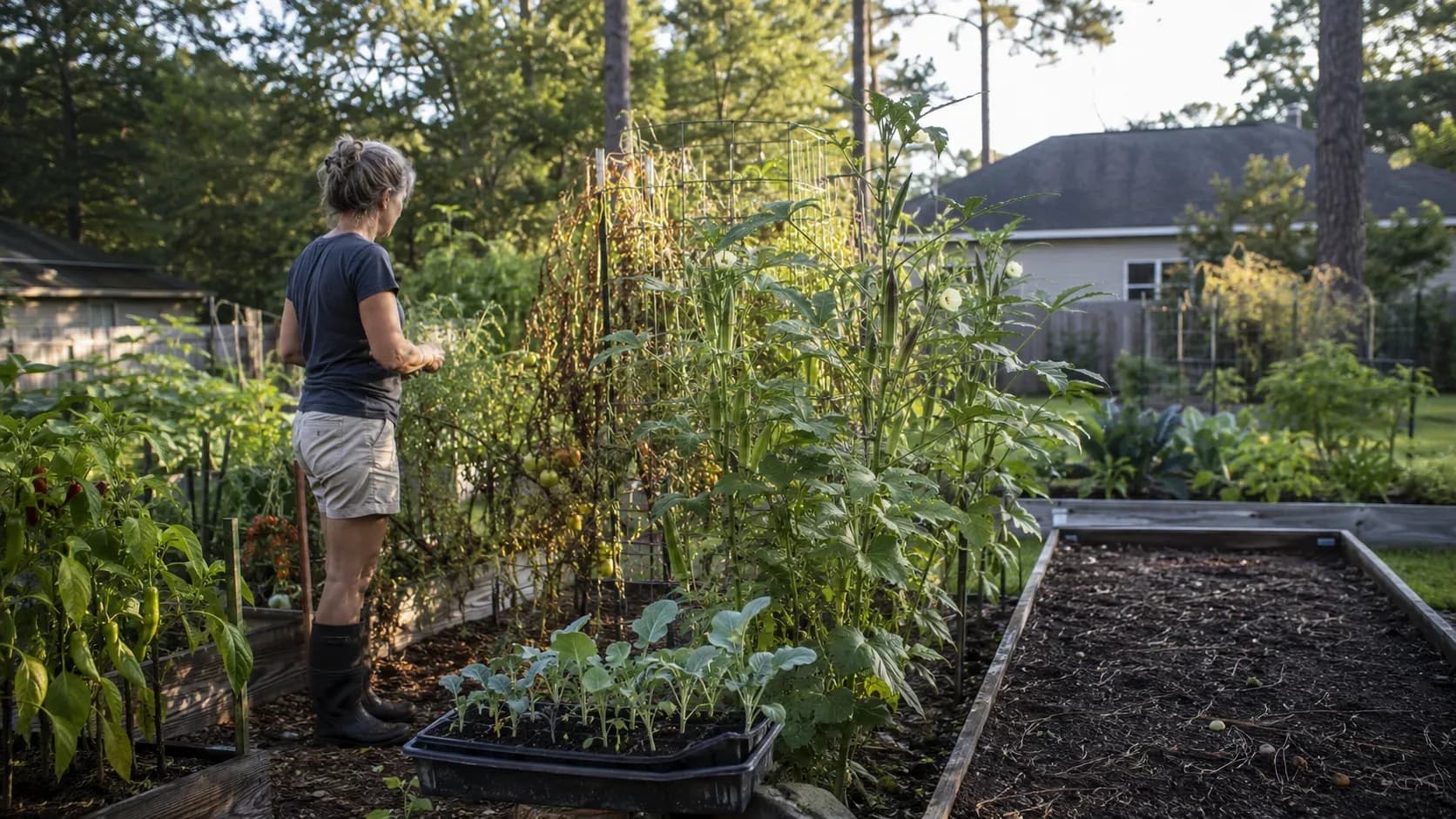
By August, a Texas vegetable garden can look like it has survived an argument. Tomato vines lean against their cages. Squash leaves have seen better days. Weeds have discovered every place the gardener failed to look for three days, and the afternoon sun makes the whole operation seem like something that should be reconsidered in October.
It is tempting to harvest whatever remains, close the gate and declare the season finished. That would be understandable. It would also be early.
Around Conroe, Montgomery, Coldspring and the communities between them, late summer is not simply the tired end of one garden. It is the overlap of three. Some warm-season plants may still have weeks of production left. A small group of fast crops can still reach the kitchen before cold weather. And the work that determines next spring's garden can begin before this year's tools are put away.
The garden has not stopped. It has changed jobs.
August is the hinge, not the ending

The first job is not to pull everything. It is to decide what has earned more time.
Healthy okra can continue producing in the heat. Peppers and eggplant may regain their enthusiasm as temperatures become less punishing. Established cherry tomatoes sometimes recover enough to offer another round. Herbs such as rosemary, oregano and thyme can remain useful long after the large summer harvest begins to fade.
Those plants need attention, not nostalgia. Harvest frequently. Remove damaged fruit. Check the underside of leaves. Keep weeds from taking the water and nutrients intended for the crop. If a plant is healthy and producing, it may deserve its space. If it is badly diseased, overrun with pests or no longer capable of producing, keeping it does not extend the season—it gives trouble a permanent address.
Texas A&M AgriLife advises removing spent spring and summer plant material before preparing a fall garden. Obviously diseased or insect-infested residue should leave the garden rather than enter a home compost pile, where the next crop may meet the same problem again. This is the useful kind of clearing: not tearing out a garden because it looks tired, but making room according to evidence.
The late-summer decision is not whether the whole garden stays or goes. Healthy, productive plants can remain while diseased and exhausted plants make room for the next crop.
There may still be another supper in the calendar
Late-summer planting is a race between maturity and the first freeze. That makes crop selection more important than optimism.
Texas A&M's home vegetable guide places bush beans, summer squash, leaf lettuce, mustard, radishes, spinach and turnips among the quicker vegetables, generally maturing in about 30 to 60 days. Cucumbers, southern peas and several other crops take longer, but our extended warm season can leave a useful window when they are planted on time.
For the warmer part of Southeast Texas, AgriLife's regional fall schedule points toward southern peas around mid-August, followed by bush beans, cucumbers and sweet corn around early to mid-September. Summer squash follows close behind. These dates are averages, not appointments. The variety, the condition of the soil, local shade and drainage, and the arrival of unusually early cold can move the outcome in either direction.
The safest late crop is not necessarily the most exciting one. It is the one with enough days left to finish. Read the seed packet before buying the dream. A 50-day bush bean has a different chance than a sprawling crop requiring 100 days. A small planting also reduces the gamble. Four healthy squash plants that can be watered properly may contribute more to the table than three rows planted because the package looked promising.
There is another advantage to quick crops: they teach us to stop thinking of a garden as one annual event. A bed can grow spring beans, summer peppers and fall greens without any of those crops having to occupy it forever. The garden becomes a calendar instead of a photograph.
The fall garden begins while summer is still standing in it

Fall vegetables do not wait for the gardener to feel a cool breeze. Broccoli, cabbage, cauliflower and Brussels sprouts benefit from the head start provided by transplants. In our part of Texas, the plants can be raised or purchased while the weather is still hot, then moved into the garden as the fall window arrives.
Young transplants need moisture while their roots establish, but constantly soaked soil can damage them as surely as drought. That means late August is a preparation month even when the actual planting comes later. Clear the future bed. Repair the irrigation line. Find the row cover. Decide where the afternoon shade falls. Begin looking for healthy transplants instead of accepting whatever remains on the rack after everyone else remembers fall gardening.
As the season progresses, the choices widen. Broccoli, cabbage, cauliflower, collards, kale, chard and kohlrabi can take their turns. Lettuce, beets, carrots, radishes, spinach, mustard, turnips, garlic, onions and parsley follow as the soil and nights cool. They do not all need to go in on the same Saturday.
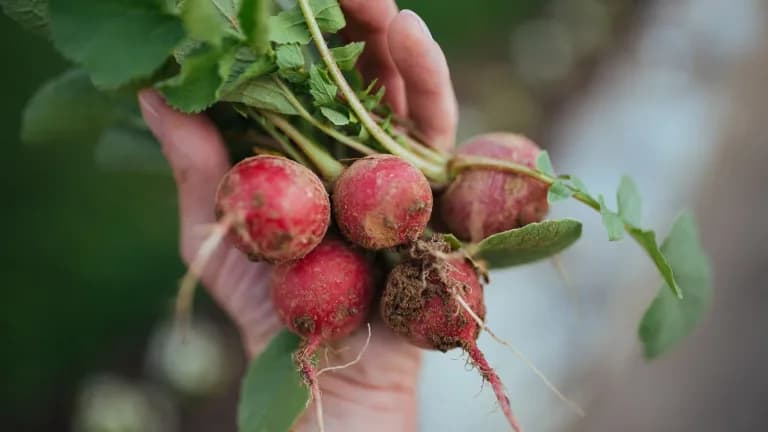
Successive planting—small amounts separated by a week or two—can keep one family from receiving 40 radishes on Tuesday and none for the rest of the year. It also spreads the risk. One planting may meet heat, heavy rain or insects while the next arrives under better conditions. That is not indecision. It is insurance purchased with seed.
Fall preparation begins before the air feels cool. Healthy transplants, repaired irrigation and prepared soil give cool-season vegetables a better start.
Water the soil, not the calendar
The phrase "water once a week" is easy to remember and often too simple to use. Sandy soil near one home may drain quickly. A heavy bed at another may still be wet below a dry-looking surface. A raised bed, a container and an in-ground row can sit 20 feet apart and require three different schedules.
Texas A&M recommends checking the soil rather than reacting only to the appearance of the plant. Scratch down about an inch. If the soil is still moist, wait. If it is dry, water deeply enough to wet the root zone rather than briefly dampening the surface. AgriLife's general guidance is to soak the soil to about six inches, with roughly one to two inches of water in a typical week as a starting point—not a command that overrides rainfall and actual soil conditions.
Drip irrigation makes that easier. It places water near the roots, reduces runoff and avoids repeatedly wetting the foliage. Mulch helps hold that moisture and slows the weeds, but it should not be piled tightly against plant stems. The goal is not to water more. It is to make more of the water reach the plant.
Spring begins in the dirt

The most useful preparation for next year's garden may be the least photogenic thing a gardener does this year: take a soil sample.
Texas A&M recommends testing garden soil about every two years. The sample should combine small amounts taken four to six inches deep from several places in the bed. That blended sample can reveal whether the garden actually needs fertilizer and how much. Without it, we are buying nutrients according to habit, package design or the advice of somebody whose soil may bear no resemblance to ours.
Fertilizer cannot correct deep shade, poor drainage, tree-root competition or soil packed hard enough to discourage roots. More fertilizer in those situations may add expense without solving the problem, and too much can injure the plants we intended to help.
Once the crop is removed, work only soil that is moist—not wet enough to stick to the tools. Add well-rotted compost or other appropriate organic matter gradually. Texas clay does not become perfect garden soil during one heroic weekend. It improves through repeated attention.
Raised beds are especially useful in places that hold water after heavy rain. They give roots drainage and air, two things no fertilizer can replace.
An unused bed can also grow something without growing supper. Rye or oats planted in fall can protect bare soil and add organic matter when worked under before spring planting. AgriLife specifically recommends Elbon cereal rye as one tool for gardens with root-knot nematode trouble. A cover crop does require planning—it cannot occupy the same space as a fall vegetable garden—but empty ground does not have to remain empty.
Soil testing, compost, drainage work and a simple garden map may do more for next spring than another cart full of fertilizer.
Leave yourself a note before the evidence disappears
Gardeners trust memory more than memory deserves. By February, it can be difficult to remember which corner stayed wet, where the tomatoes received too much shade, which bean produced well, or where squash bugs first appeared. Once the beds are cleared, much of the evidence vanishes.
Before changing everything, take a few photographs and draw a rough map. Record the varieties worth growing again. Mark where water stood after a storm and which plants wilted first during dry weather. Note the crop families so next year's plants can be rotated rather than placed directly into the insects and diseases their relatives left behind.
Texas A&M recommends following one crop with an unrelated one where possible. Rotation is not a magic shield, especially in a small garden, but it helps interrupt the buildup of crop-specific pests and diseases.
The notes do not need to become a research paper. "Best peppers were by the fence" may be enough to save an entire season of rediscovery.
A garden does not have to be large to have another season
Nothing in this transition requires an acre, a tractor or a greenhouse. A few containers can hold lettuce, radishes, green onions or herbs. One cleared bed can produce fall greens. A gardener with limited mobility can place containers near the door instead of surrendering the pleasure of growing food.
Leafy vegetables such as lettuce, mustard and parsley can tolerate more partial shade than crops grown for large fruit. The sensible garden is the one a person can tend consistently.
That may be the real advantage of beginning now. Spring gardening often arrives with a burst of ambition: too many seed packets, too many plants and too much work scheduled for one beautiful weekend. Late summer gives us time to notice what the garden actually needs.
Keep what is healthy. Remove what is carrying trouble. Plant only what still has time to finish. Prepare the cool-season beds before the cool season arrives. Test the soil before trying to repair it. Write down what this year taught before next year asks the same questions.
August may make the garden look finished. It is not. One last harvest may still be waiting in this year's calendar—and next spring's garden has already begun beneath our feet.