Texas Approves $1.6 Million to Expand Cancer Screening at Houston-Area Clinics
A newly approved CPRIT grant would expand screening and follow-up support at Legacy clinics in Baytown, Southwest Houston and Acres Homes. No start date for the new grant-funded services has been announced.
State approval is in. A start date for the expanded program is not. A $1.6 million cancer-prevention grant approved Nov. 18 would bring screening and follow-up help to three more Legacy Community Health locations in the Houston area, including Baytown. The award remains pending contract negotiation, and the grant listing does not announce when new program appointments will begin.
The Cancer Prevention and Research Institute of Texas grant record names Houston Methodist Research Institute as the recipient and Arica Brandford as program director. The project, called C-CUR 2.0, builds on an existing cancer-screening partnership serving medically underserved residents of Harris and Chambers counties.
Where the expansion is planned
The grant proposal identifies three additional Legacy locations: Baytown, Southwest Houston, which serves the Gulfton corridor, and Acres Homes. Its aim is to extend an existing clinic-based model with bilingual community health workers and help patients move from an abnormal screening result to diagnosis and, when needed, treatment.
Planned services address breast, cervical and colorectal cancer screening, along with screening related to hepatitis C and liver cancer risk. The proposal also calls for outreach through electronic health records, community education and patient navigation. It describes mobile mammography through The Rose and diagnostic and treatment support for uninsured patients through Houston Methodist's charity-care program. These are components of the funded proposal, not a promise that every service is available today at every clinic.
Why follow-up matters
A screening result is only the beginning if a patient cannot get the next test or reach treatment. The proposal sets goals to guide patients with abnormal results to diagnostic workups within 30 to 60 days and those diagnosed with cancer into treatment within 45 days. It also aims to provide direct screening education to at least 9,000 people over three years. Those numbers are program targets, not results already achieved.
The grant application cites elevated cancer incidence in two state-recognized areas, Fifth Ward and Kashmere Gardens and the East Harris County area around the San Jacinto River Waste Pits. Those figures explain the project's focus; they do not establish the cause of an individual cancer or mean everyone living in the area has the same risk.
What patients can do now
People who need routine screening should not wait for the new grant program to launch. Legacy's current screening page says patients can discuss recommended tests during a well exam, schedule online or call (832) 548-5000. Screening choices depend on age, personal history and other risk factors, so ask a health care professional what is appropriate for you.
Legacy's current page says mammograms are ordinarily ordered by a clinician and performed at an imaging center. The new proposal includes mobile mammography, but CPRIT's award listing does not provide a public enrollment date, site-by-site schedule or appointment instructions for that expansion. Check with Legacy for its current services and locations before traveling.
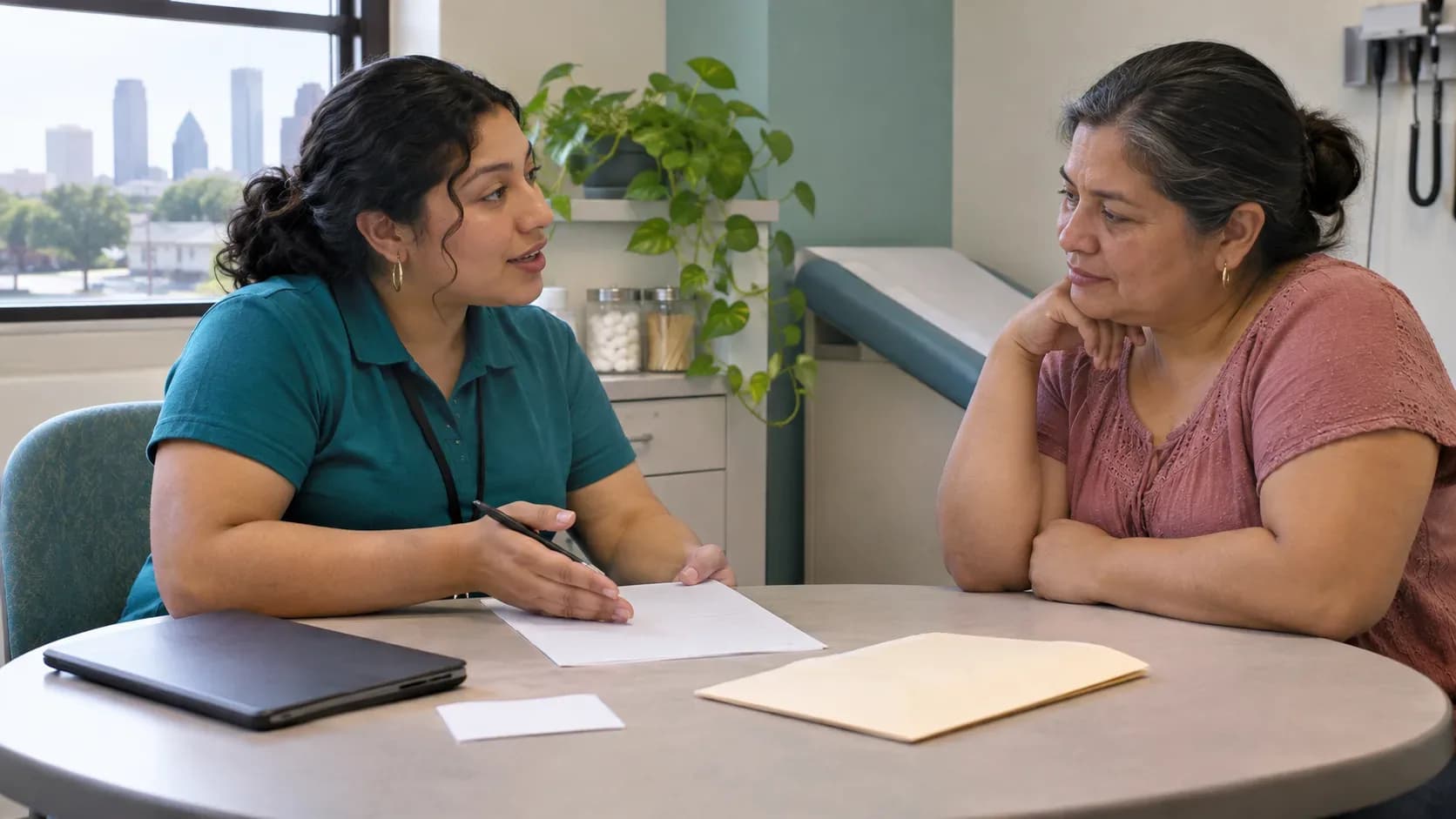
Image: AI-generated editorial illustration of a patient-navigation conversation; it does not depict a Legacy clinic, employee or patient.