Victoria County to Weigh CHRISTUS Bid for Citizens Medical Center
Victoria County commissioners will consider a Nov. 23 letter of intent on Monday for CHRISTUS Health to buy Citizens Medical Center for $60 million and pledge $40 million in capital spending, a proposal that is not yet a completed sale.
Victoria County commissioners will consider a letter of intent at 10 a.m. Monday that would start formal talks to sell the county's hospital, Citizens Medical Center, to CHRISTUS Health. The eight-page letter, dated Nov. 23 and included in the court's Nov. 30 agenda packet, proposes a $60 million payment for substantially all of the assets tied to the hospital's operations and a separate $40 million capital commitment. Paul Generale, CHRISTUS' president of operations, signed the letter on Nov. 23. The signature line for County Judge Ben Zeller is blank.
CHRISTUS, a faith-based nonprofit based in Irving, wrote that it "recognizes the tremendous blessing that Citizens Medical Center has been to Victoria County and surrounding communities for almost 70 years" and that it looks forward to partnering "to build on that foundation and continue to expand access to excellent health care throughout the community." The letter is an agreement in principle, not a completed sale. Most of its business terms would become binding only if the parties later sign a definitive purchase contract.
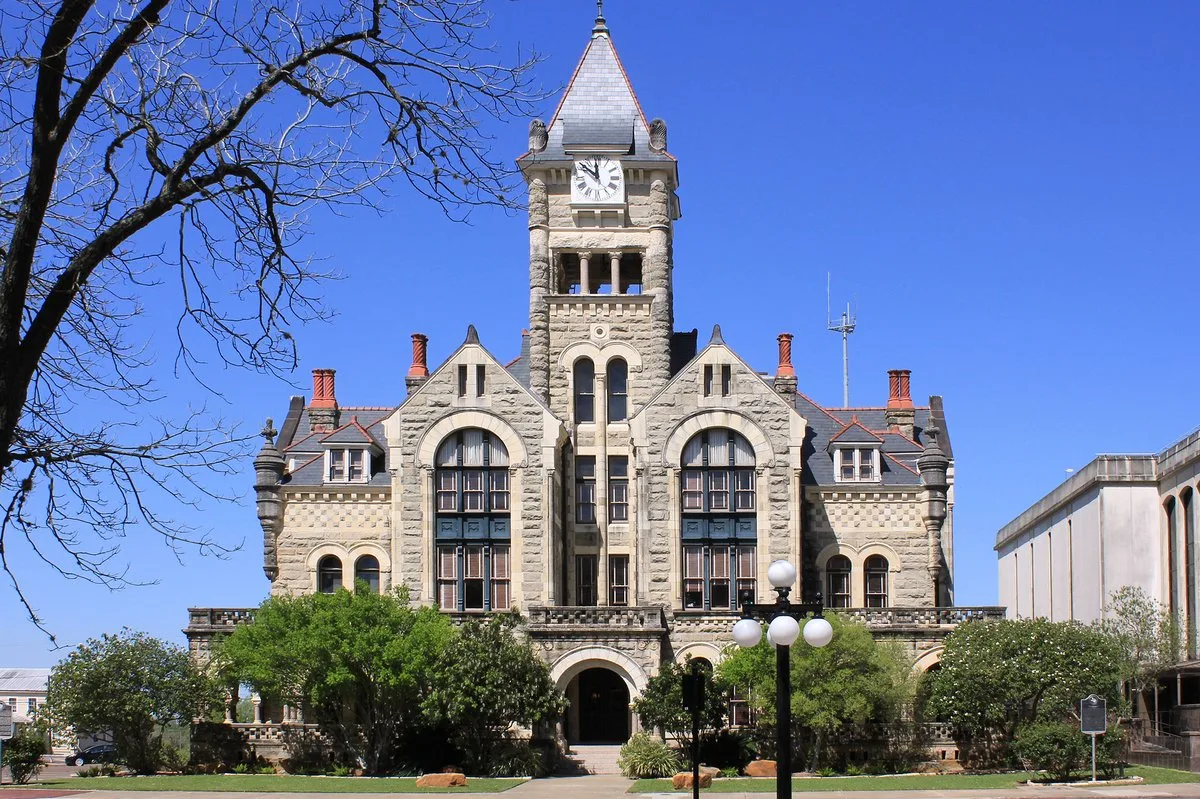
The east elevation of the old Victoria County Courthouse in Victoria, with a newer county building at right, photographed March 25, 2016. Photo: Larry D. Moore / Wikimedia Commons, CC BY 4.0.
What the Letter Proposes
The $60 million purchase price would cover substantially all operating assets, including cash, transferable real estate, buildings and accounts receivable. Of that sum, about $31 million would be used to pay off county debt related to the hospital, according to the Sept. 30, 2026, balance sheet cited in the letter. Another $7.5 million would go into an interest-bearing reserve escrow for six years to cover certain pre-closing county liabilities, with any remainder returned to the county. A further $7.5 million would pay the county's share of buying a reversionary interest that burdens about 19 acres of hospital property; CHRISTUS would contribute a matching $7.5 million toward that same purchase. The price could be adjusted, up or down, within 120 days after closing if net working capital differs by more than 3 percent from the approximately $31.2 million shown on the Sept. 30 statement, excluding a prepaid defined-benefit pension balance.
On top of the purchase price, CHRISTUS would fund $40 million at closing for future capital spending at the hospital and in a nine-county service area: Victoria, Jackson, Calhoun, Refugio, Goliad, DeWitt, Bee, Wharton and Lavaca. That money is earmarked for equipment, maintenance, renovations, new or expanded facilities and medical office space, as well as information systems, electronic medical records software, and physician recruitment and retention. Spending on those information-systems and recruitment items would be capped at $15 million. The full $40 million would have to be spent within eight years, with annual reports to the county due each Dec. 31.
The letter also sketches how the hospital would be run if a sale closes, with a target closing date of March 1, 2027, and a goal of finishing definitive documents by Jan. 15, 2027. For two years after closing, CHRISTUS and the county would each appoint three members to a transition board; CHRISTUS would name the chair. The county would keep a 10-year right of first refusal if CHRISTUS later wanted to sell the hospital to a for-profit buyer. CHRISTUS says it would continue the hospital's existing indigent and charity care and serve as the county's mandated provider of those services, without further compensation, under Section 61.030 of the Texas Health and Safety Code. It anticipates offering employment, for at least 12 months unless the transition board agrees otherwise, to substantially all hospital employees in good standing, at comparable titles, pay and benefits, subject to customary screening. The hospital's existing emergency-room physician contract with Elite Hospital Partners would remain in place through Feb. 28, 2028, except for cause, and at no subsidy. For three years after closing, participating county employees would not be charged more than prevailing Medicare rates for medical services, with talks on a Medicare-plus model to start after closing for year four.
Some important pieces would stay with the county. The hospital's defined-benefit pension plan would be excluded from the deal and retained by the hospital or the county, subject to due diligence, while CHRISTUS would evaluate how to provide substantially equal benefits going forward. The Citizens Medical Foundation's governing documents would be amended so CHRISTUS or an affiliate becomes its sole member, with funds raised by the foundation to be used on services or projects in the service area.
What Signing Monday Would Bind
The letter itself is clear about its limits. Aside from provisions on term, a no-shop clause, publicity, expenses, governing law, notices and the binding-versus-nonbinding section, it "creates no binding rights in favor of any party." A closing would still depend on a signed definitive agreement, truthful representations, the hospital's accreditation and licenses remaining in good standing, required federal, state and local approvals, and no material adverse change in the hospital's finances or operations since the Sept. 30 statements.
If commissioners approve the letter and Zeller signs it, those few binding clauses would matter immediately. The letter would run until a definitive agreement is signed, the parties agree to end it, or March 1, 2027, whichever comes first. During that period, unless otherwise required by law, the county could not solicit other offers, hold sale talks with another buyer, or agree to sell the hospital's assets to anyone but CHRISTUS. A later definitive contract would also bar the county from directly or indirectly supporting or engaging in activity that competes with the hospital or CHRISTUS in those nine counties.
A county-owned hospital is a public trust. The purchase price, the capital pledge, and the promises on charity care, jobs and emergency-room coverage will matter to families who use this hospital. So will the no-shop clause, the pension left with the county, the escrow, and the nine-county restrictive covenant in a later definitive contract. Approving the letter would start formal talks; a sale would still depend on contracts, approvals and a closing.