At Raccoon Boot Camp, the Goal Is to Make Them Forget Us
At first they need people for everything. Six months later, success means these orphaned raccoons know how to survive without us.
At first they need people for everything. Six months later, success means these orphaned raccoons know how to survive without us.
There is a funny thing about rescuing a wild animal: if you do the job right, the animal eventually wants nothing to do with you.
That is the idea behind what staff at Woodside Wildlife Rescue in Pass Christian, Mississippi, call raccoon boot camp. The young raccoons arrive because they are orphaned, injured, or separated from their mothers. At first, they need people for almost everything. Months later, success looks very different: a raccoon that can find food, climb out of trouble, swim across water, and recognize that humans can be dangerous. The people who save them spend months working toward the day the raccoons no longer need saving.
First, They Have to Survive Being Babies
Woodside Wildlife Rescue was founded in 2019 by Paula Woodside, a former U.S. merchant mariner. Its mission is to rehabilitate injured and orphaned native wildlife and return those animals to natural habitats when they are ready. The Associated Press reported that the rescue has cared for 76 raccoon kits so far in 2026.
When a very young kit arrives, the first stage does not look much like boot camp. The smallest animals may spend weeks indoors, bottle-fed and cared for until they are old enough and healthy enough to move into outdoor enclosures. Whenever possible, rescuers first try to reunite a kit with its mother. When that cannot happen, the human job becomes temporary parenting — with an unusual ending in mind.
Then the Lessons Change
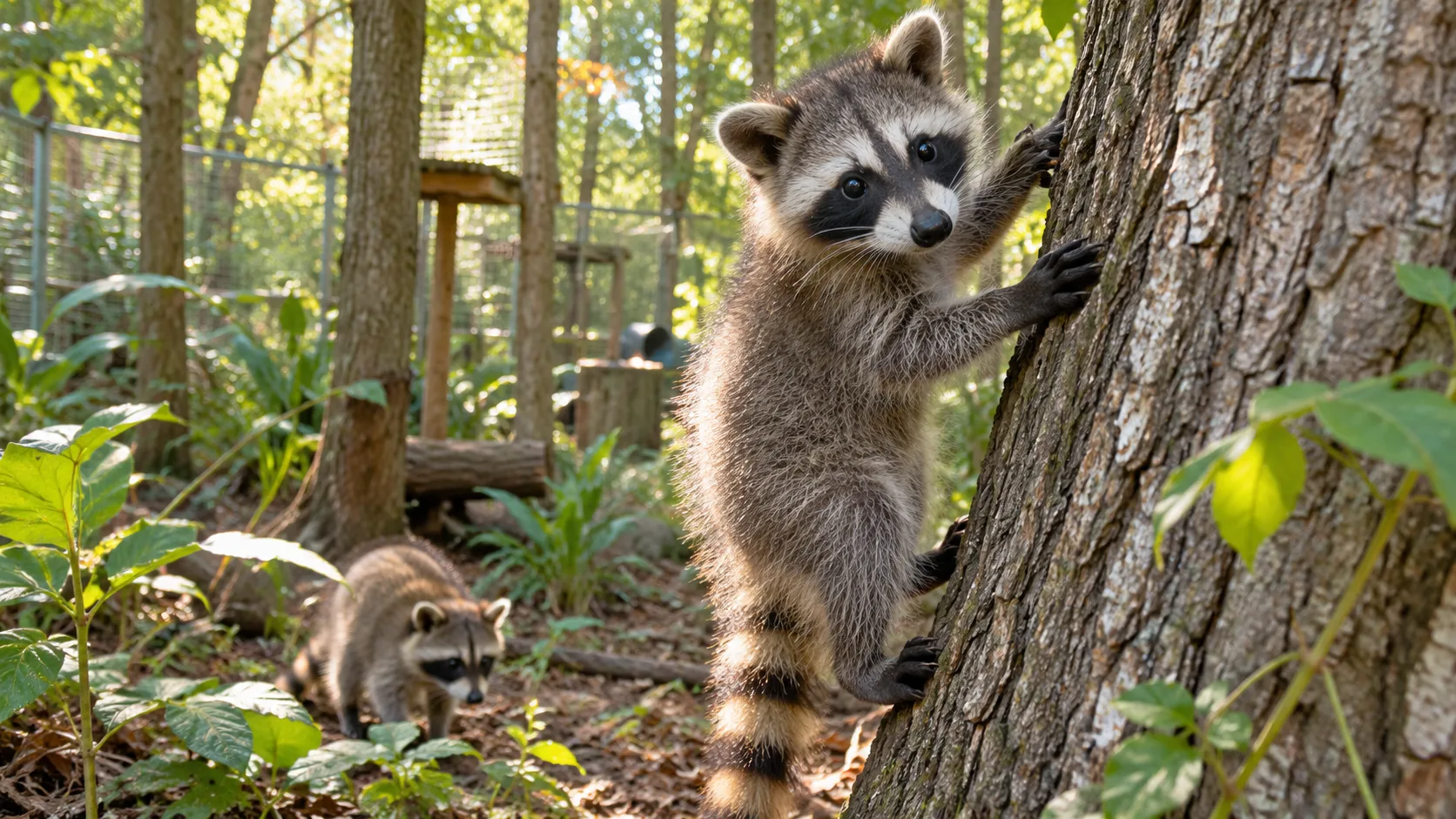
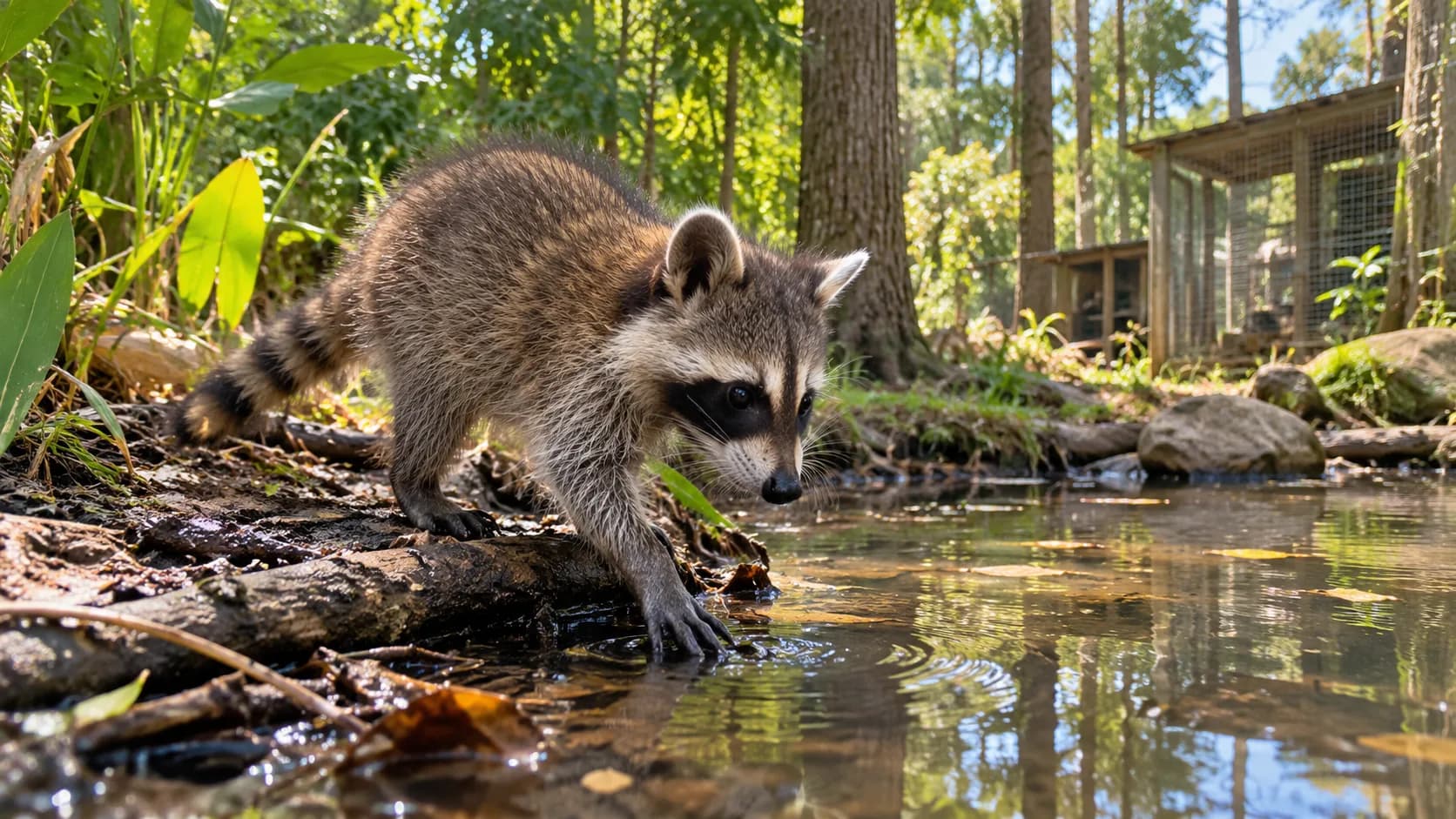
Once the kits are strong enough, the training starts to look much more like the wild world waiting for them. On the rescue's rural 20-acre property, young raccoons are given room to explore. They learn to dig and forage. They are introduced to natural foods and hunting opportunities. They practice climbing trees and moving through the woods, where height can mean safety from danger on the ground.
They also learn to swim.
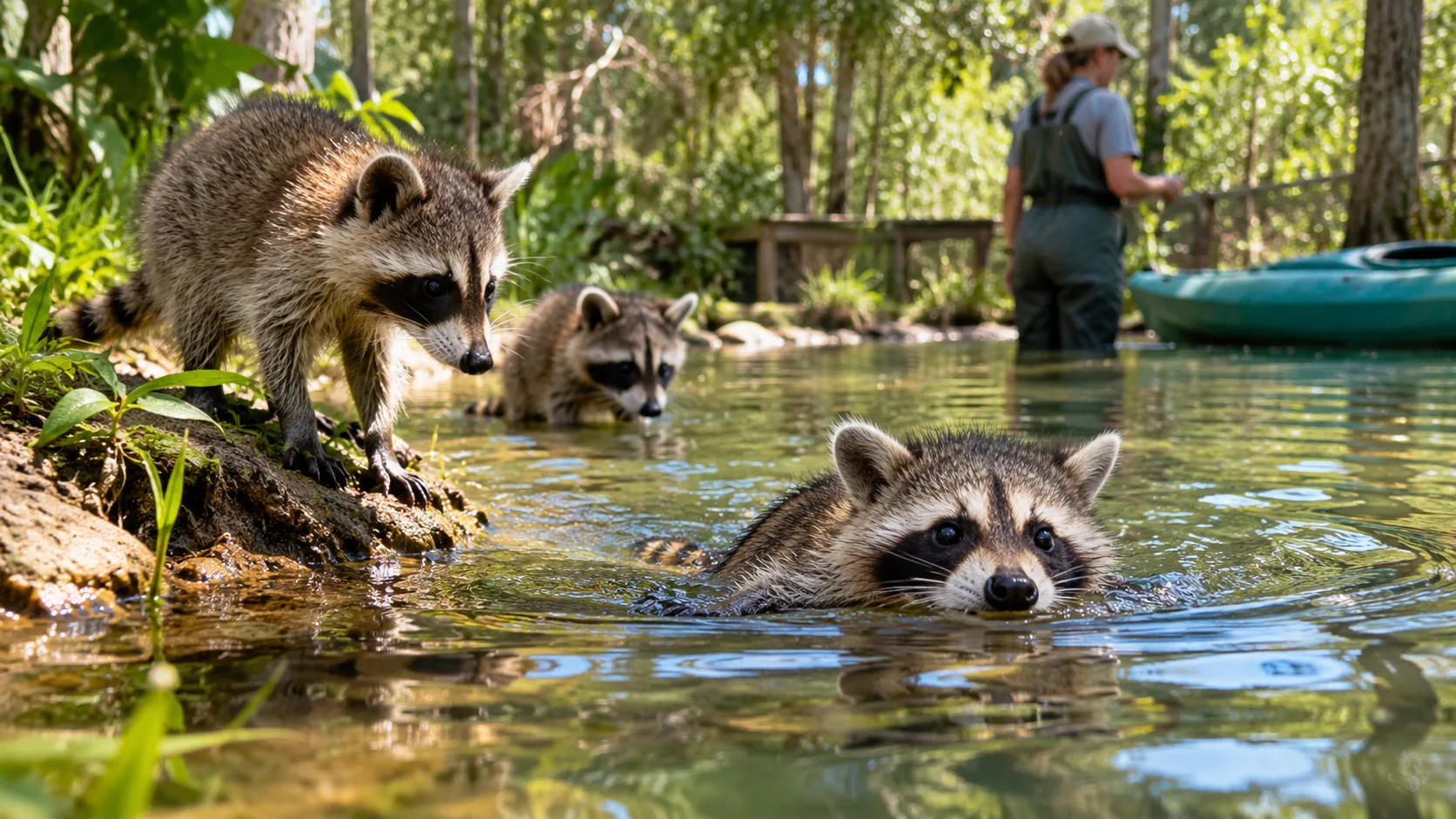
That may sound like a strange classroom subject for a raccoon, but on the Mississippi Gulf Coast, water is part of the landscape and storms are part of life. Rescue staff use the property's pond and even kayaks to encourage the young animals to become comfortable moving through water.
The point is not to turn raccoons into performers. It is to give orphaned animals some of the experiences they would normally pick up while following their mother through the woods.
The Hardest Lesson May Be Us
There is another skill a wild raccoon needs that can be difficult to teach after months of hand-feeding and care: people are not always safe. For one of the final lessons, AP reported that a volunteer who is not one of the raccoons' familiar caregivers uses a cage trap to frighten the animals enough to build caution around traps and unfamiliar humans.
It sounds harsh until you remember the goal. A raccoon that walks confidently toward every person, porch, or baited cage may not stay wild for long.
Wildlife rehabilitation has an odd emotional math to it. The animal must trust a person enough to accept care when it is helpless, and then gradually learn that it should not rely on people once it can survive on its own. That is why the best ending to this story is not a raccoon coming when someone calls its name. It is a raccoon disappearing into the trees.
Yes, There Is a Graduation
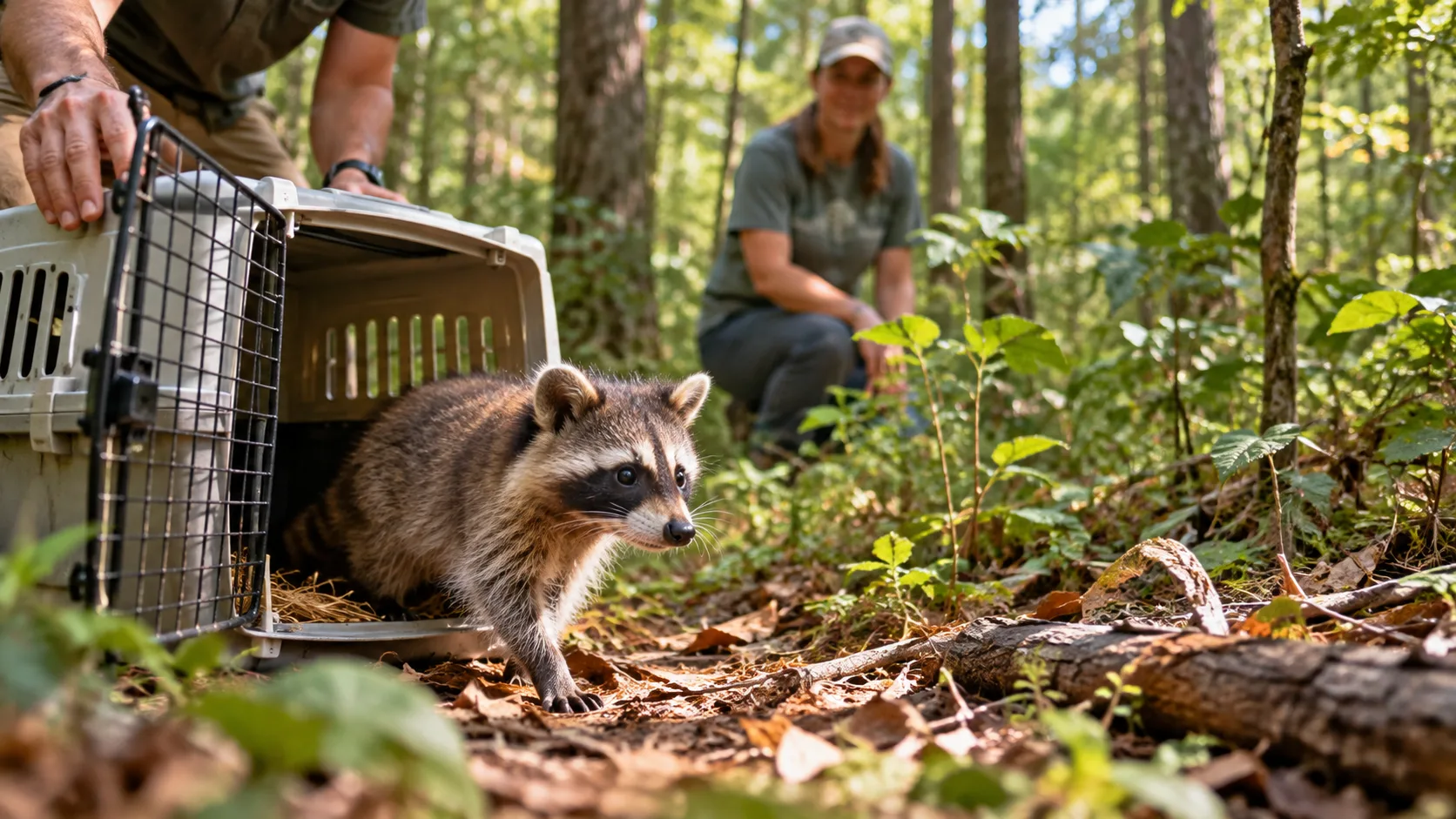
After roughly six months, the kits that are ready to leave get one last very human moment before returning to a much less human life. Woodside Wildlife Rescue holds a graduation ceremony. The names of the young raccoons are called. "Pomp and Circumstance" is played. A reverend blesses the animals' journey, and then they are released into a forested section of the property.
It is sweet, a little funny, and probably harder on the people than it is on the raccoons. Then the graduates head into the woods to do exactly what months of care were designed to make possible: become ordinary wild raccoons.
Saving Something Does Not Always Mean Keeping It
That may be the part of raccoon boot camp worth remembering even if you never meet one of its graduates. People often think of rescue as bringing an animal closer — taking it in, feeding it, protecting it, making it comfortable around us. Wildlife rehabilitation sometimes requires the opposite ending.
The animal is helped so it can leave. It is cared for so it can become independent. The relationship succeeds when the wild thing becomes wild again.
For the kits at Woodside Wildlife Rescue, graduation does not come with a job offer or a diploma on the wall. It comes with trees, water, darkness, distance — and, if everybody did their job, no reason to come back looking for us.
Note: All images in this article are original illustrative editorial images created for this piece. They do not depict Woodside Wildlife Rescue, its staff, or the specific raccoons described in the reporting.