One Small Nut Feeds an Entire Winter: What Ohio’s 2026 Acorn Crop Means for Wildlife
Ohio’s 2026 acorn survey found a strong white-oak crop. Here’s how one small nut shapes deer movement, bird behavior and winter survival.
Walk beneath an oak tree in November and the ground can look untidy—leaves, twigs and acorns scattered everywhere. To wildlife, however, that clutter is a winter pantry.
Ohio’s latest acorn survey found a particularly strong crop among white oaks. Across 22 wildlife areas, 60% of the white oaks checked by the Ohio Department of Natural Resources bore acorns this year, compared with a long-term average of 39%. Red-oak production was more moderate: 45% of the trees surveyed produced acorns, below the long-term average of 55%.
Those percentages measure more than the success of a tree crop. They help explain where deer travel, what squirrels store and how dozens of birds and mammals find energy when other foods become scarce.
White oak first, red oak later
Not all acorns are the same.
Acorns from the white-oak group mature in one growing season and contain less tannin, making them less bitter and generally more appealing to wildlife. They also tend to fall earlier. Deer, wild turkeys, squirrels and other animals often seek them out first.
Red-oak acorns take two growing seasons to mature and contain more tannin. Their bitterness may make them a second choice while sweeter acorns are plentiful, but red oaks can continue dropping acorns later in the season—even into winter. That staggered schedule helps keep food on the forest floor after much of the early fall crop has disappeared.
This year’s Ohio survey therefore tells two connected stories: an abundant early supply from white oaks and a more modest later supply from red oaks.
A food chain hiding in plain sight
The U.S. Forest Service has identified more than 90 wildlife species that use acorns. The list includes white-tailed deer, wild turkeys, squirrels, mice, raccoons, ruffed grouse, quail, blue jays, woodpeckers, tufted titmice and white-breasted nuthatches.
Acorns are especially valuable because they are energy-rich, widely available and slower to decompose than many seasonal foods. They fall when animals are preparing for cold weather and can remain available during winter, when insects, berries and tender vegetation are harder to find.
The size of the crop can ripple through the woods. Abundant acorns have been linked to better body condition, winter survival and reproductive success for some species. A poor crop can force wildlife to travel farther, use field edges or agricultural land more often and compete more heavily for other food.
What people may notice this winter
A statewide average cannot describe every oak stand. Acorn production varies by species, region, weather and even from one tree to the next. One neighborhood may be covered while another, only a few miles away, has very little.
Where white oaks produced heavily, people may see squirrels and blue jays repeatedly carrying acorns away to store them. Deer may spend more time feeding beneath oak canopies and less time crossing open ground in search of another meal. Hunters sometimes find that a strong crop changes familiar deer patterns because the animals do not need to travel as far between bedding and feeding areas.
Families can conduct their own informal survey by looking beneath several oaks instead of judging the crop from a single tree. The rounded leaves of the white-oak group and the pointed, bristle-tipped leaves of the red-oak group provide one clue, while the timing of the acorn drop provides another.
More than one season
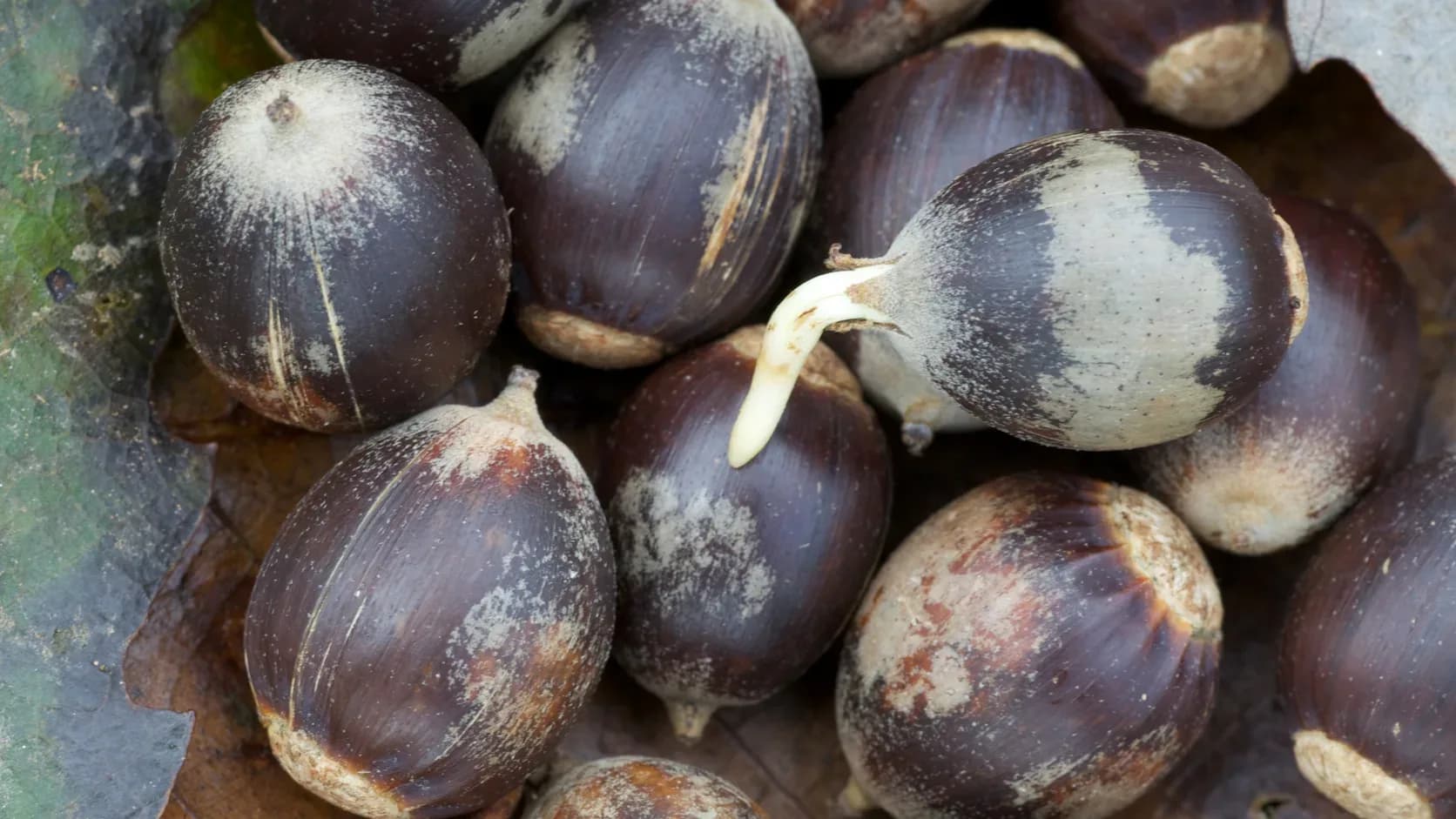
Most of this year’s acorns will be eaten. Others will rot, be damaged by insects or fail to find the conditions needed to grow. A few will be carried away, buried and left behind long enough to germinate.
That is the quiet second half of the story. An acorn can feed an animal this winter, and the one that escapes can become part of the forest that feeds wildlife decades from now.
The 2026 survey is a snapshot of one season in Ohio. Beneath it lies a much older system: oak trees producing food, wildlife moving that food across the landscape and a forest renewing itself one small nut at a time.
Photo: Chinkapin oak acorns, including one beginning to germinate. Ryan Hagerty/USFWS, public domain.