

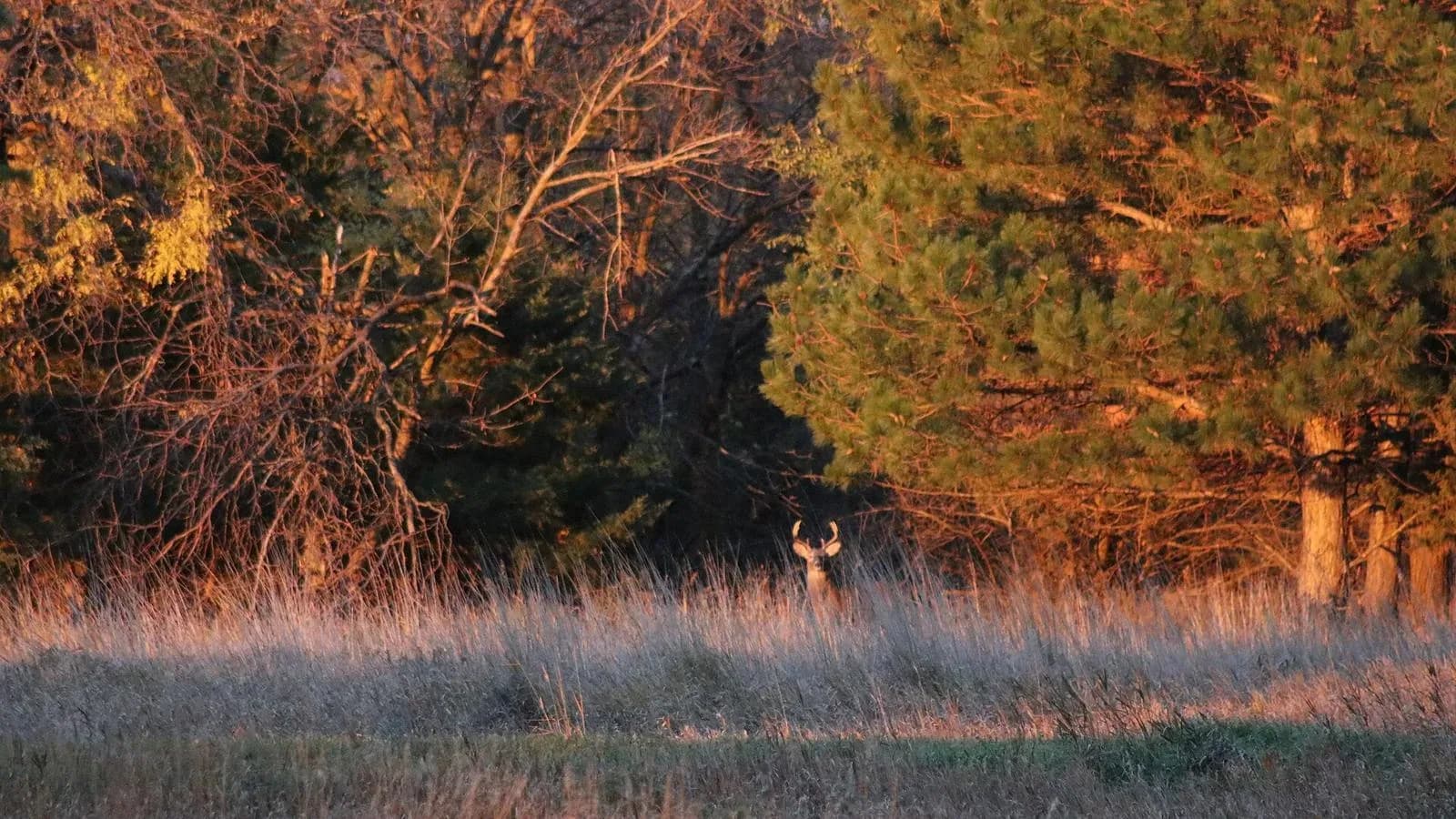
Texas Dropped Its CWD Zones. Here Is What Deer Hunters Still Have to Do This Season
Mandatory chronic wasting disease check stations and zones are gone, but statewide carcass rules still apply, and free voluntary testing is open now. With the general season opening Nov. 7, here is what changed and what did not.
If you have hunted deer in West Texas, the Hill Country or the Panhandle in recent years, you may remember driving a deer to a check station within 48 hours. That rule is gone.
Texas Parks and Wildlife removed its chronic wasting disease containment and surveillance zones, and the 48-hour check station requirement that came with them, starting with the 2025-26 Outdoor Annual, according to a TPWD hunter education bulletin. The current CWD regulations page lists only voluntary check stations.
That does not mean the disease is gone, or that hunters have no duties. The youth-only weekend starts Oct. 30 and the general season opens Nov. 7. Here is what still applies.
What CWD is
Chronic wasting disease is a fatal neurological disease of deer and related species, TPWD says on its CWD page. In Texas it affects white-tailed and mule deer, elk and some exotic deer such as red deer and sika. Symptoms often do not show until just before death, so a healthy-looking deer can still be infected.
Texas found its first case in 2012, in a free-ranging mule deer in West Texas. Its first captive white-tailed case came in 2015. TPWD says hundreds of cases have been confirmed in captive and free-ranging deer since.
Why the zones went away
TPWD had set up nine containment zones and 26 surveillance zones since 2012, according to a January 2025 commission agenda item. At the commission’s urging, staff proposed replacing that system with "science-based mitigation standards" based on distance from known detections, in both wild and captive herds. The proposal also clarified the department’s authority to sample hunter-harvested deer. It added stricter rules for deer breeding facilities, where CWD keeps turning up.
What you still must do: carcass disposal
The statewide carcass disposal rules still apply to every white-tailed and mule deer taken away from the property where it was killed. TPWD prefers that you leave unused parts on the property of harvest. If you move the carcass, unused parts must go to a commercial trash service, go back to the property of harvest, or be buried at least three feet deep and covered with at least three feet of dirt.
You may debone a deer anywhere, as long as the meat stays in whole muscles, not ground, chopped or sliced. Meat from more than one deer must stay in separate bags, and proof of sex and tagging must stay with the meat until it reaches its final destination. Processors and taxidermists must dispose of parts properly.
Exotic species carry their own rule. Texas Animal Health Commission rules require landowners to have adult deaths of exotic CWD-susceptible species such as elk, red deer and sika tested each year, including hunter-harvested animals, until three valid results are reported.
Free testing, if you want it
Testing is now voluntary, and it is free. Results take about two weeks, and you can look them up online with your six-digit sample number, according to TPWD’s hunter page. Hunters and landowners can also request sampling kits from TPWD.
To submit a head, put it in a plastic trash bag, keep it cool and leave two or three vertebrae below the skull so the right tissue is there, TPWD advises. A CWD receipt serves as proof of sex, so you can leave the head at the station. Voluntary stations and drop boxes are open in counties including Kimble, Sutton, Val Verde, Gillespie and Hunt, and in the Panhandle and Trans-Pecos. In Kimble County, the drop boxes at Segovia and South Llano River State Park are open around the clock through Feb. 28.
Eat with care
TPWD’s precautions are simple. Never eat meat from an animal that looks sick. Never eat the brain, eyes, spinal cord, spleen or lymph nodes of a CWD-susceptible animal. The agency notes that the CDC reports no strong evidence CWD can infect people, but the CDC still recommends that hunters consider testing deer taken where CWD is known to exist before eating them.
A hunter’s part
Fewer rules put more of the job on the hunter. That is how it should be. Texas has an estimated 5.64 million deer, and keeping that herd healthy depends far more on the people in the field than on any check station. Dispose of carcasses right and test when you can, especially on a lease near a past detection or on public land. Report a sick deer to TPWD. Good stewardship is not a regulation. It is a duty owed to the land, the herd and the next generation of hunters.
More Outdoors Stories
 Today
Some Texas State Parks Close for Public Hunts This Fall. Check the Dates Before You Go
 Yesterday
Texas Flounder Fishing Closes Nov. 1. Here Is What to Know Before the Fall Run Shuts Down
 Yesterday