Red Tide Is Back on the Texas Coast for the First Time in Years. Here Is What Anglers and Beachgoers Should Know
Red tide has lingered along the Texas coast since September, closing several shellfish areas. Here is what is safe to eat, how to avoid the cough and where to check conditions.
Fall is prime time on the Texas coast. The summer crowds thin out and the weather finally cooperates. This year, though, anglers and beachgoers have had a visitor to watch for: red tide.
Texas had not seen a substantial red tide bloom since 2015 until this September, Liana Garcia of the Texas Parks and Wildlife Department’s Coastal Fisheries Division told KEDT in an interview that aired Oct. 16.
Where it stands now
The latest water samples, taken Oct. 11 through Oct. 18, detected red tide along the coast in Calhoun and Nueces counties at levels unlikely to cause respiratory irritation, according to NOAA’s National Centers for Coastal Ocean Science.
That is an improvement from earlier in the season. TPWD began receiving reports of a bloom off Galveston on Sept. 8, and by late September fish kills and breathing complaints had shifted to East Matagorda Beach and the mouth of the Colorado River, the Bay City Tribune reported. In early October, NOAA said levels capable of causing respiratory irritation had been detected in Brazoria, Calhoun, Matagorda and Nueces counties.
TPWD’s current status page reported on Oct. 4 that the monitoring station in Port Aransas showed red tide cell concentrations rising above background levels.
Oysters: check before you harvest
This is the part that matters most for your health. The Texas Department of State Health Services lists several shellfish harvest areas as closed because of elevated Karenia counts, according to its harvest area status table dated Oct. 15. Those include areas TX 14, 15, 16, 18, 29 and 30, where both public and private oyster areas are closed for that reason.
Oysters, clams, mussels and other shellfish can build up red tide toxins and make people seriously ill with neurotoxic shellfish poisoning, TPWD says in its red tide FAQ. Toxins can stay in oysters for weeks to months after a bloom appears to be over. Oysters bought from a restaurant or certified dealer should not have red tide toxins because of state monitoring.
The status of harvest areas can change daily, so check the DSHS page before you go.
Can I eat the fish I catch?
Usually, yes. According to TPWD, it is generally okay to eat fish, crabs and shrimp during a red tide because the toxin is not absorbed into the fleshy tissue. That advice assumes you eat only the fillet or muscle. Never eat fish found sick or dead, red tide or not.
The cough, and who should be careful
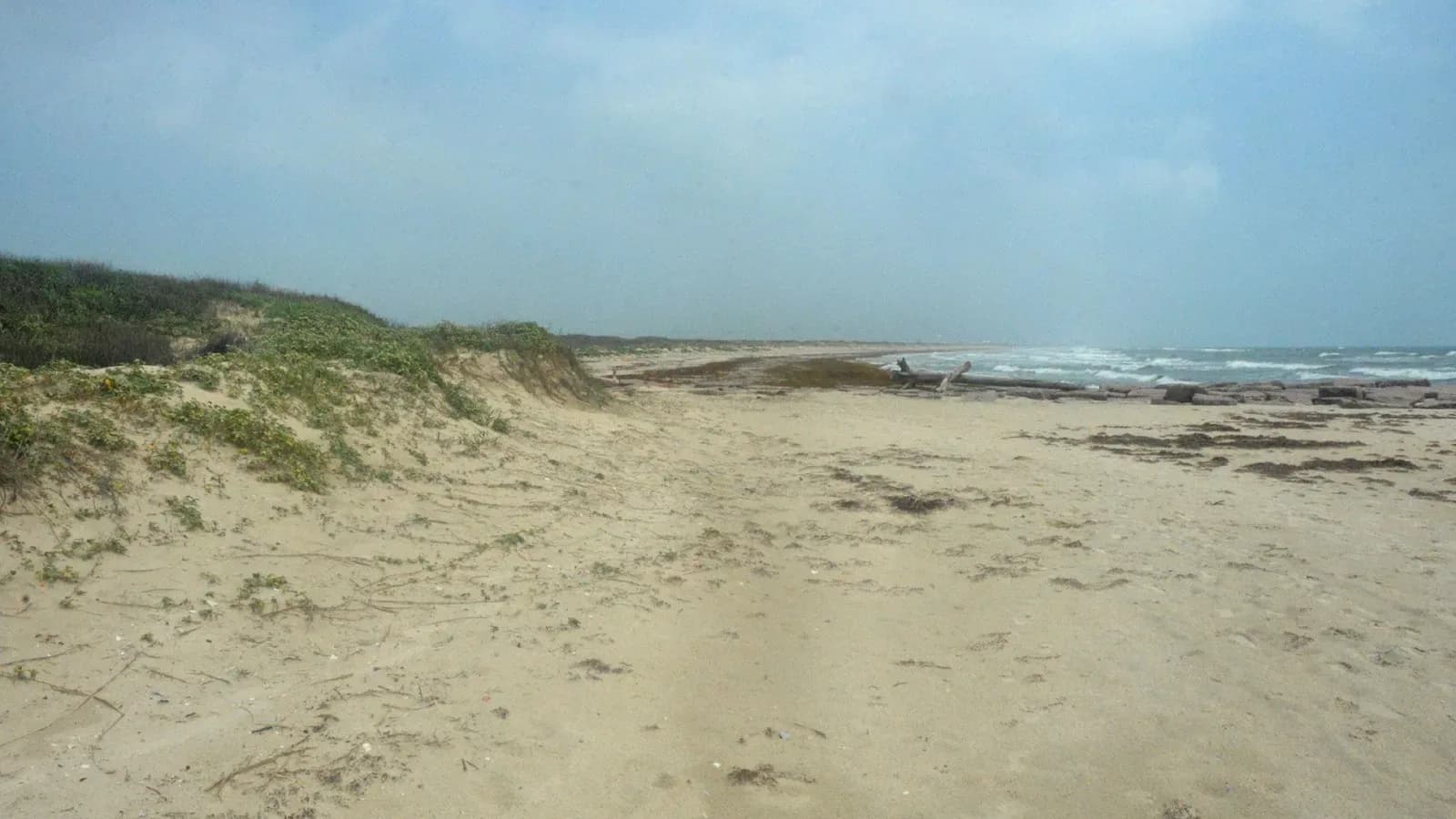
Red tide is caused by a microscopic algae, Karenia brevis, that produces toxins called brevetoxins. When waves break, cells near the surface can rupture and release toxins into sea spray, and onshore winds carry it toward the beach, causing coughing, sneezing and irritation of the eyes, nose and throat, the Bay City Tribune reported, citing NOAA. Offshore winds generally reduce the risk.
TPWD’s red tide page cites the Centers for Disease Control and Prevention: anecdotal evidence suggests that people who swim among or breathe brevetoxins may experience eye, nose and throat irritation, coughing, wheezing and shortness of breath, and people with existing respiratory illness, such as asthma, may have those symptoms more severely. If that describes you or your child, take extra care.
Conditions change by the hour. TPWD says the same stretch of beach can be irritating in the morning and fine by afternoon. Its best advice: if you feel the effects, move to another area. Blooms are patchy, and on any given day there are generally miles of good beach and clean water.
How to stay informed
Check TPWD’s red tide status page, NOAA’s Texas satellite imagery and the DSHS shellfish harvest map before you head out. To report a bloom, TPWD lists (800) 792-1112 or (512) 389-4800.
TPWD also says red tide is a natural event and that the Texas coast has always recovered. A wise fisherman checks the water before he wets a line. Heading inland instead? Dock Line has the outlook for deer season and duck hunters.