A Plumbing Failure Flooded the Sheriff's Complex. Who Pays the First $2 Million?
Water damage at the Montgomery County Sheriff's Office Criminal Justice Center may approach $4 million. The county expects to absorb the first $2 million through its self-insurance program while officials review whether a contractor should reimburse taxpayers.
Water damage at the Montgomery County Sheriff's Office Criminal Justice Center may approach $4 million. The county expects to absorb the first $2 million through its self-insurance program while officials review whether a contractor should reimburse taxpayers.
A water-line failure at the Montgomery County Sheriff's Office Criminal Justice Center may become one of the county's largest property claims of the year. Early estimates are in the low $4 million range. Before the Texas Association of Counties' coverage begins paying, Montgomery County expects to absorb the first $2 million through its self-insurance program.
That is the immediate answer to who pays first. The longer-term answer is not settled.
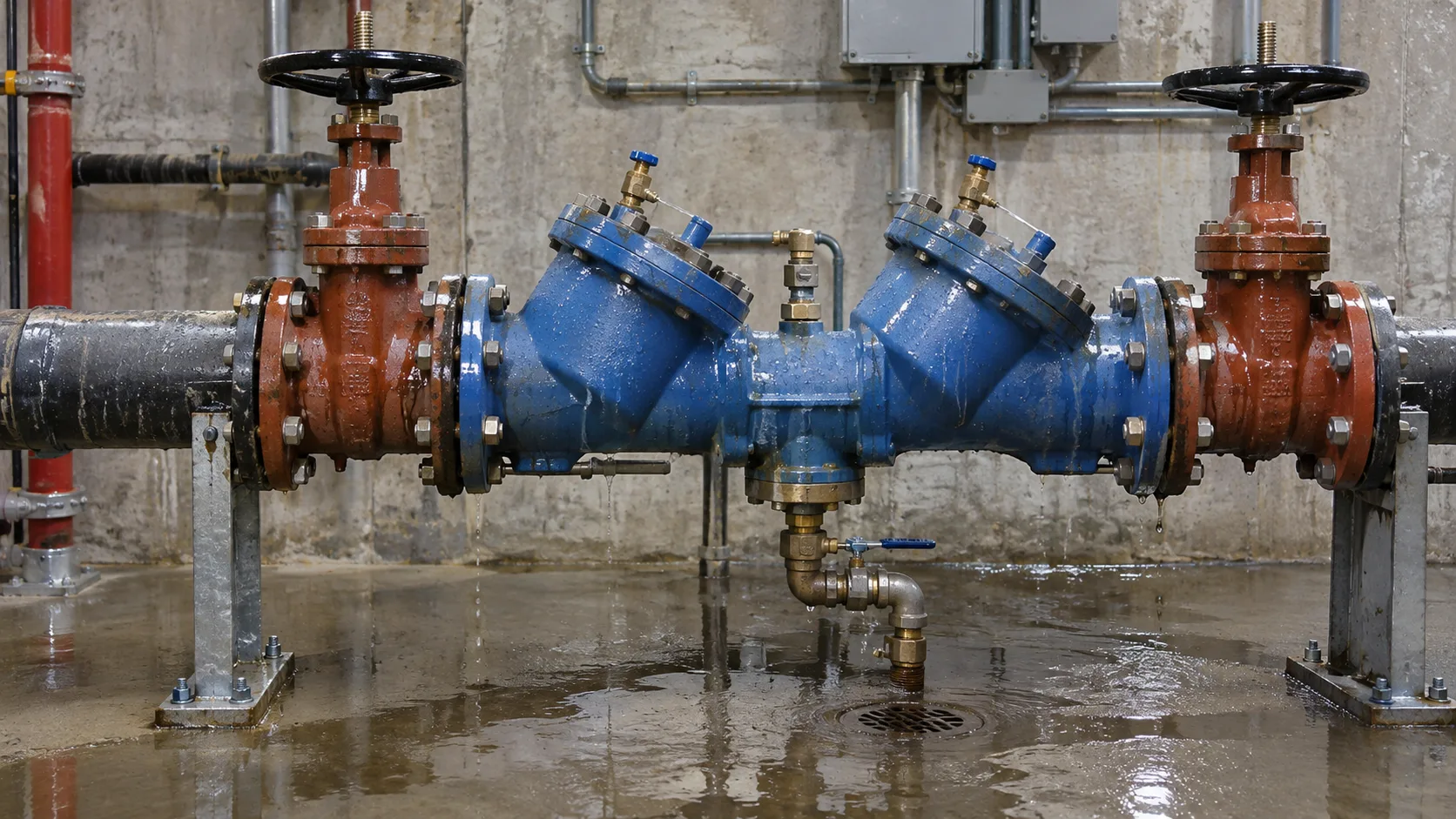
County officials say a contractor-installed backflow preventer is the suspected source of the Oct. 17 flooding. The County Attorney's Office and risk management are reviewing whether the county can recover some or all of its cost from the contractor. No final determination of responsibility was announced at the Nov. 5 Commissioners Court meeting.
What Happened Oct. 17
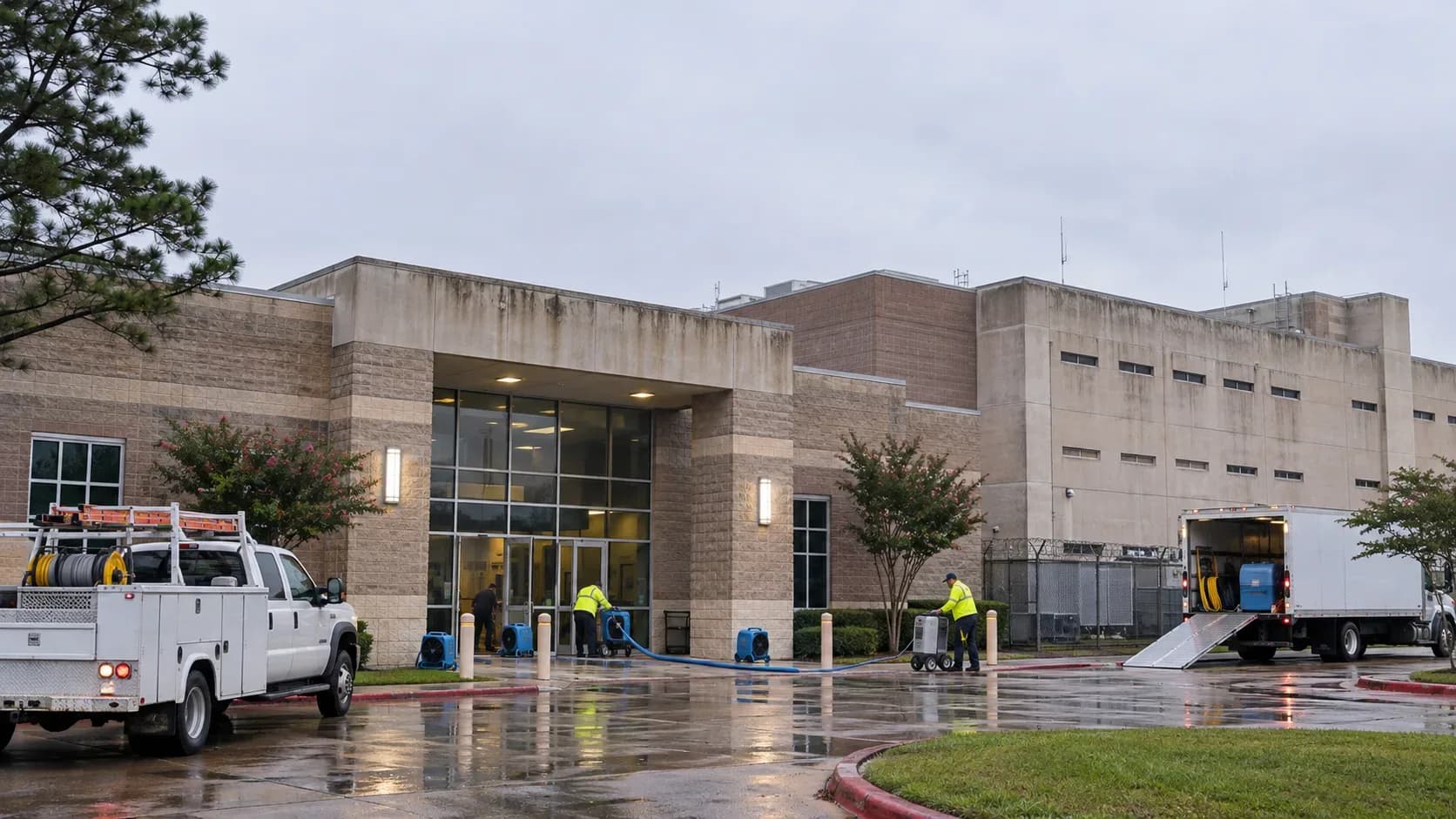
The incident flooded the bottom floor of the main Criminal Justice Complex and part of the jail visitation area, according to a Sheriff's Office statement reported after the event. Visitation was canceled that day because of the broken water line. The jail remained open and fully operational. Power was restored, and the affected jail area was cleared.
Many Sheriff's Office employees were displaced from their normal workspaces and continued working from storage rooms and mobile command vehicles while cleanup and repairs moved forward. The Sheriff's Office credited information-technology employees, building maintenance teams, emergency-management personnel and other crews with keeping operations running.
The county's Nov. 5 discussion added the first public look at the financial scale. Commissioners approved risk management's request to process claims 9332 and 9337, both connected to the Oct. 17 water damage.
What the First $2 Million Means
Montgomery County carries a $2 million self-insured retention. In plain language, the county pays covered losses up to that amount before the next layer of coverage through the Texas Association of Counties applies. It works much like a very large deductible, although the legal and insurance details are not identical to a household policy.
Risk management told commissioners the Sheriff's Office loss is expected to reach that full retention. The county budgeted $4,937,000 for all claims during the current fiscal year, not just this incident. A $2 million loss would equal about 40 percent of that annual claims allocation.
That comparison shows why commissioners want regular updates, but it does not prove the county will need a budget amendment. The final damage total, timing of payments, insurance determinations and any recovery from another party are still being worked out.
Why the Total May Approach $4 Million

Water damage inside a public-safety complex can extend far beyond wet flooring and drywall. Cleanup may involve drying and environmental work, electrical systems, communications equipment, computer infrastructure, office contents and the temporary relocation of employees. County officials described the current estimate as being in the low $4 million range. It remains an early estimate, not a final bill.
The county has not publicly released a complete damage inventory, a final repair schedule or a breakdown showing how much of the claim belongs to building repairs, technology, equipment or temporary operations. That distinction matters. A preliminary insurance estimate can change as damaged systems are opened, tested, repaired or replaced.
Can the County Recover the Money?
Possibly, but that question is under review. During the Commissioners Court discussion, officials identified a contractor-installed backflow preventer failure as the suspected cause. Risk management and the County Attorney's Office are examining potential subrogation — the process of seeking reimbursement from a party that may be legally responsible for a covered loss. If that effort succeeds, recovered money could reduce the county's ultimate cost.
The word "suspected" is important. A failed component does not by itself establish who is legally responsible. Investigators must determine whether the problem involved the device, installation, maintenance, another part of the system or some combination of factors. Contract terms, warranties and insurance policies may also affect any recovery.
The contractor has not been publicly identified in the meeting information reviewed by Dock Line Magazine, and the county did not announce a finding of liability.
What Residents Should Watch Next

The most useful answers will come as the county moves from emergency response to a documented claim. Residents should watch for:
A final or updated damage estimate
A detailed repair and replacement timeline
Confirmation of how much the county pays from its self-insurance fund
A coverage decision from the Texas Association of Counties
The result of the County Attorney's contractor review
Any reimbursement, settlement or lawsuit connected to the failure
Any request to amend the county budget
The Sheriff's Office appears to have kept its essential work moving through a serious disruption. The financial work is only beginning. The public record supports two conclusions: the loss may approach $4 million, and Montgomery County expects to be responsible for the first $2 million unless later recovery shifts some of that cost elsewhere.