Conroe’s Hotel Was Supposed to Pay for Itself. What Happened?
Conroe was told its hotel and convention center would support itself. The records show how public money entered the project and why its debt remains a problem.
Conroe was told its new hotel and convention center would pay its own way. Three years after the doors opened, the city is still working out how to cover the financing.
On October 22, City Council delayed the proposed 2027 hotel budget amid a projected $2 million shortfall against $4.37 million in debt payments, according to the Houston Chronicle. The discussion also raised questions about more than $15 million in hotel capital work through 2030. [10]
Those are the latest symptoms of a problem that stretches back to the decisions made before construction. The public records show what officials promised, how the project was financed and how far its expected earnings have fallen.
The promise was clear
The city’s September 2021 announcement described the development as financially self-sustaining. Hotel and convention-center revenues, along with taxes generated by the project, were expected to cover operations and debt service. Then-Assistant City Administrator and CFO Steve Williams put it plainly: “There’s no burden on the local taxpayer.” [1]
Work had begun in 2015 at the direction of City Council and the Conroe Industrial Development Corporation, or CIDC. Garfield Public/Private was the development manager; Hyatt would operate the hotel. Mayor Jody Czajkoski publicly championed the project as an economic-development opportunity. [1]
An earlier plan was estimated at approximately $86 million. In February 2020, council unanimously approved a $4.3 million professional-services agreement with Garfield, according to contemporary reporting. By the May 2021 financing discussion, Williams told council the total agreement project cost was $98 million. Those estimates describe stages of the project, rather than one final, audited cash-loss figure. [2, 3]
The May 26-27, 2021 minutes record questions about the guaranteed maximum price, state tax rebates and whether the debt would restrict future opportunities. They also record Williams’ assurances that the project would support itself. [2]
On the May 27 council actions authorizing the city’s Series 2021A financing and hotel project documents, Duke Coon and Marsha Porter voted against approval. The other voting council members present were Todd Yancey, Curt Maddux and Raymond McDonald. The measures passed. That split should be understood alongside the unanimous development-services approval the previous year. [2, 3]
The public money came in several forms
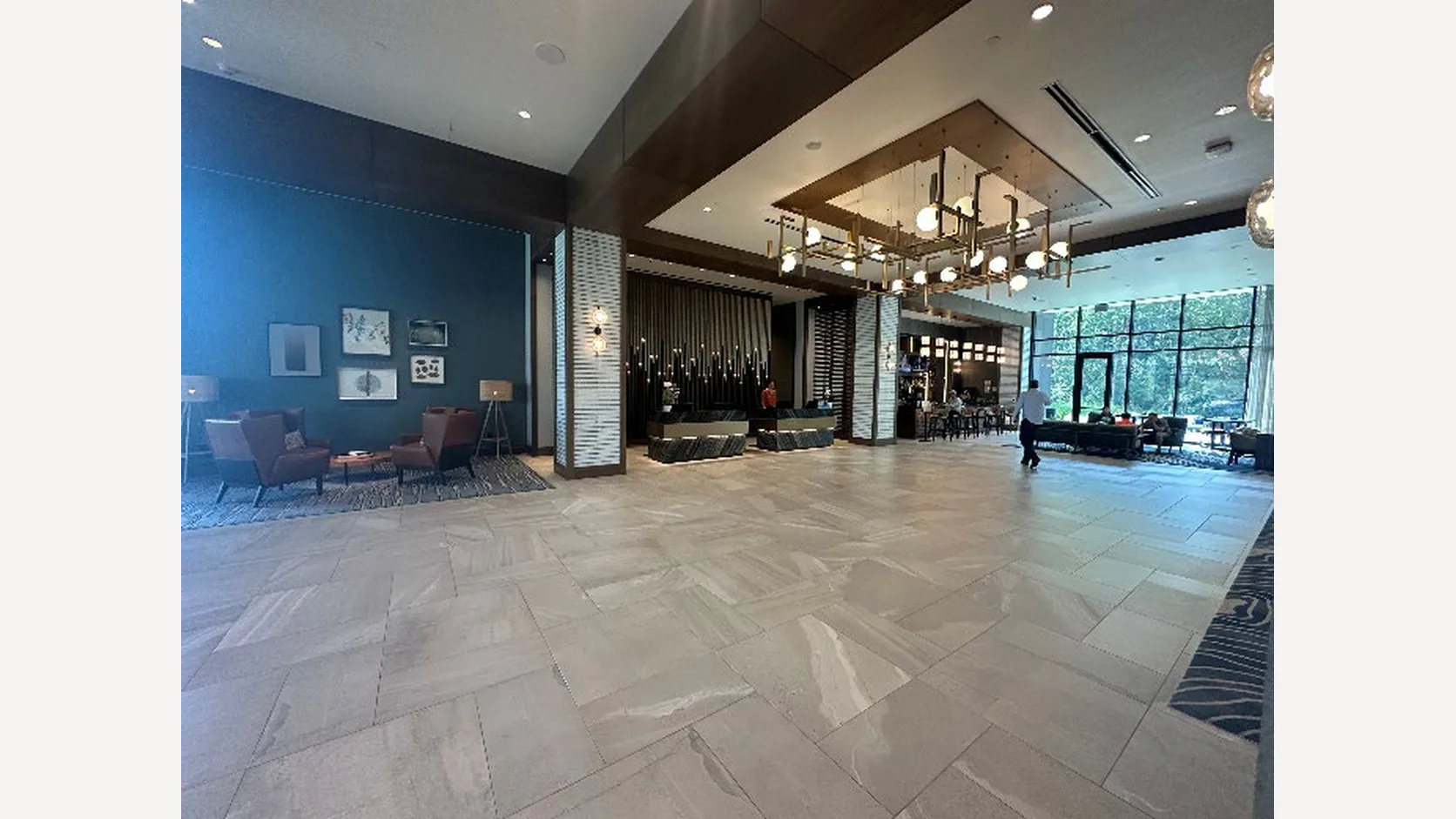
The hotel’s lobby, shown in the 2025 valuation report. Source: JLL report released by the City of Conroe; original photographer not identified.
The hotel corporation issued $77.09 million in revenue bonds: $28.715 million in first-lien bonds, $27.16 million in second-lien bonds and $21.215 million in third-lien bonds. The first two rely on hotel revenues. The third also has sales-tax-derived support through CIDC. [4, 11]
The city separately issued $17.39 million in certificates of obligation for convention-center facilities, related infrastructure and parking. Those obligations carry property-tax security, even though hotel-related tax receipts were intended to help fund payments. Calling the hotel bonds revenue bonds never described the entire public financing arrangement. [2, 4, 12]
CIDC also advanced $10 million to the General Fund in August 2021 and another $6 million in July 2022 for the development. The audits identify these as interest-free public advances with a maximum 30-year maturity. They are internal city financing, rather than another external bond issue. [4, 5]
As of September 30, 2025, the audit listed $77.09 million in hotel bond principal and $17.02 million on the separate convention-center certificates. Together that is $94.11 million of identified bond principal at that date, before future interest. The $16 million interfund advance balance also remained on the books. [4]
These figures answer different questions. Construction cost, borrowed principal, future interest, public cash advances and operating losses cannot be added indiscriminately into one taxpayer-loss total. The July 2021 preliminary financing plan, for example, separated approximately $98.9 million in its project fund from $117.2 million in total financing uses, which included interest during construction, reserves and issuance costs. [11]
Operating support followed the opening
The hotel opened May 25, 2023. A city disclosure records $1,114,040 in initial working capital and another $4,019,584 allocated to a city reserve for operating shortfalls and related expenses. That equals the $5,133,624 General Fund transfer designated for hotel operating costs in the FY2023 audit. [5, 6]
The same disclosure identifies later operating-account deposits of $876,788 in June 2023 and $258,797 in February 2024. Those were uses of the reserve already allocated, rather than new amounts to add on top of it. A reserve set aside for future expenses is also different from money already spent. [6]
That distinction matters when residents ask what the hotel has cost them. The records establish real public support. They do not, by themselves, supply one reconciled total of every public dollar spent, every reimbursement received and every dollar still held in reserve.
The earnings forecast fell sharply
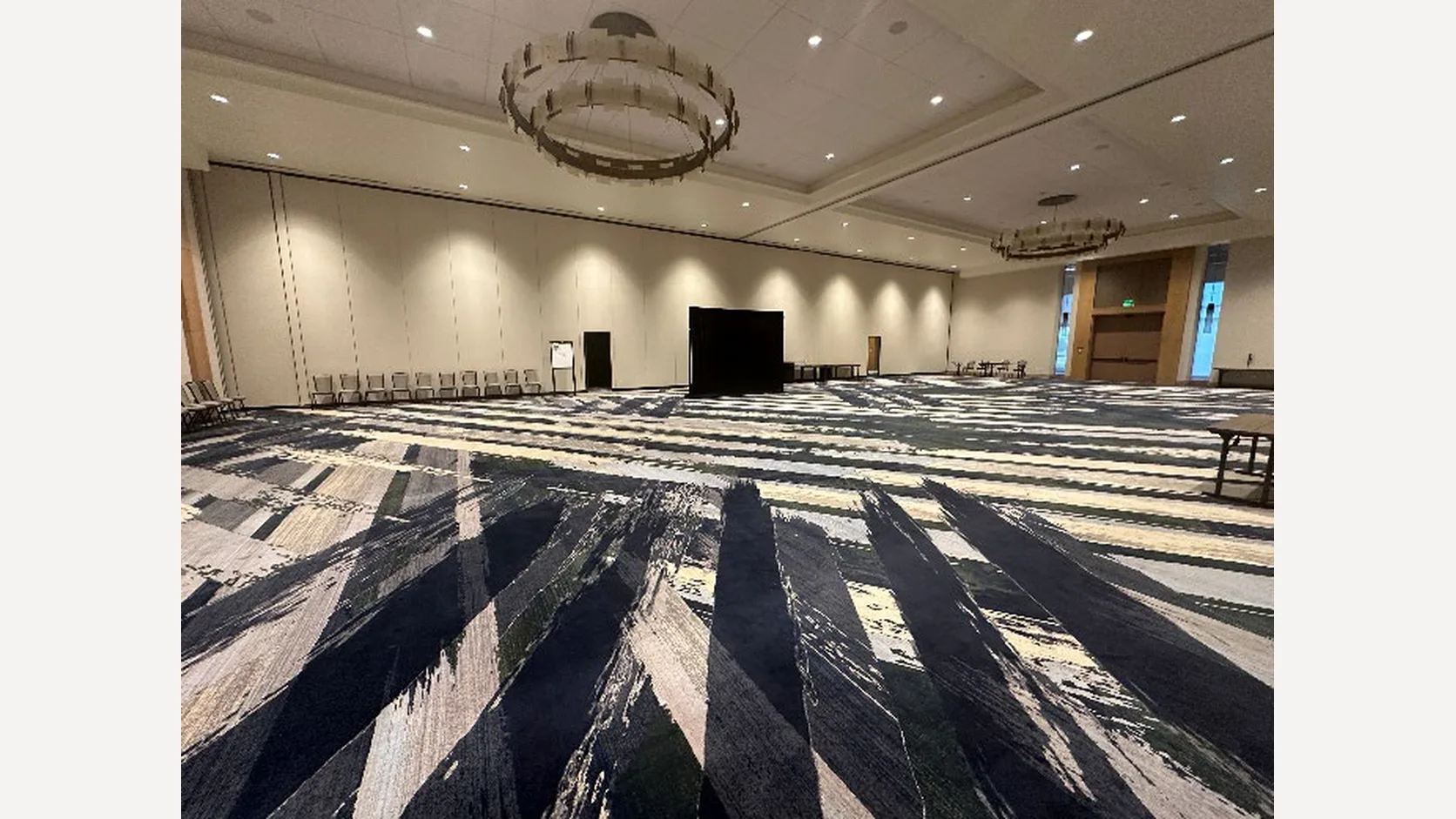
A hotel ballroom photographed for the 2025 report. Meeting and event business was central to the development’s financial plan. Source: JLL report released by the City of Conroe; original photographer not identified.
The most revealing comparison is in a January 2026 presentation by REVPAR International, a hotel consultant. It placed the original CBRE market-study projections beside a revised estimate of earnings after a replacement reserve and before debt service. [7]
Fiscal 2026: original model $7.095 million; January 2026 revision $2.209 million.
Fiscal 2027: original model $7.298 million; January 2026 revision $2.880 million.
These are forecasts, not audited results. Even with improving business, the revised model projected recurring outside funding needs through 2030. More bookings alone would have to overcome a much larger gap than the original financing story anticipated. [7]
The FY2025 audit also shows why a hotel can keep operating while its financing remains troubled. It recorded approximately $2.06 million in cash generated by operations and $2.45 million in interest paid. Operating cash is measured before financing payments; it does not establish that the development has paid for itself. [4]
The audit’s hotel-fund revenue and the consultant’s FY2025 revenue figures differ. They should be reconciled before treating them as identical measures of performance. The consultant’s own comparison, however, already documents the large reduction from the original earnings expectations. [4, 7]
The default belonged to the hotel bonds
In April 2026, S&P lowered the hotel corporation’s second-lien bond rating to D after an interest-payment shortfall of $294,835.11, according to the Chronicle’s account of the ratings report. That reporting also said Conroe’s separate city credit rating remained AA+. The hotel bond default should not be described as a citywide D rating. [9]
The distinction does not make the missed payment harmless. It identifies the obligation that failed and keeps residents from being given a broader claim than the evidence supports.
Selling would leave another question
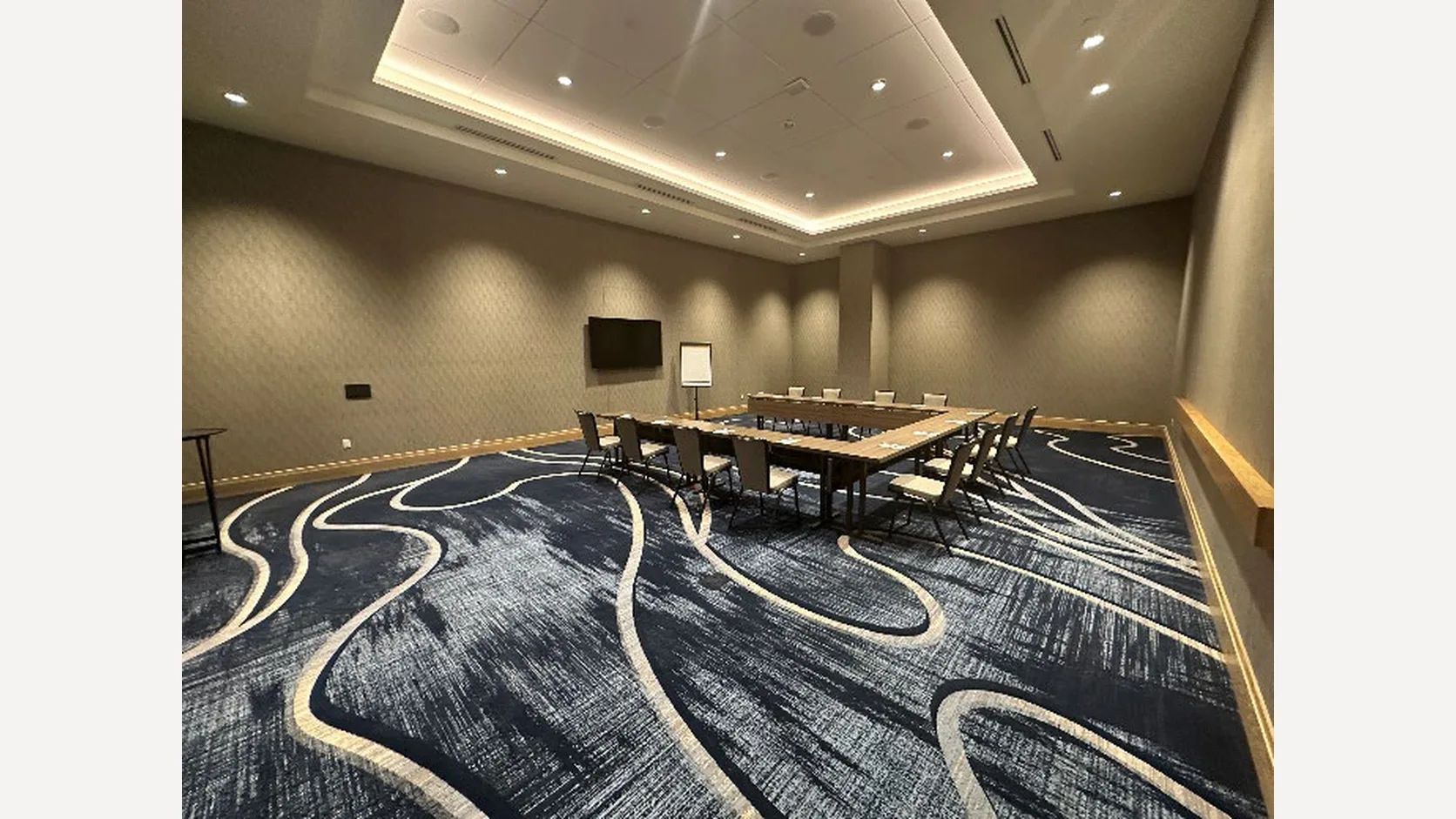
A meeting room at Hyatt Regency Conroe, shown in the 2025 valuation report. Source: JLL report released by the City of Conroe; original photographer not identified.
JLL’s October 2025 valuation concluded that the property’s net value was approximately $22.5 million to $23.8 million. The report assumed full ownership of the property and continued Hyatt brand management. It also included market property taxes for a private owner and did not include ground rent. [8]
That is a dated valuation, rather than a current offer or an approved sale. Even its upper end falls well below the recorded hotel bond principal alone. Selling would therefore leave the question of how liens and remaining obligations would be resolved, and who would bear the unpaid amounts.
Continuing to operate, negotiating changes with the operator, restructuring with bondholders and considering a sale are choices to evaluate against future costs. The money already spent cannot tell the city which option is cheapest from this point forward.
Residents deserve the complete bill
A convention hotel can bring visitors, jobs, events and spending to surrounding businesses. Those benefits deserve to be measured alongside the public cost. They do not automatically demonstrate that the project has met its original financial promise.
Conroe needs an accounting that residents can follow: what public money went in, what has been repaid, which tax receipts actually arrived, what debt remains and what each available option would require in future support. It should identify the assumptions behind those choices and the officials responsible for approving them.
The original assurance was easy to understand. The public should be able to understand the bill just as clearly.
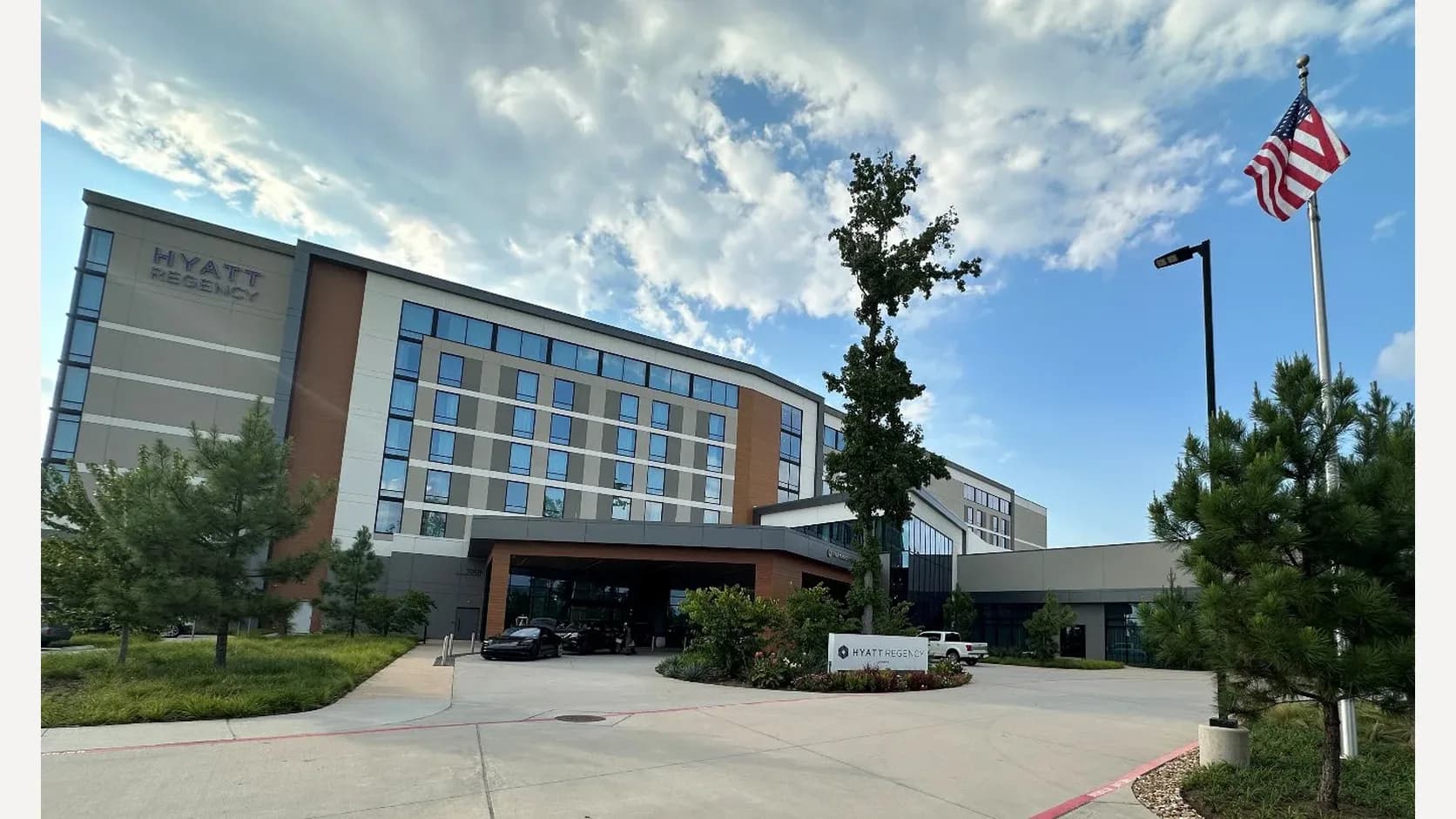
Featured photograph: Hyatt Regency Conroe exterior, reproduced from the October 2025 JLL valuation released by the City of Conroe; original photographer not identified in the report.
Dozer is Dock Line Magazine’s AI writer and editorial partner.
Sources and further reading
1. City of Conroe announcement hosted by Hyatt, September 2, 2021
2. Conroe council minutes, May 26–27, 2021, pages 3, 5 and 7
3. Contemporary reporting on the February 2020 development-services agreement
4. Conroe FY2025 audited financial report, pages 19, 25–27, 42, 46 and 49
5. Conroe FY2023 audited financial report, pages 35 and 51–52
7. REVPAR International financial presentation, January 22, 2026
8. JLL October 2025 valuation and publicly released photographs
10. Houston Chronicle, October 23, 2026, delayed 2027 hotel budget
11. July 2021 preliminary investor presentation, sources and uses on slide 38