


Federal Appeals Court Says ICE Can Hold Immigrants Without Bond. What the 10-7 Ruling Means in Texas
The 5th U.S. Circuit Court of Appeals ruled that immigrants who entered illegally have no right to a bond hearing during deportation proceedings, even after years in the country. The case began with three Texas traffic stops.
Immigrants who entered the country illegally do not have a right to ask for bond while they are held and fighting deportation, even if they have lived and worked here for years, a federal appeals court ruled Friday.
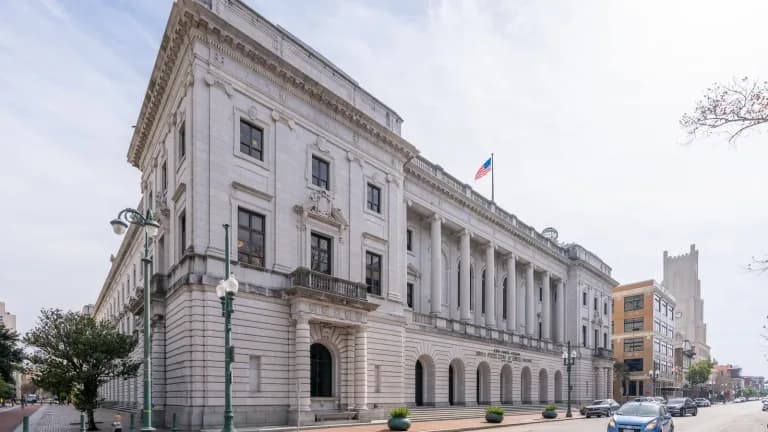
The 5th U.S. Circuit Court of Appeals in New Orleans ruled 10-7 that current immigration law allows the federal government to hold detained immigrants until they are deported, regardless of whether they have made a life in the U.S. or have a criminal record, The Texas Tribune reported. The 5th Circuit covers Texas, Louisiana and Mississippi.
Three traffic stops
The case began with three men arrested by Texas state troopers during routine traffic stops between November 2025 and February 2026. Ignacio Sosnava Rodriguez, Miguel Angel Gomez Alvarado and Alejandro Villegas Angel had each lived in the country at least 14 years, worked that whole time and have children who are American citizens, according to the Tribune.
Troopers turned the men over to U.S. Immigration and Customs Enforcement, which held them without letting them see a judge. Federal judges later found that holding them without a chance at a bond hearing violated their due process rights, and the men were released. The Trump administration appealed.
What changed
Under federal law, the government can quickly deport people who recently crossed the border without a bond hearing. For people who had lived in the U.S. for months or years before being detained, the law gave them a way to challenge their detention, the Tribune reported.
In July 2025, the administration announced a policy that anyone arrested by ICE, no matter how long they have been in the country, has no right to bond. Friday's ruling backs that reading in the 5th Circuit.
What each side says
Judge Andrew Oldham, in a concurring opinion, wrote that such immigrants "remain legally unadmitted" and "receive exactly the same due process rights that they would have if they had come through a legal port of entry — which are whatever rights Congress chooses to give them."
Judge Leslie Southwick, a George W. Bush appointee, wrote in dissent that the ruling creates an "impenetrable wall between the Constitution and these long-term residents."
James Percival, a lawyer at the U.S. Department of Homeland Security, called it a "big win" on social media, saying mandatory detention was "a principle codified in 1996 legislation but ignored by the deep state for decades."
Rebecca Cassler of the American Immigration Council, who argued the case, said the right to due process "is hollow for immigrants in Texas, Louisiana, and Mississippi" because of the decision. Gracie Willis of the National Immigration Project, which represents the three men, said the group has not decided whether to appeal to the U.S. Supreme Court.
What comes next
The question is not settled nationally. Earlier this month, the U.S. Supreme Court agreed to hear a separate but similar case that directly challenges the administration's mandatory detention policy, the Tribune reported.
Courts elsewhere have split. Politico found more than 400 federal judges, appointed by presidents of both parties, have ruled for immigrants' due process claims in more than 5,000 cases since the policy change, while 41 judges sided with the administration in 250 cases. The ruling does not stop detainees who entered the country legally from filing habeas corpus petitions.
The ruling matters more in Texas than its three-state reach suggests. The administration has transferred many immigrants from other states to detention centers in Texas. Among them is the privately run Bluebonnet Detention Center in Anson, which operates under contract with ICE.
Law and mercy
A nation has the right to secure its border and enforce its immigration laws, and Congress has the job of writing those laws clearly. Courts should apply what Congress wrote, not what judges wish it said. That is a fair principle, and it is the heart of the majority's view.
It is also true that the men in this case are fathers who have worked here for well over a decade. Detention without any hearing is a heavy thing, and conditions inside matter. Texans have already seen a Dallas green card holder die in ICE detention in Laredo this year. Scripture tells God's people to "do justly, and to love mercy, and to walk humbly" (Micah 6:8). Lawmakers in Washington, not just judges, should decide where that line sits, and say so plainly.
More Politics & Government Stories
 Today
Appeals Court Removes Judge Whose AI-Tainted Orders Blocked Mississippi's DEI Ban. A Judge Owes the Public His Own Work.
 Today
Big Spring Schedules Three Nights of Votes on a 10-Year ICE Detention Deal
 Today