

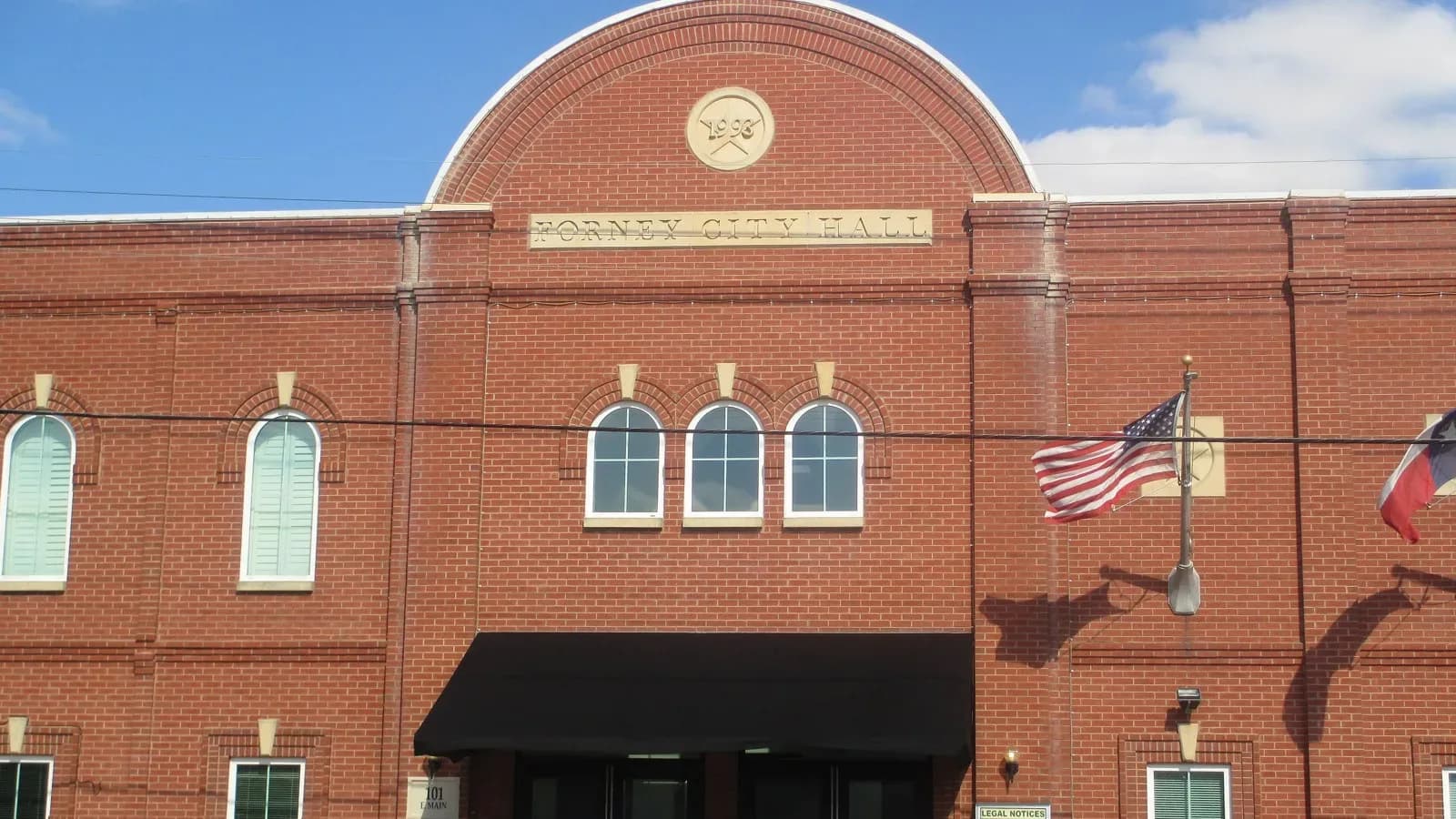
Forney to Bill Insurers, Not Residents, for Fire Responses and Set Rules for Traffic Calming
The council is set to hire a firm to bill insurance carriers for crash and fire responses and adopt a resident petition process for speed signs and beacons.
Forney is preparing to bill insurance companies when its firefighters respond to crashes, fires and hazardous materials calls. City documents promise that residents and drivers themselves will never be billed.
The City Council on Tuesday, Oct. 20, is set to approve Sure Fire Recovery Services to run the city’s Fire Department Cost Recovery Program, according to the agenda. The meeting starts at 6:30 p.m. at the City Hall Annex council chambers, 101 E. Main Street. The item is on the consent agenda.
Insurance only
Fire Chief John Holcomb wrote in the staff summary that the program covers emergency responses including motor vehicle accidents, fires, hazardous materials incidents and rescues. It is meant to offset the cost of apparatus, equipment and personnel. “The program will bill insurance companies only,” the summary says. “Residents, property owners, vehicle owners, drivers, and other individuals will not be personally billed or subjected to collection activities.”
The request for proposals says the program was created by Ordinance No. 26-30. It makes those protections non-negotiable. The contractor may not pass a denied or unpaid balance to a person, refer anyone to collections or credit bureaus, file liens, sue individuals, charge interest or late fees, or sell the accounts. It may not tell anyone they may be personally liable.
The contractor is paid a percentage of what it actually collects and gets nothing on claims that bring in no money. It has no role in setting the rates. The city issued the request Sept. 17, took proposals through Oct. 12 and received four. Staff says it will bring an equipment fee schedule to a future meeting for the city’s Master Fee Schedule, so the actual charges are not yet set.
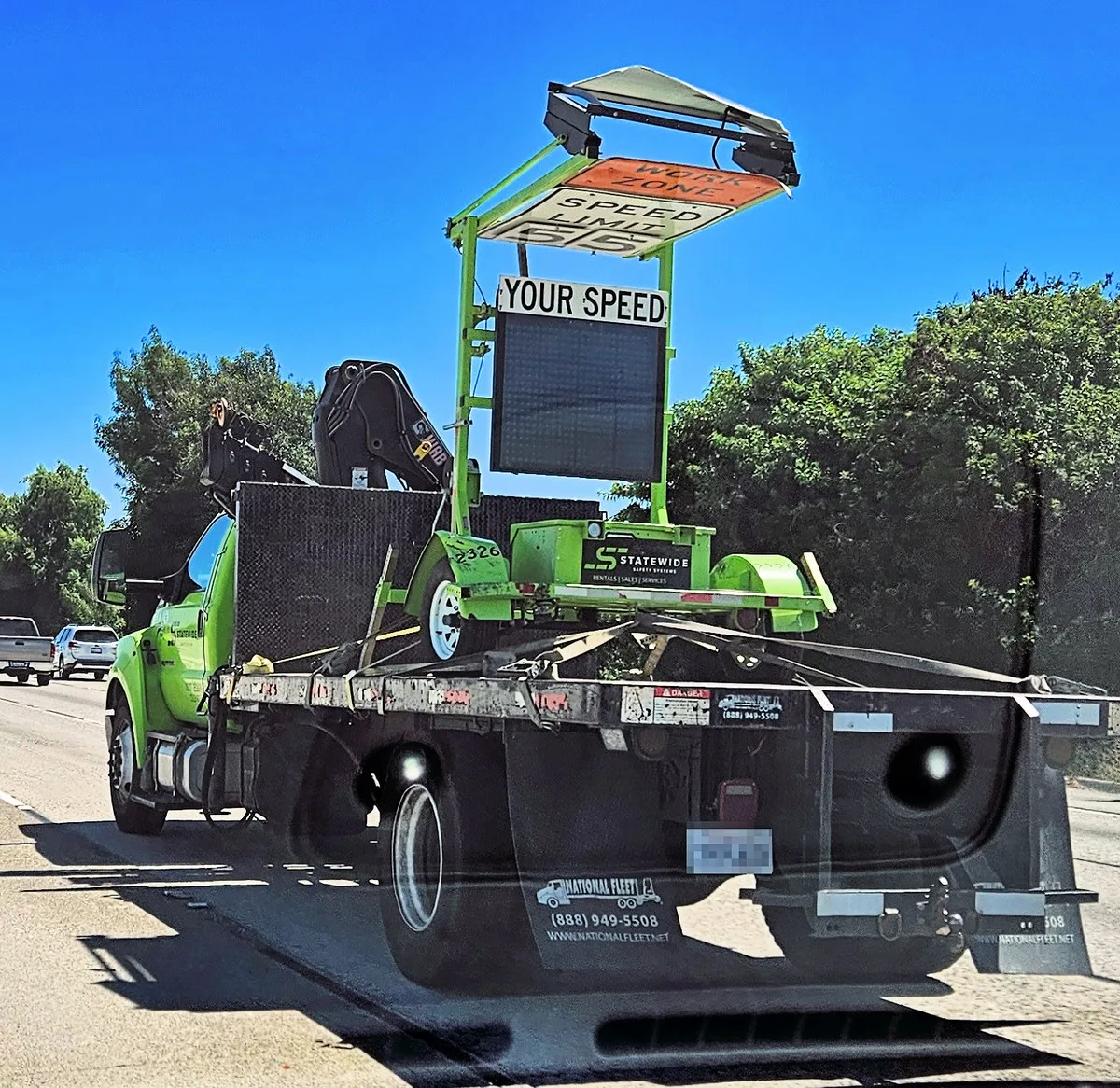
A portable radar speed display sign. Digital speed signs are among the few devices Forney’s handbook allows. Photo: Eric Polk / Wikimedia Commons, CC BY-SA 4.0.
A process for slowing traffic
The council will also consider a handbook that lets residents request traffic calming on neighborhood streets. Council Member Salgado asked for the item after residents raised ongoing concerns about speeding, according to the item summary.
To qualify, a street must be a two-lane local street in a mostly single-family neighborhood with a speed limit of 30 mph or less. It must carry more than 500 vehicles a day and be at least 1,000 feet long. Collector and arterial streets on the Thoroughfare Plan are not eligible. Applicants need a petition signed by at least 60% of residents or owners in the affected area.
The only devices offered are flashing beacons, pavement markings, rumble strips and digital speed display signs. The handbook “intentionally does not provide for” speed humps, speed tables or chicanes. The city and the applicant split device costs 50/50, though an applicant may pay the full cost to move faster, and the city maintains the devices.
Also Tuesday
The council will consider a State Infrastructure Bank loan of up to $3,140,000 from the Texas Transportation Commission. The loan would pay for utility relocation and right-of-way for the FM 1641 wastewater relocation project. Other items include a master fee schedule update, a towing agreement with Chubs Towing & Recovery and an ordinance updating police and fire position classifications.
Growth and traffic are pressing questions in fast-growing Texas towns. Dock Line covered similar pressures in Willis Is Building Thousands of Homes While the Roads Are Still Waiting
More Politics & Government Stories
 Today
Abbott Took About $9 Million From Data Center-Linked Donors While Calling for a Crackdown, Tribune Analysis Finds
 Today
Trump Rallies for Roger Marshall in Kansas and Reaches for 'Shylock' Again. He Has Been Told. He Should Stop.
 Today