Judge Blocks FCC Early Review of ABC Broadcast Licenses
A federal judge on Wednesday stopped the FCC from pressing an unusually early license review of ABC-owned stations, citing a First Amendment retaliation claim.
The facts come first below. My opinion follows in the section marked as opinion.
A federal judge on Wednesday blocked the Federal Communications Commission from continuing an unusually early review of broadcast licenses for ABC-owned television stations, according to NBC News and Deadline.
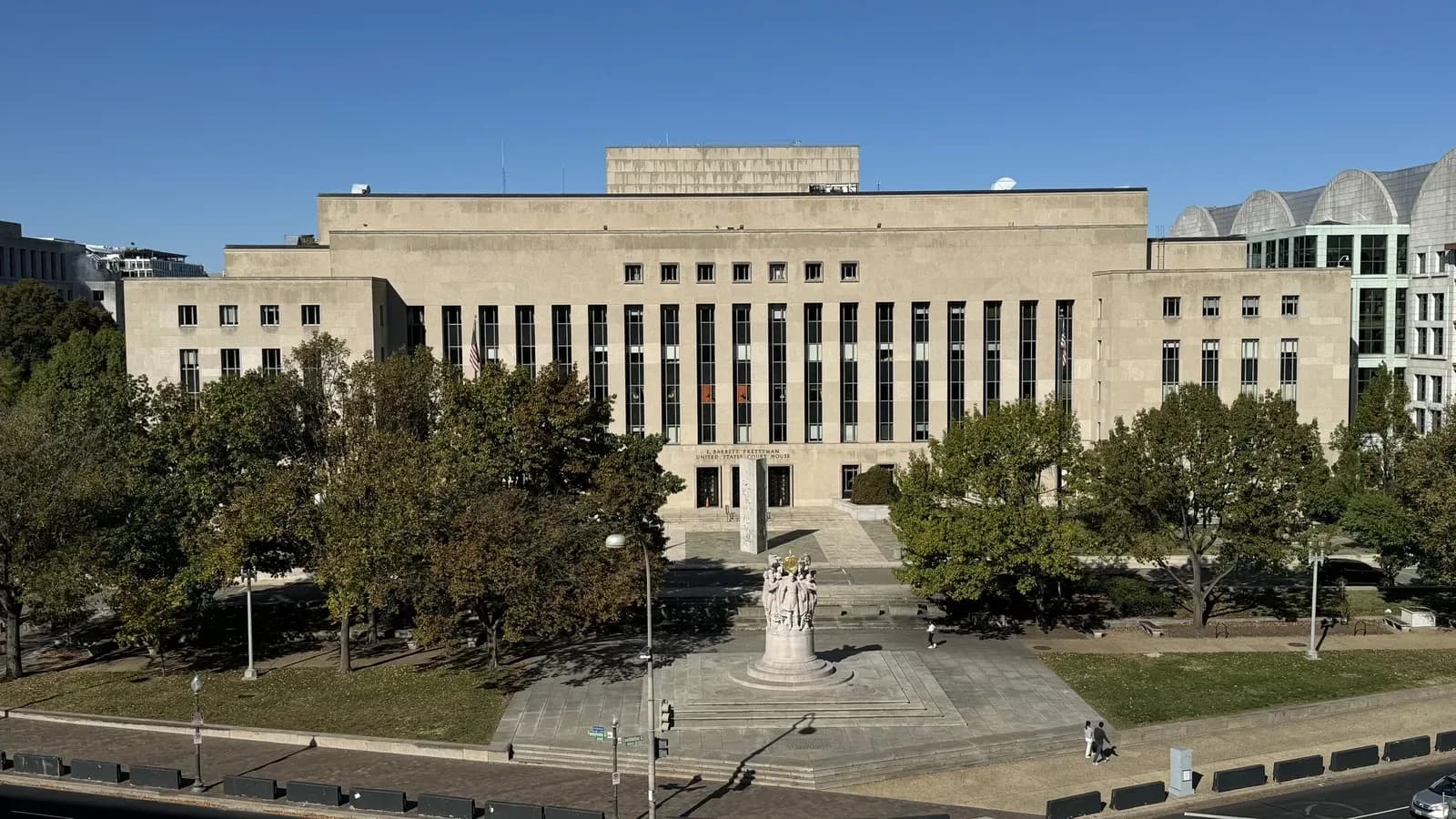
U.S. District Judge Loren AliKhan issued the order in a First Amendment lawsuit brought in August by the Walt Disney Co. and ABC against the FCC, both outlets reported. In a memorandum opinion filed Nov. 25, the judge said the court would "enter a preliminary injunction" and "deny Plaintiffs' concurrent request for a temporary restraining order as moot." NBC News, in a report updated the evening of Nov. 25, described the ruling as a temporary restraining order. Deadline described it as a preliminary injunction. In a statement to NBC News, an FCC spokesperson referred to "Disney's request for preliminary injunctive relief" and said the portion of the decision granting the motion was "wrong on the facts and wrong on the law."
The judge wrote that she concluded the company was "likely to succeed on their retaliation claim" against the FCC, NBC News reported. Deadline quoted her as concluding that the network was "likely to succeed in their retaliation claim." "This is not a close case," AliKhan wrote, according to both outlets. The official opinion states that "The court concludes that Plaintiffs are likely to succeed on their retaliation claim."
NBC News reported that the order blocks the agency "from taking any continuing or further action against Plaintiffs in relation to the early license renewal proceedings before the Federal Communications Commission." The official order also bars the agency from "issuing a Hearing Designation Order" in those proceedings. She also denied the FCC's request to dismiss the lawsuit, both outlets reported. The FCC had argued that the district court lacked jurisdiction and that the challenge belonged in the federal appeals court, according to NBC News and Deadline.
The dispute stems from an FCC order, which NBC News dated April 28, directing Disney's eight owned-and-operated television stations to file license renewals ahead of schedule. NBC News reported that the licenses were not due to come up for renewal until 2028 at the earliest; Deadline said the first of the licenses was not set to expire until 2028. The judge's opinion said no station's license is slated for renewal until at least 2028. NBC News said the stations operate in New York, Los Angeles, Chicago, Philadelphia, Houston, San Francisco, the Raleigh-Durham area and Fresno, California. Disney's lawsuit called the early review an "existential threat" to the First Amendment, NBC News reported.
FCC Chairman Brendan Carr has said the early review was tied to an agency investigation of Disney's diversity, equity and inclusion practices, according to NBC News and Deadline. Both outlets reported that the order came a day after President Donald Trump publicly criticized ABC late-night host Jimmy Kimmel and called for him to be fired. NBC News said Trump's remarks followed a joke Kimmel had made about first lady Melania Trump.
"Chairman Carr has taken President Trump's rhetoric as his marching orders," AliKhan wrote, according to both NBC News and Deadline. NBC News quoted her as writing, "against the backdrop of President Trump and Chairman Carr's call-and-response, it is no coincidence that President Trump criticized Mr. Kimmel's skit on social media and the very next day Defendants initiated the early license renewal proceedings."
Deadline quoted a further passage from the order: "No one doubts that the Commission may enforce the law in the manner it sees fit." She added, "But in doing so, Defendants may not retaliate against or punish Plaintiffs and other broadcast license holders for disfavored speech." Deadline also reported that AliKhan denied a broader request to bar any FCC action "to coerce or threaten" ABC, writing that such an injunction could not be issued against something "merely feared."
An ABC News spokesperson called the order an "important victory for the First Amendment," NBC News reported. The FCC spokesperson, in the same NBC News report, said the agency "looks forward to prevailing in full on this matter" and "will continue to use our lawful authority to hold broadcasters accountable to their public interest obligations."
In other legal news this week, a federal judge blocked a Trump administration order limiting birthright citizenship.
Opinion:
The First Amendment is not a reward for popular speech. It is a limit on government power, including when a president dislikes a late-night monologue or a news broadcast. Judge AliKhan's words, as quoted by NBC News and Deadline, go to that point: "This is not a close case," and the commission "may not retaliate against or punish" license holders "for disfavored speech."
Christians do not have to enjoy Jimmy Kimmel, or defend a corporation's personnel policies, to want a government that does not use broadcast licenses as a club. The FCC may enforce the law. It may not, if the court's account is right, treat an early license review as punishment for speech the White House does not like. A free people should insist on that distinction, and then let the appeals court test it.