McKinney ISD Asks for $500 Million in Bonds and a Tax Rate Election as Early Voting Opens
McKinney ISD voters have five propositions on the ballot: four bonds totaling $500 million and a tax rate election for teacher pay. The district says the total tax rate still falls. Here is what each piece costs.
Early voting opens Monday in McKinney, and McKinney ISD has five propositions on the ballot. Four are bonds that add up to $500 million. The fifth, Proposition A, would raise the district's operating tax rate to pay teachers.
What is on the ballot
According to the district's election website:
Proposition A: a voter-approval tax rate election, or VATRE, for teacher salaries and classroom programs.
Proposition B, $430.95 million: renovations, safety and security, two new elementary schools, a career and technical education center, fine arts, buses and district vehicles.
Proposition C, $62 million: network equipment and replacement student devices.
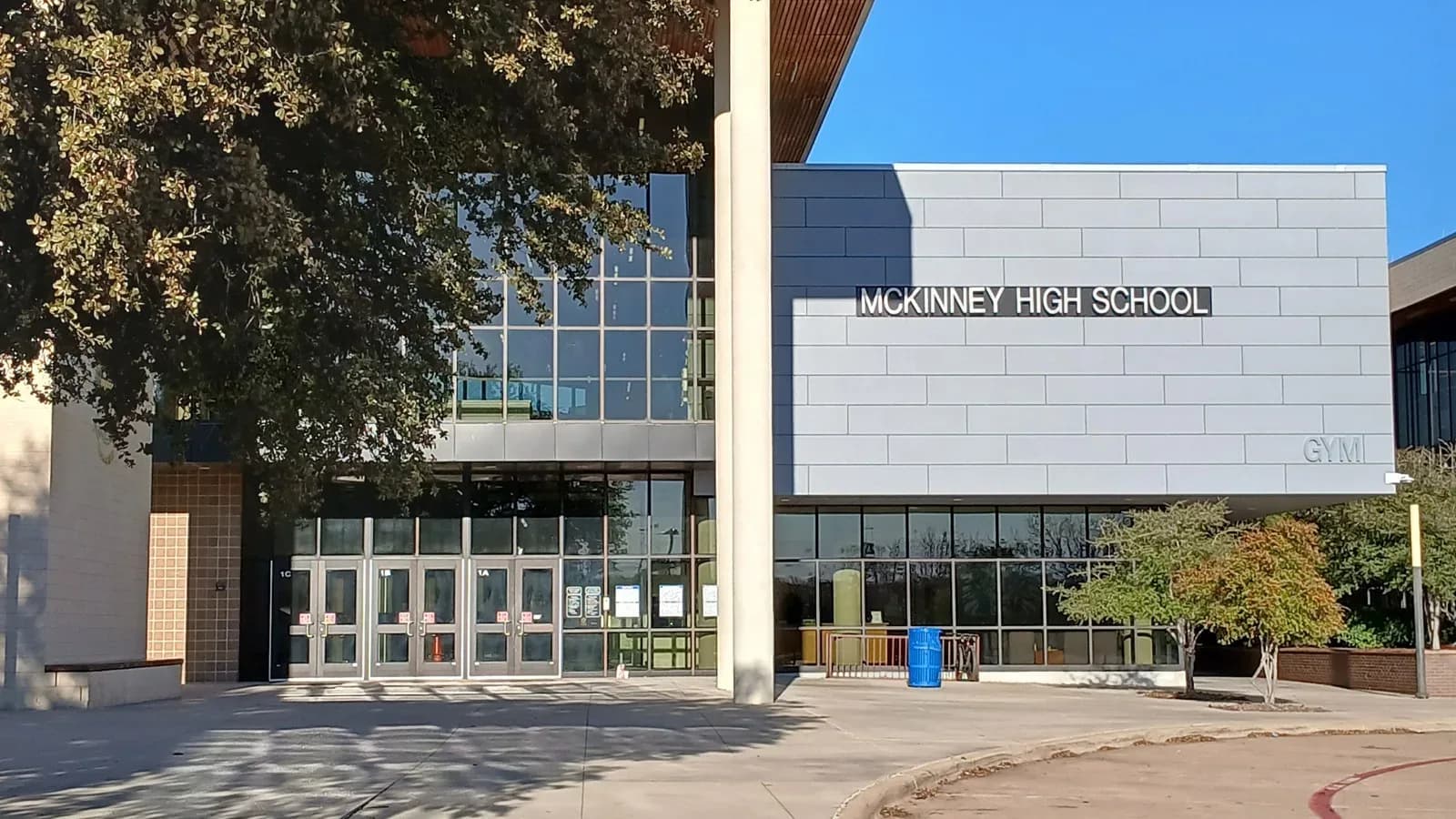
Proposition D, $4.5 million: repairs to the existing McKinney High School training pool.
Proposition E, $2.55 million: stadium turf replacement and track resurfacing.
The tax rate math
The district's main argument is that the total rate still goes down. Its financial page says the adopted 2025 rate was $1.1043 per $100 of value. The proposed 2026 rate is $1.0664, or 3.79 cents lower. Three things drive that number. The state compresses the maintenance and operations rate from $0.7343 to $0.7147 because property values rose. The district cuts its debt rate from $0.37 to $0.32. Proposition A then adds $0.0317 back onto the operations rate.
So the rate falls either way. If Proposition A fails, the total would be $1.0347, about 3.17 cents below what the district has proposed, by my math using the district's figures. On the district's estimated median homestead value of $368,036, those 3.17 cents come to about $117 a year before exemptions.
The district estimates the median homestead tax bill falls from $4,227 to $3,925, or $302 less. That assumes the median value drops from $382,757 to $368,036. Your bill depends on your appraisal and exemptions, and the district says so too.
Every school bond proposition in Texas must carry the words "THIS IS A PROPERTY TAX INCREASE." The district's voting page explains why: property taxes repay bond debt.
Why the district says it needs Proposition A
In its board announcement, the district says it faced a $23 million deficit in 2024-25. It cut staff and budgets and repurposed three campuses, saving $3 million a year, and that brought the gap down to about $6 million. Proposition A would raise about $4.1 million a year after recapture, the money the state takes back from property-wealthy districts. The district's Prop A page says that without it, programs like fine arts, athletics, gifted and talented, and career and technical education could face cuts.
The district also says it now spends 2% of its budget on administration, about half the state average. It estimates that sharing one career training center with Collin College would save taxpayers about $350 million over a 50-year agreement.
A district that has already made cuts before asking voters for more deserves a fair hearing. Voters can also see that the tax rate will drop by a smaller amount if Proposition A passes. Each proposition is voted on separately, and every voter can weigh them one at a time.
How to vote
Early voting runs Oct. 19-30 at any early voting location in Collin County. Mail ballot applications must be received by Oct. 23. Election Day is Tuesday, Nov. 3, with polls open from 7 a.m. to 7 p.m. Collin County voters will also see the county's own bond package on the ballot.
Related on Dock Line: Collin County's $817.5 Million Bond Would Carry $486 Million in Interest; Lubbock-Cooper ISD Asks Voters to Ratify a Tax Increase. The District Puts It at $144 a Year.