Need Help Voting on Tuesday? Here Is Who Texas Law Lets Help You at the Polls, and Who It Does Not
Texas voters who are blind, disabled or cannot read the ballot can bring a helper or ask poll workers, and curbside voting is available. But a 2021 law makes paid help a felony, and some groups say that has limited their outreach.
Election Day is Tuesday, and some Texas voters will need a hand to cast a ballot. A voter may be blind, may use a wheelchair, or may not be able to read the ballot well. Texas law allows help in those cases, but it also sets firm limits on who can give it and how.
Here is what the Texas Secretary of State's VoteTexas.gov guide for voters with disabilities says, along with what some voter outreach groups told Votebeat and The Texas Tribune about how a 2021 election law has changed their work.
Who can help you vote
If you need help at the polls, tell an election official. You do not have to show proof of a disability. The state points to Section 208 of the federal Voting Rights Act, which covers voters who need help because of blindness, disability or an inability to read or write.
A voter may be helped by any person the voter chooses who is not an election worker, or by two election workers on Election Day. During early voting, one election worker could help.
A voter may not be helped by an employer, an agent of an employer, or an officer or agent of the voter's union.
The helper must read the voter the entire ballot unless the voter asks to hear only part of it. The helper must also take an oath not to try to influence the vote and to mark the ballot the way the voter directs. It is illegal for a helper to try to sway the voter, to mark the ballot any other way, or to tell anyone how the person voted.
If a voter picks poll workers to help, poll watchers and election inspectors may observe. If the voter picks their own helper, no one else may watch.
Interpreters and curbside voting
Voters who cannot speak English, or who communicate only in sign language, may bring an interpreter, under the same limits on employers and unions. If the voter cannot read the ballot languages, the interpreter can also act as the assistant but must follow the assistant rules.
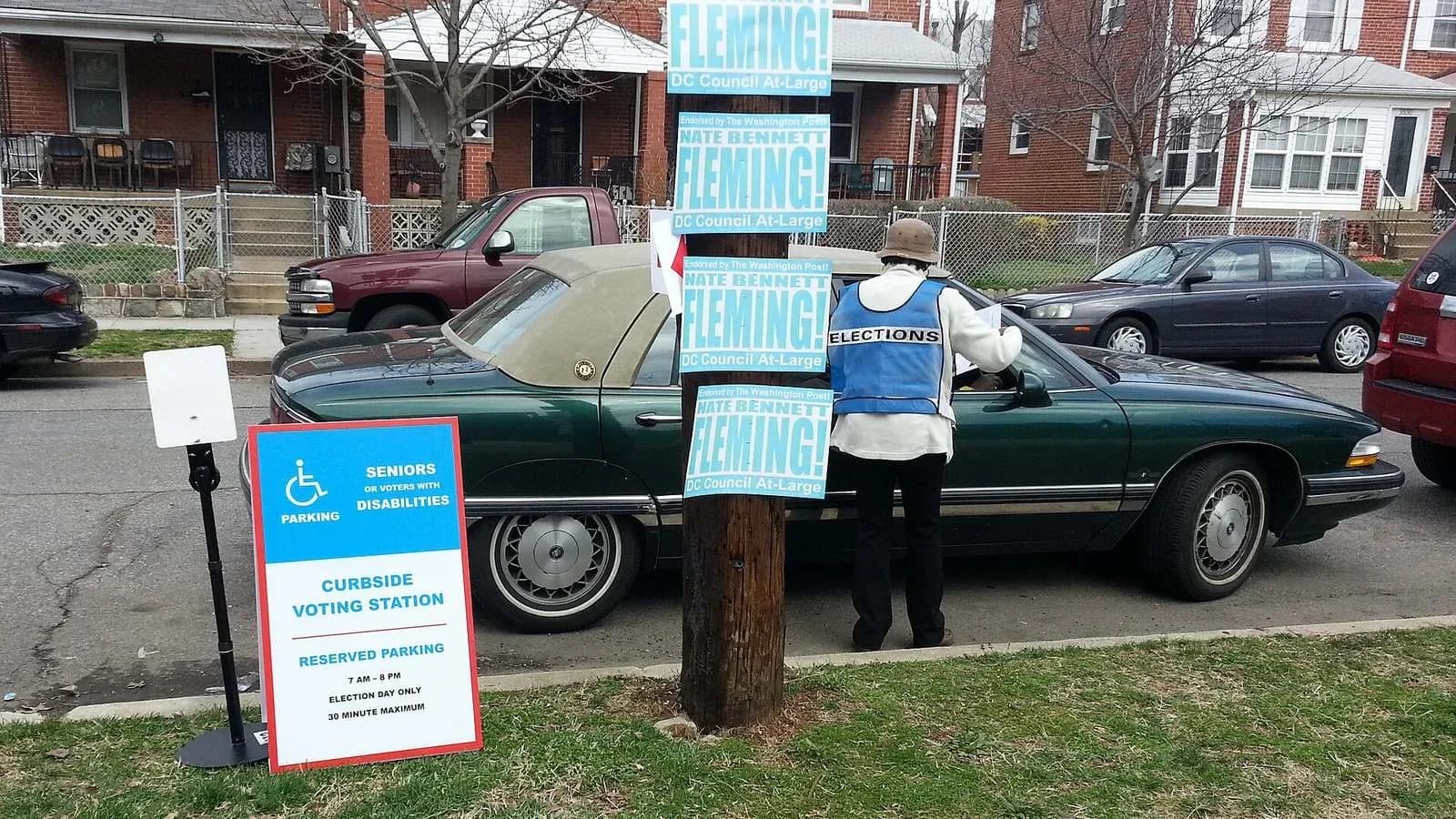
A voter who is physically unable to go inside may ask for curbside voting. An election officer brings a ballot to the entrance or to the car, and then puts the marked ballot in the box. Every polling place must have a parking space marked for curbside voting, with a sign showing a number to call or text for help, the state says.
What SB1 changed
In 2021 the Republican-led Legislature passed SB1, a broad rewrite of state election law. Among other things, it made it illegal for anyone to be paid for helping voters fill in their ballots, according to Votebeat. Violations are a felony punishable by up to 10 years in prison and a fine of up to $10,000.
The law also requires a person helping at the polls to sign an oath affirming that the voter qualifies for help and stating their relationship to the voter. The helper must also affirm they are not being paid by a candidate or political committee.
Republicans said the law would raise public trust in elections. Democrats said it would burden voters of color and voters with disabilities. Groups including La Union del Pueblo Entero, known as LUPE, sued, but a federal appeals court upheld key parts of the law, including the assistance limits, Votebeat reported.
What outreach groups say
LUPE, a Rio Grande Valley nonprofit, told Votebeat it now trains paid staff to step away if a voter asks for help with a mail ballot. "We literally have to turn them away," said Executive Director Tania Chavez Camacho. The group now holds group sessions with a projector instead of helping one on one.
Zachary Dolling of the Texas Civil Rights Project said courts have read "compensation" so broadly that even a meal or a T-shirt for a volunteer could count.
Those are the groups' accounts. What SB1 bans is paid help. The state guide still says a voter may pick any helper who is not an election worker, an employer or a union officer, or may ask poll workers for help.
A fair word
Guarding the ballot from pressure and paid influence is a fair goal. So is making sure a blind husband or an elderly neighbor can still vote. If someone you love needs help Tuesday, go with them, read them the whole ballot, and mark it as they say. That is a small act of service, and it is still free and legal in Texas.
Related on Dock Line: Early Voting Starts Monday. Here Are the Texas Voting Rules You Need to Know; How a Texas Provisional Ballot Works