Supreme Court Agrees to Hear Challenge to Trump's Border Asylum Ban
The Supreme Court agreed Friday to review Trump's suspension of asylum at the southern border. Lower courts struck the policy down; it remains in effect.
The facts come first below. My opinion follows in the section marked as opinion.
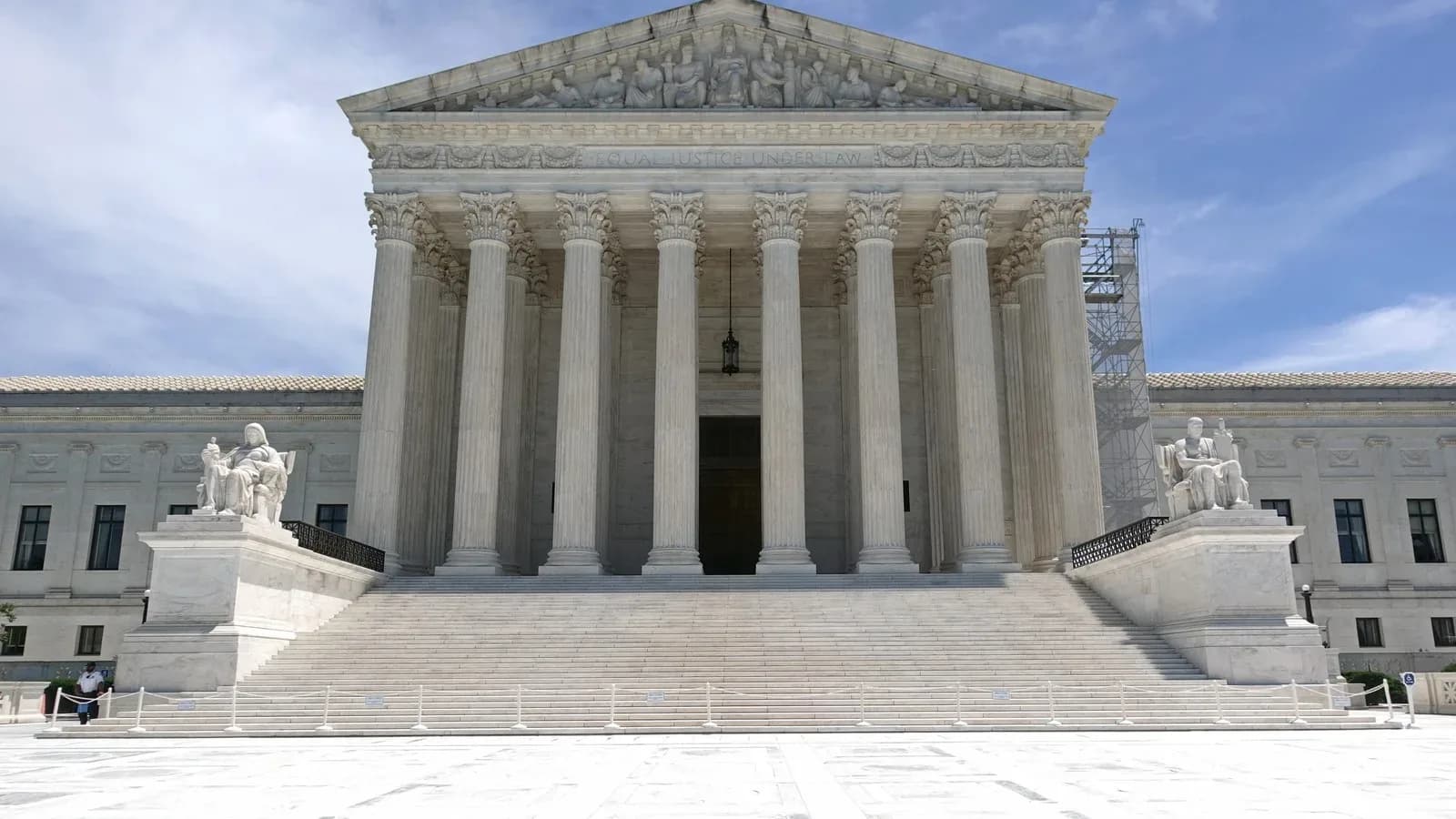
The Supreme Court agreed Friday to decide whether the Trump administration may suspend access to asylum for people at the U.S.-Mexico border, SCOTUSblog, NBC News, and the Associated Press reported. The justices will review a ruling by the U.S. Court of Appeals for the District of Columbia Circuit that struck down the policy as an overreach, SCOTUSblog reported. The Court's official questions presented state that the petition was granted, limited to two questions: whether Presidential Proclamation No. 10,888, 90 Fed. Reg. 8333 (Jan. 29, 2025), and its implementing guidance are lawful, and whether a federal statute, 8 U.S.C. 1252(f)(1), bars the classwide relief entered by the district court, according to the Supreme Court's questions-presented order.
The case is Mullin v. Refugee and Immigrant Center for Education and Legal Services. NBC News and SCOTUSblog reported that the dispute traces to a proclamation President Donald Trump issued on Jan. 20, 2025, the first day of his second term. The January 29 date in the Court's order is the Federal Register publication date, not a second signing date. SCOTUSblog reported that the proclamation declared that "an invasion is ongoing at the southern border" and suspended the entry of noncitizens "engaged in the invasion." The Department of Homeland Security then issued guidance that barred noncitizens from applying for asylum and indicated that people who entered despite the suspension would be quickly removed, without some of the procedural protections provided by law, SCOTUSblog reported.
Both lower courts that have ruled on the merits held the policy unlawful, but it has remained in effect during the appeal. NBC News reported that U.S. District Judge Randolph Moss ruled against the administration in July 2025, saying that nothing in the Constitution or immigration law "grants the president ... authority to replace the comprehensive rules and procedures set forth in the INA." In April 2026, the D.C. Circuit upheld that ruling, NBC News reported. SCOTUSblog reported that Judge J. Michelle Childs, joined by Judge Cornelia Pillard, wrote that the "text, structure, and history" of federal immigration law "make clear that in supplying power to suspend entry by Presidential proclamation, Congress did not intend to grant the Executive the expansive removal authority it asserts." The court said the proclamation and guidance "are thus unlawful to the extent that they circumvent … removal procedures and cast aside federal laws affording individuals the right to apply and be considered for asylum or withholding of removal protections."
Judge Justin Walker dissented in part, SCOTUSblog reported. He argued that the president has discretion to deny all asylum applications and therefore can dispense with the application process, but he agreed with the majority that the government "cannot remove aliens to countries where they will be persecuted, and the Proclamation and Guidance cannot strip them of mandatory procedures that protect against that removal." The D.C. Circuit agreed to keep its ruling on hold while the government appealed, allowing the administration to maintain the asylum restrictions, SCOTUSblog reported. NBC News and the Associated Press likewise reported that the policy has remained in place during the litigation.
Solicitor General D. John Sauer told the justices that the policy "rests on a commonsense understanding of the President's inherent and delegated powers to exclude aliens," SCOTUSblog and NBC News reported. The Associated Press quoted Sauer as writing, "Since the proclamation took effect, border encounters have fallen by 93 percent, dropping to the lowest levels since the 1960s." The challengers, including 13 individuals and three immigration nonprofits, have urged the Court to leave the lower-court rulings in place. Their lawyers wrote that the president "may not invent by fiat a new removal system that eviscerates the protections Congress mandated by statute," NBC News and SCOTUSblog reported. In papers described by SCOTUSblog, the challengers also said that by January 2025, before the proclamation took effect, "border apprehensions had returned to historically routine levels, down over 90 percent from their peak" and that if the executive branch wants new tools, "Congress must provide them."
SCOTUSblog reported that the Court agreed to consider the legality of the proclamation and guidance, and the district court's power to enter broad relief, but declined the government's request to review whether the class itself violates class-action rules. That matches the official order, which granted review limited to the first two questions and did not grant the third. NBC News said the Court's ruling is due before the end of June. The Associated Press said the justices are expected to hear the case in the spring and decide it by the end of June. SCOTUSblog likewise said the justices will likely hear arguments sometime next spring. The Court is already considering other Trump administration immigration cases, including what NBC News described as third-country removals and what SCOTUSblog described as detention without a hearing. Dock Line previously reported another Supreme Court border dispute: Supreme Court Lets Big Bend Border Construction Resume. A Stay Is Not the Final Word..
Opinion:
A grant of review is not a ruling. The Court has agreed to hear the case. It has not said who is right. Anyone who treats Friday's order as a final victory, or a final defeat, is getting ahead of the facts.
A nation has a duty to control its border. Illegal entry is not a paperwork inconvenience, and asylum is not a general ticket to come in and wait for years. At the same time, the president is not a lawmaker. Congress wrote the asylum statutes. If those statutes give the president this power, the Court should say so plainly. If they do not, the Court should say that too, and send the question back to Congress, where new tools belong.
The parties are already arguing about numbers, about a claimed invasion, and about what the law allows. The justices should read the statute as it is, not as either side wishes it were. The country needs a real border, honest enforcement, and a government that tells the truth about the law it is bound to follow.