TAHC Adds Two Screwworm Zones After Thanksgiving Eve Detections
Executive Director Lewis R. Dinges, D.V.M., signed Nov. 25 orders creating Infested Zones 47 and 48 after New World screwworm was detected in a bovine in Duval County and a white-tailed deer in McMullen County.
On Thanksgiving Eve, the Texas Animal Health Commission added two new New World screwworm quarantines in South Texas after fresh detections in livestock and wildlife. An order signed Nov. 25 by Executive Director Lewis R. Dinges, D.V.M., says the parasite was detected that day in a bovine in Duval County, and it designates areas of Duval and Jim Wells counties as Infested Zone 47. A second order signed the same day says New World screwworm was detected in a white-tailed deer in McMullen County, and it designates areas of Atascosa, La Salle, Live Oak and McMullen counties as Infested Zone 48.
The commission's offices were closed Wednesday through Friday, Nov. 25-27, for Thanksgiving, according to a notice on the agency's New World screwworm page. The orders themselves are dated Nov. 25 and say they take effect immediately. They remain in force until the commission releases the quarantines.
The two orders use the same movement rules. Warm-blooded animals inside each zone may not be moved outside the zone without prior authorization from the commission. Anyone in possession or control of those animals must obtain permission and meet the conditions the commission sets before hauling them beyond the quarantine boundaries. To leave the zone, an animal must be inspected and treated as the commission requires, and a commission representative must issue a permit or certificate for the movement. Hides, carcasses and parts of any animal capable of serving as a host must also be inspected, and must undergo any treatment a commission representative deems necessary, before they are taken out. Unauthorized movement is prohibited and is subject to administrative penalties and/or criminal prosecution, the orders say.
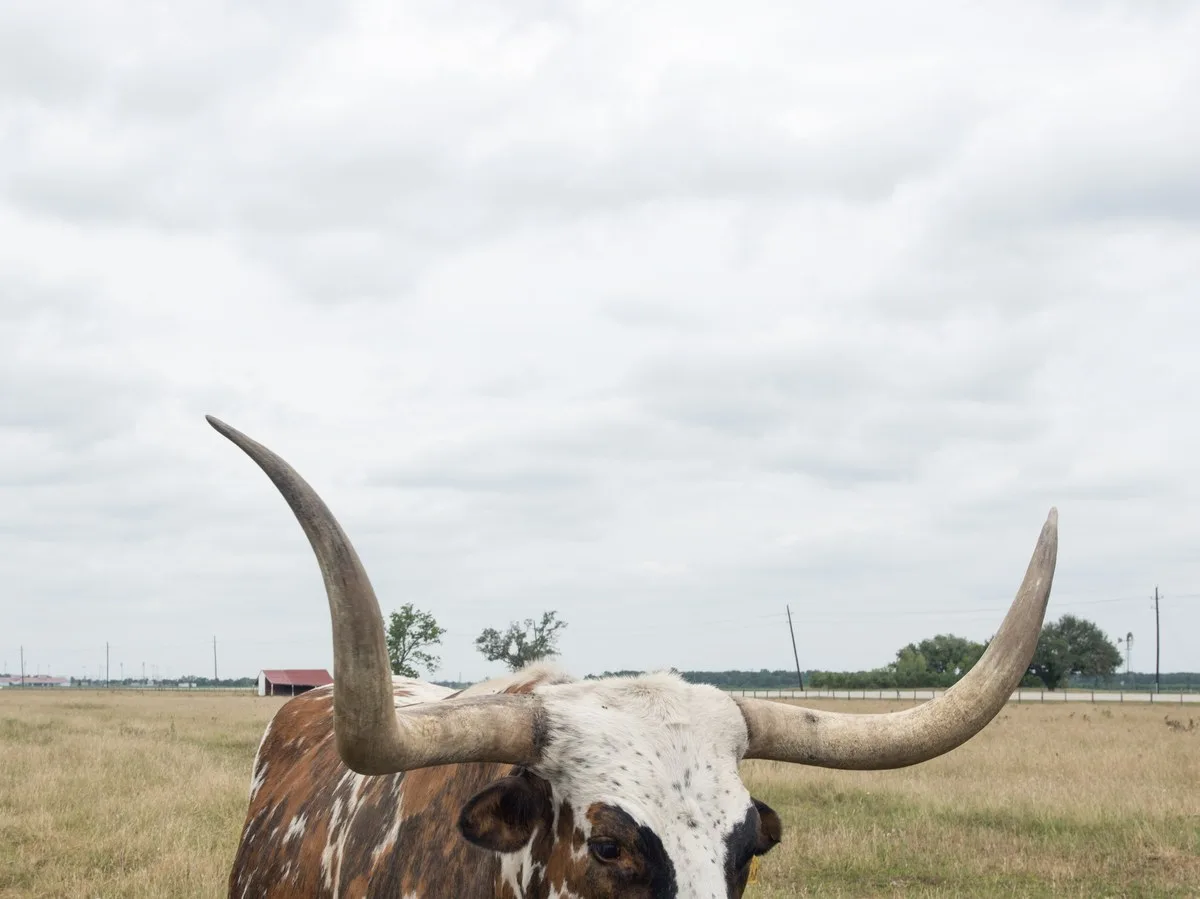
A longhorn steer at George Ranch Historical Park in Fort Bend County, photographed May 7, 2014. File photo. Photo: Carol M. Highsmith, Library of Congress, Public domain.
How the new zones fit the wider outbreak
The same landing page lists additional modified orders posted Nov. 25 for other South Texas counties, and it carries a standing notice that movement restrictions are in place because of established Infested Zones in parts of 45 Texas counties. Those counties, as named by the commission, are Andrews, Atascosa, Bandera, Brewster, Brooks, Cameron, Crockett, Culberson, Dimmit, Duval, Edwards, El Paso, Fisher, Frio, Goliad, Hidalgo, Hudspeth, Irion, Jeff Davis, Jim Hogg, Jim Wells, Kenedy, La Salle, Live Oak, Martin, McMullen, Medina, Midland, Mitchell, Nolan, Pecos, Presidio, Reagan, Reeves, Schleicher, Scurry, Starr, Sutton, Terrell, Uvalde, Val Verde, Webb, Willacy, Zapata and Zavala. A county on that list is not the same thing as a countywide lockdown. The notice refers to "parts of" those counties, and the new orders attach maps of Zone 47 and Zone 48 rather than declaring every acre of the named counties off limits.
In a "Texas Current Situation" section, the commission lists 30 Texas counties with a confirmed New World screwworm detection and 104 Texas premises confirmed with at least one detection. The first detection in Texas, the page says, was confirmed on June 3, 2026, in a calf in Zavala County. The commission says that calf has since recovered and that the individual animal case is now considered inactive.
The Nov. 25 orders repeat the basic description of the pest. New World screwworm is a parasitic fly that lays eggs in wounds or soft tissues of live warm-blooded animals. The larvae hatch and burrow into living tissue, causing a painful condition called myiasis. As the wounds grow, the infestation can cause serious injury, secondary infection and death if it is not treated. The United States Department of Agriculture recognizes the fly as a foreign animal disease that poses a threat to U.S. agriculture, wildlife, public health and the economy. The commission's page adds that the condition is highly preventable and treatable with approved products and animal care, but that, left untreated, animals can die within one week of infestation.
The orders also recite the state's disaster declarations. On Jan. 29, 2026, Gov. Greg Abbott issued a statewide disaster proclamation for all Texas counties because of the threat the fly poses to the livestock industry, the economy and property. The commission said he has renewed that proclamation each month since. On June 5, after the Texas detection, Abbott issued a new statewide disaster proclamation, which the orders say was renewed on July 4, Aug. 3, Sept. 2, Oct. 2 and Nov. 1, 2026. The commission cited Chapter 161 of the Texas Agriculture Code and its own rules as the authority for the quarantines, including a rule that lets the executive director act quickly in an animal-health emergency.
For owners trying to move animals legally, the landing page says warm-blooded animals leaving an Infested Zone must contact the commission or a New World screwworm certified inspector to set up an inspection. During that inspection, a certified inspector completes a movement and treatment certificate that lists the product used for prevention or treatment and the animals' official identification. That certificate must accompany the movement. The page says animal owners can ask for more guidance when they first call to request an inspection.
The new zones do not close the book on an outbreak that has already spread far beyond the first Zavala County calf. They do tell ranchers, deer managers and anyone else with warm-blooded animals in those South Texas areas what is required, as of Nov. 25, before those animals leave the designated ground: a call to the commission or a certified inspector, an inspection, any required treatment, and a paper permit or certificate in hand.