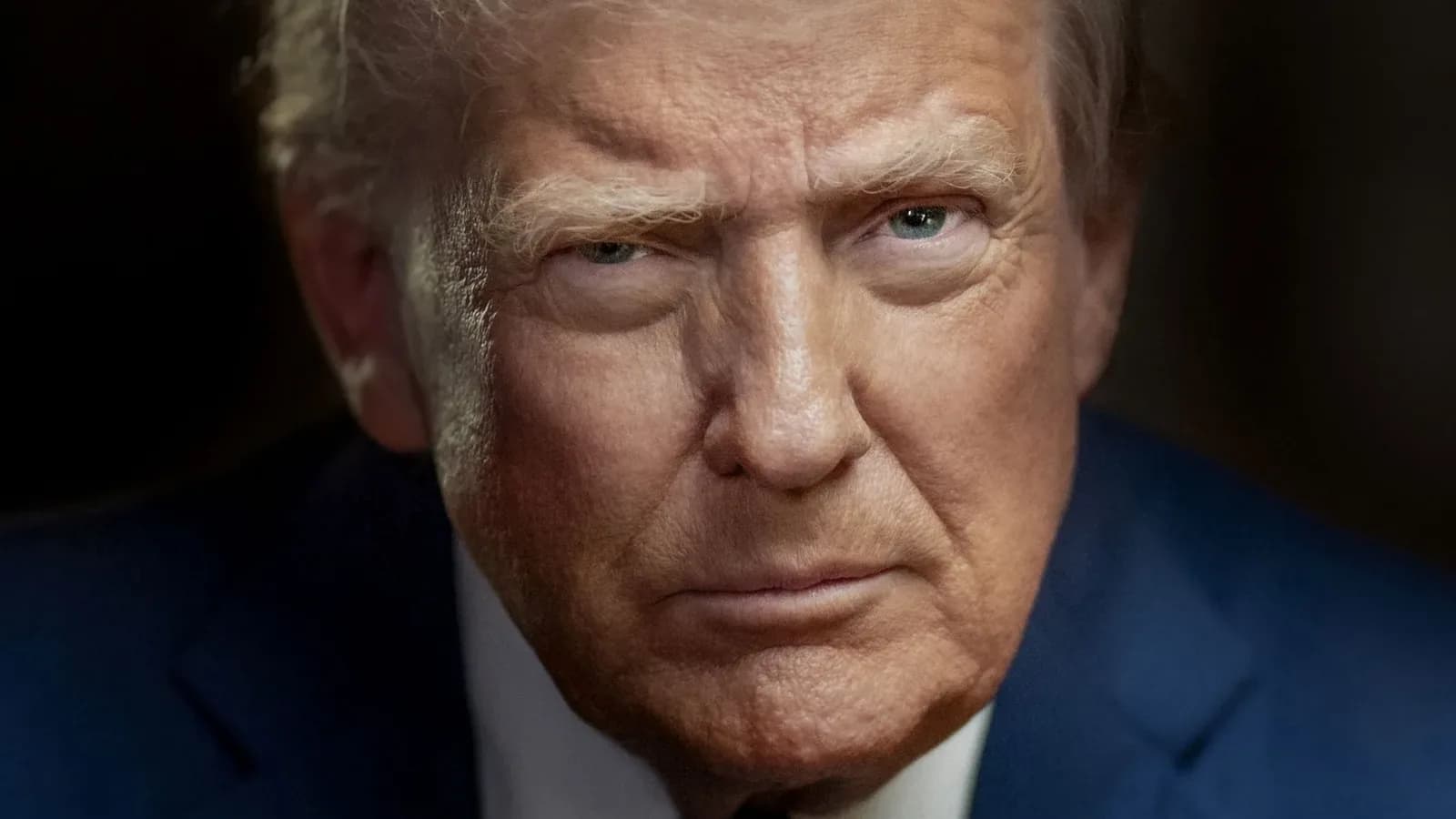
Trump Says He Would Work With Democrats to Cap Credit Card Rates
President Trump said Saturday he would work with the incoming Democratic Congress to cap credit card interest rates, a proposal typically set at 10 percent.
The facts come first below. My opinion follows in the section marked as opinion.
President Donald Trump said Saturday that he would work with the incoming Democratic Congress to cap credit card interest rates, according to an Associated Press dispatch published by WTOP. "I would do it. These credit card companies have made a lot," Trump told Fox News Channel's "Saturday in America," the AP report said.
Democrats and the president have both backed a cap, with the standard proposal being a 10 percent ceiling, the Associated Press reported. The same dispatch said the median credit card interest rate is roughly 22.2 percent, according to an August survey by the New York Federal Reserve. A 10 percent cap would substantially reduce what card companies can charge customers, the AP said.
One such proposal is already in the Senate. S. 381, the 10 Percent Credit Card Interest Rate Cap Act, was introduced Feb. 4, 2025, by Sen. Bernie Sanders, I-Vt., for himself and Sen. Josh Hawley, R-Mo., and referred to the Committee on Banking, Housing, and Urban Affairs, according to the introduced text posted by the Government Publishing Office. The bill would amend the Truth in Lending Act so that "the annual percentage rate applicable to an extension of credit obtained by use of a credit card may not exceed 10 percentage points, inclusive of all finance charges." It would also limit certain fees that are not counted as finance charges, provide for forfeiture of interest when the cap is knowingly violated, and sunset on Jan. 1, 2031, the text says.
Trump first proposed a credit card rate cap in January as part of a White House affordability push, the Associated Press reported. Banks and credit card companies opposed the idea, the dispatch said, arguing that a cap would force them to cancel cards for the poor and less creditworthy customers or cut back on rewards. The AP also reported that the proposal did not sit well with Republicans and that there was little effort by the GOP-controlled Congress to fulfill the president's promise.
That could change when Democrats take control of both the House and the Senate, the AP said. Sen. Elizabeth Warren, D-Mass., who is expected to be the next chair of the Senate Banking Committee, has repeatedly said she wants to cap rates. In response to the Fox News interview, Warren said, "Let's cap credit card interest rates and save Americans money," according to the AP. Sen. Hawley "posted on X on Saturday," the same dispatch said: "The President is right. Let's pass my bill to cap credit card interest fees."
The Associated Press reported that about 195 million people in the United States had credit cards in 2024 and were assessed $160 billion in interest charges, according to the Consumer Financial Protection Bureau. It also cited New York Fed figures of about $1.23 trillion in credit card debt for the third quarter of last year. The midterm results that will give Democrats the House included the North Carolina race described in Dock Line's report that Virginia Foxx Concedes North Carolina House Race After Recount.
Opinion:
Families know what a 22 percent card rate does to a grocery run that spilled onto plastic. Interest can become a second rent. It is right to be angry at that, and it is right to ask why a working household should pay a rate that would have been called usury in a more serious age. A president who says, "I would do it," in the AP account of the interview, is naming a real burden. Naming it is not the same as writing a law that works.
A hard cap can punish excess. It can also shrink the supply of credit, exactly as the banks warn. That warning may be self-serving, and it may also be partly true. Poor and thin-file borrowers are often the first to lose a card when lenders are told they may not price for risk. Congress should not pretend that a ceiling abolishes risk, or that rewards points are the heart of the matter. The heart of the matter is whether a family can get out of debt without being bled, and whether a lender can still make an honest loan.
The Sanders-Hawley bill at least puts a number on the table, includes finance charges in the cap, and tries to stop fees from becoming a back door. Those are serious drafting choices, and they deserve a serious vote, not a slogan. If Trump now means to work with a Democratic Congress after his own party would not move the idea, he should say what bill he would sign and what he would not. Voters can judge the results. They should not be asked to live on a promise.