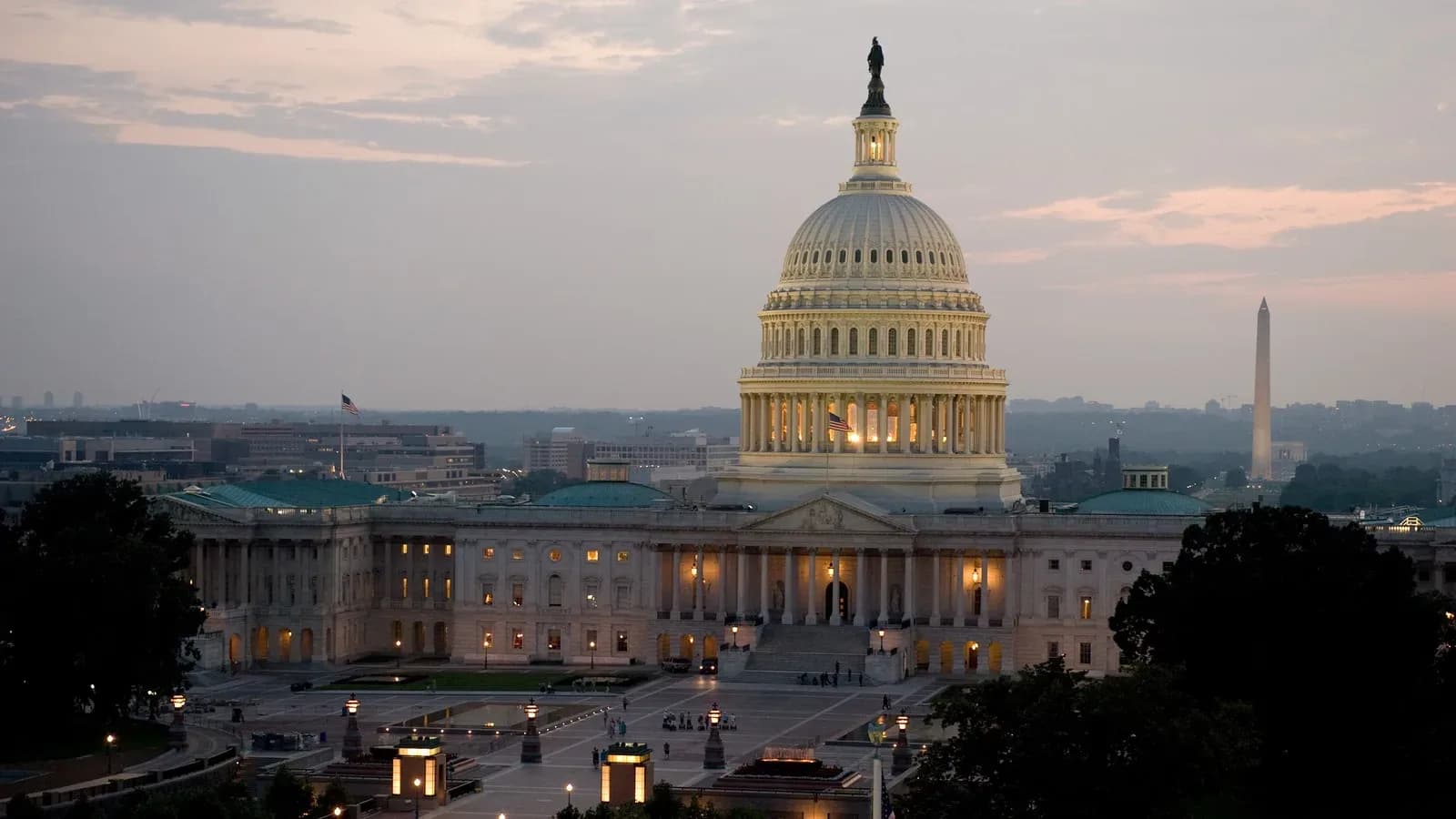
White House Asks Congress for Stopgap Spending Exceptions
The administration asked lawmakers for exceptions in the next short-term funding bill, including shipbuilding, air traffic systems, and other authorities.
The facts come first below. My opinion follows in the section marked as opinion.
The White House has sent Congress a list of requested exceptions for the next short-term spending bill, asking lawmakers to add authorities and faster spending power for shipbuilding, an air traffic control system initiative, and other programs, according to the official anomalies package and an NBC News report.
NBC News reported on Tuesday that the White House transmitted the list of "anomalies" to Congress on Monday night, for use in any future stopgap bill. The document, titled "FY 2027 Continuing Resolution (CR) Appropriations Issues," describes those anomalies as spending exceptions, higher rates, and additional authorities that would not otherwise be available under a standard continuing resolution. NBC reported that government funding is set to run out Dec. 12, and that Democrats have signaled the list is unlikely to pass as part of a short-term spending bill.
On Navy shipbuilding, the package says language is needed to let the Department of War obligate continuing-resolution funds in the Shipbuilding and Conversion, Navy account at a rate necessary to support the cost-to-complete program. "Without the anomaly, DOW would need to issue stop work orders on the Columbia - and Virginia -class submarines, DDG-51, and Carrier Replacement Program and would be unable to pay for planned Economic Price Adjustments." A separate item seeks new-start authority for a Battleship Advance Procurement program "in an amount not to exceed $1 billion," for advance procurement of nuclear propulsion work.
On aviation, the list asks for additional authority so the Federal Aviation Administration can obligate Facilities and Equipment funds at a rate needed to support the Brand New Air Traffic Control System, or BNATCS, initiative. Without that anomaly, the package says, the FAA would not have adequate funding for critical BNATCS business line items, which would increase costs and delay completion dates.
The document also asks Congress to update the statutory definition of final hemp-derived cannabinoid products, in a way the package says would allow access to appropriate full-spectrum CBD products while preserving Congress's intent to restrict the sale of products that pose serious health risks. NBC News reported that the administration asked Congress to revise federal hemp restrictions and that some Republicans, including Sen. Tom Cotton of Arkansas, have taken issue with the hemp language.
Other requested authorities appear in the official package and in the NBC News account of the same request. They include language "to provide the Department of State with additional authorities to complete U.S. Agency for International Development (USAID) closeout activities and transfer former USAID foreign assistance functions to the Department of State," and a waiver process so the Development Finance Corporation could support projects in Venezuela, which the document says is now a prohibited country for that agency. NBC quoted the request as saying that without the waiver, "DFC would be unable to provide key financing to restore Venezuelan infrastructure, thereby limiting the United States' ability to further its economic and foreign policy goals." A related item in the official list would raise the corporation's loan principal limit, authorizing an additional $15 billion in new direct or guaranteed loans, for a total limit of $30 billion.
A continuing resolution is a temporary measure to keep agencies open when the regular appropriations bills are not finished. The request is a bargaining document, not a law. It arrives as Congress is also handling other fights, including earlier coverage of Rep. Jimmy Gomez to Resign After House Ethics Misconduct Report.
Opinion:
Congress should fund the government without turning a short-term bill into a junk drawer. Some of the items on this list are serious. Shipyards cannot be jerked from month to month. If the official package is right that, without an exception, the Navy would have to issue stop-work orders on Columbia-class and Virginia-class submarines, lawmakers ought to face that fact in public, not discover it after the work has stopped. Air traffic control systems that are already behind should not be delayed further by the ordinary rigidity of a continuing resolution.
Other requests deserve more skepticism. A stopgap bill is a poor place to rewrite the legal definition of hemp products, to finish the dismantling and transfer of foreign-aid accounts, or to open a new financing door for projects in Venezuela. Those may be debates worth having. They are not automatic add-ons. NBC News reported that Democrats have already signaled the full list is unlikely to pass as part of a short-term measure. That resistance is not, by itself, a reason to shut the government down. It is a reason to separate must-pass operations from policy wishes.
The White House is entitled to ask. Congress is obliged to read the document, including the official list, and to say yes only where the need is real. A temporary spending bill should keep faith with sailors, air travelers, and ordinary agencies. It should not become the back door for every unfinished argument in Washington.