Why Political Ads Sound Like the End of the World
The worries may be the same, but the way the message reaches us has changed everything
There was a time when political talk did not need a studio, a microphone, a social media account, or dramatic music in the background.
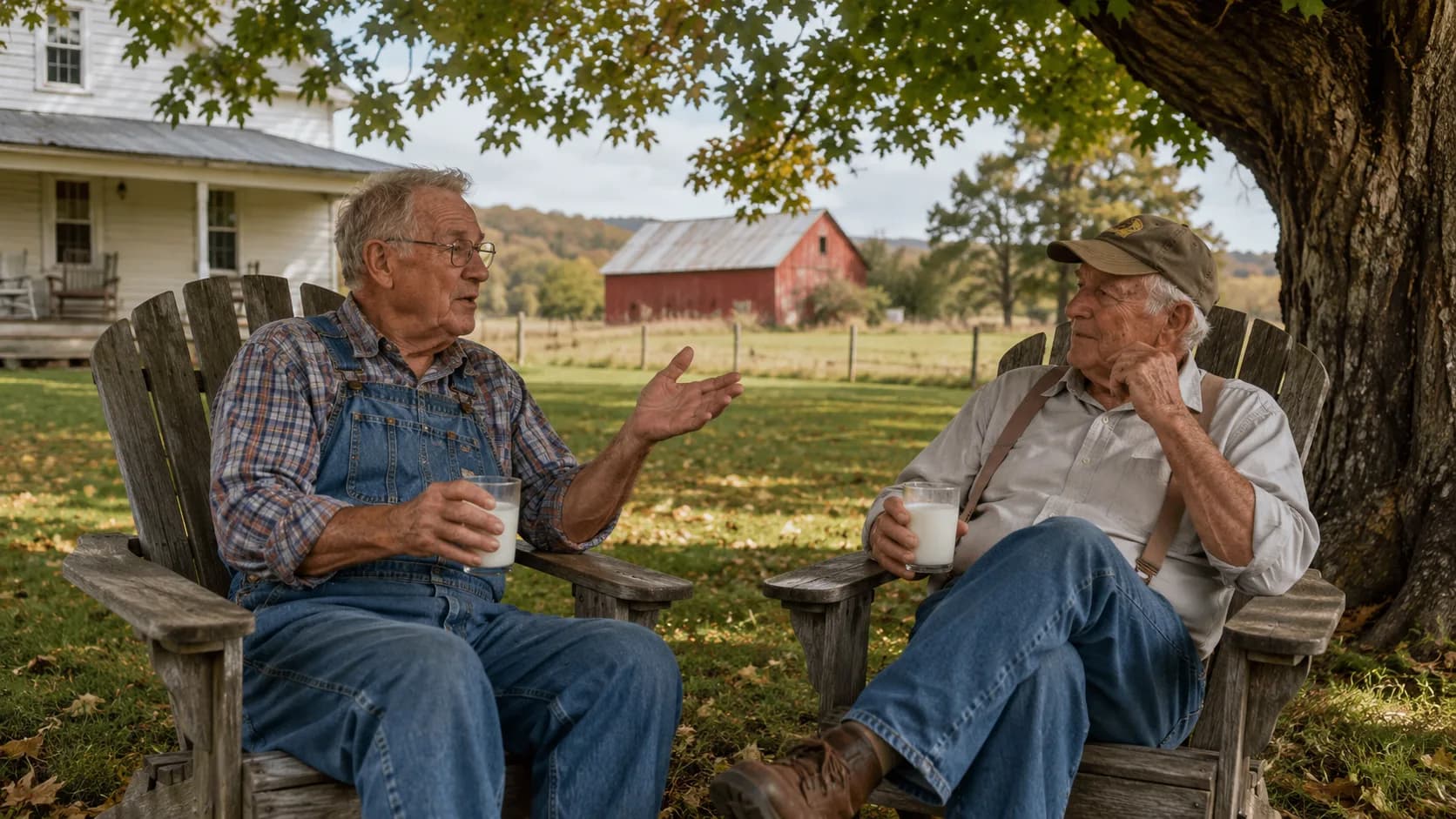
Sometimes it happened beneath a tree.
When I was young, my father and his neighbor used to sit under a maple tree drinking buttermilk and talking politics. Their concerns would still sound familiar today.
"They're coming to take our guns."
"Everything is so expensive."
"Six thousand dollars for a 98 Oldsmobile."
That last one was enough to make a man shake his head and wonder whether the country had lost its mind.
The funny thing is, people today are still having the same conversation.

Fear gets attention. Calm does not.
The numbers changed, of course. The Oldsmobile became a truck or SUV with a sticker price that can make your knees buckle. The buttermilk may have been replaced by bottled water or coffee. The maple tree may have been replaced by television, Facebook, YouTube, text messages, and talk radio.
But the worries? Those are still with us.
Prices are too high.
Government is too big.
Rights are in danger.
The country is changing too fast.
The other side is ruining everything.
So if the concerns sound familiar, what changed?
The answer may be simpler than we think.
Politics is still politics.
But the way the message is delivered has changed dramatically - and so has the way people treat one another when they disagree.
The Fear Is Not New
Political fear did not begin with the internet.
It did not begin with cable television.
It did not begin with social media, campaign consultants, or angry people typing in all capital letters at midnight.
People have worried about the future of the country for generations.
They worried about taxes.
They worried about war.
They worried about inflation.
They worried about crime.
They worried about government overreach.
They worried about whether the next generation would understand what made the country worth protecting in the first place.
In that sense, politics has always had an emotional side. It touches values, money, safety, freedom, family, and the future. That makes it personal.
But personal is not the same thing as cruel.
That may be one of the biggest differences now.

Political messages now follow us everywhere.
The Message Used to Have a Front Porch
Years ago, political discussion often happened face to face.
It happened in living rooms, at barber shops, at church picnics, in diners, on front porches, and yes, under maple trees.
People argued then too. Nobody should pretend those were magical days when everyone smiled, nodded, and politely agreed on everything. That is not how politics works, and it never has.
But there was something built into those conversations that we are losing now.
People could see each other.
They could hear tone.
They knew each other's families.
They knew where the other person lived.
And when the conversation ended, the other person was still a neighbor.
That mattered.
A disagreement about politics was often still a disagreement about a topic.
It had not yet become a total judgment on the value of the person sitting across from you.

The country was built by people who kept living next door afterward.
Now the Message Follows Us Everywhere
Today, politics no longer waits for a quiet conversation.
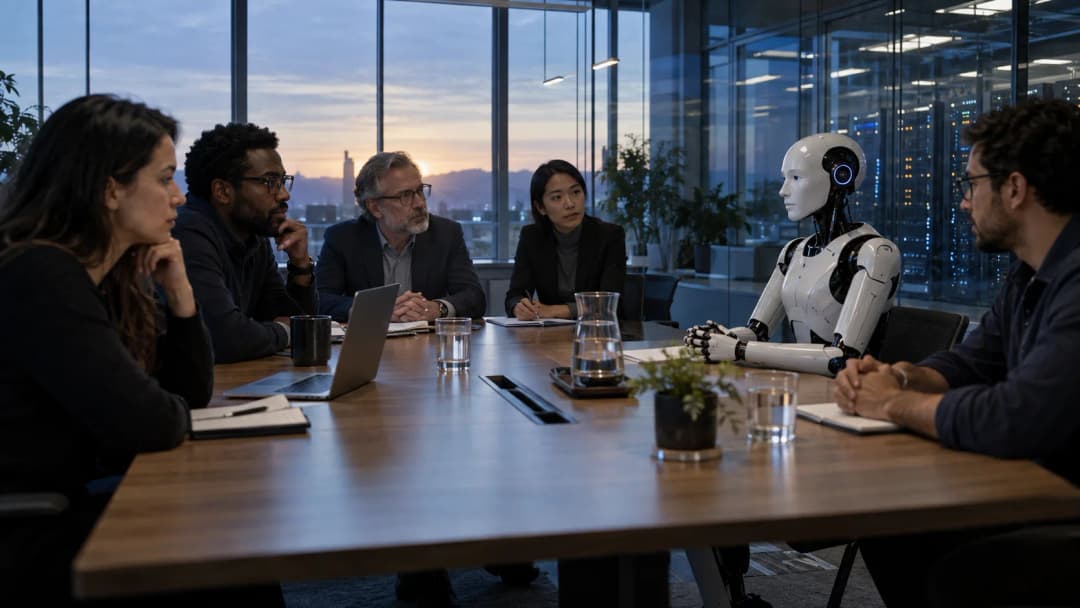
It shows up on televisions, laptops, phones, tablets, radios, inboxes, social media feeds, streaming services, and text messages. It arrives in thirty-second ads, ten-second video clips, angry memes, and headlines written to make your blood pressure rise before you have had your coffee.
Political messages now follow us everywhere.
They ride to work with us.
They sit beside us at dinner.
They wait for us in bed when we check our phones one last time.
And because every campaign is fighting for attention, the message has to be louder, sharper, scarier, and more dramatic than the one before it.
That is why political ads so often sound like the end of the world.
If a candidate simply said, "My opponent has a different tax policy, and I respectfully disagree," nobody would remember the commercial.
But add dark music, black-and-white footage, an angry narrator, and a warning that America may not survive the week, and suddenly the ad gets your attention.
That is not an accident.
It is strategy.
Fear Sells Faster Than Calm
Campaigns know something the rest of us sometimes forget:
Fear moves quickly.
Calm does not.
A balanced explanation rarely spreads like wildfire.
A complicated discussion about policy is not likely to become a viral clip.
But tell people they are about to lose their money, their freedom, their safety, their rights, their country, or their future - and now you have their full attention.
That is why political ads often rely on the same emotional triggers:
fear
anger
urgency
blame
the feeling that disaster is just one election away
According to political advertising, every race is the most important race in history, every opponent is dangerous, and every policy disagreement is a direct threat to the American way of life.
If campaigns are to be believed, the republic has apparently been on the edge of collapse for decades.
And yet, somehow, the country keeps waking up the next morning.
When the Issue Became the Person
This may be the biggest change of all.
At some point, many political discussions stopped being about an issue and started becoming about the worth of the person holding the opinion.
It is one thing to say:
"I think that idea is wrong."
It is another thing entirely to say:
"Anyone who believes that must be stupid, evil, un-American, or dangerous."
That shift matters.
Because once the argument becomes about the character of the person instead of the topic itself, the discussion gets much harder to recover.
Under the maple tree, two neighbors could argue about prices, guns, taxes, or presidents and still go home as neighbors.
Today, many disagreements turn into personal attacks almost immediately.
We question intelligence.
We question motives.
We question morality.
We question patriotism.
Sometimes we act as though a different vote means a person has no value beyond that one opinion.
That is a miserable way to live, and it is exactly the kind of atmosphere political ads are designed to encourage.
Not because campaigns care about kindness.
Because division keeps people engaged.
The Delivery System Changed the Temperature
Maybe people are not completely different than they used to be.
Maybe the bigger truth is that the modern system rewards behavior that feels meaner.
Screens create distance.
Distance makes harsh words easier.
Short-form content destroys nuance.
Outrage attracts clicks.
Personal attacks spread faster than thoughtful disagreement.
And the more politics becomes part of a person's identity, the easier it becomes to hear disagreement as a personal insult instead of a difference of opinion.
That does not mean old-school politics was noble and perfect.
It means modern politics is more constant, more amplified, and more invasive.
The old argument took place in the shade.
The new one follows you into the kitchen.
The Country Has Heard These Worries Before
That is another reason the maple tree matters.
My father and his neighbor worried about the same broad themes we still hear today.
Government power.
Rising prices.
Changing times.
Lost values.
A country moving too fast.
That does not make today's concerns fake. It simply reminds us that Americans have long argued about the direction of the country.
And somehow, through all of those arguments, the country kept moving forward.
What often feels brand new in political advertising is sometimes just an old fear wearing a sharper suit.
The message is familiar.
The packaging is new.
Maybe We Need More Maple Trees
We cannot go backward.
We are not returning to a world without television, social media, text messages, and political ads designed to sound like the final warning before civilization collapses.
But maybe we can bring something older with us into the present.
Maybe we need more maple trees.
Not literally, though that would not hurt.
What we need are more places - and more attitudes - where people can disagree without deciding the other person is the enemy.
The lesson from that old political conversation is not that everyone once agreed.
They did not.
The lesson is that disagreement did not automatically destroy the relationship.
A political opinion was something a person held.
It was not the full measure of the person.
My father and his neighbor probably did not solve many national problems under that tree.
They may have repeated rumors.
They may have exaggerated prices.
They may have predicted disaster that never arrived.
But they kept talking.
They shared the shade.
They shared the buttermilk.
And when the conversation ended, neither one had to block the other, cancel the friendship, or announce to the neighborhood that they could no longer coexist.
That might be a bigger lesson than any campaign ad can teach us.
The Bottom Line
Political ads sound like the end of the world because fear is effective.
Fear gets attention.
Fear gets donations.
Fear gets clicks.
Fear gets votes.
And when political campaigns can convince us that the person who disagrees with us is not merely wrong but dangerous, they win twice - once at the ballot box, and again in the hearts of people who begin seeing neighbors as threats instead of neighbors.
But the world does not have to work that way.
The country was not built by people agreeing about everything.
It was built by people arguing, debating, persuading, voting, and then somehow finding a way to keep living next door to one another afterward.
Maybe we cannot turn back the clock.
But we could use a few more maple trees.
Dock Line Tip — When an ad sounds like the end of the world, pause before sharing it. Ask whether it informed you — or only frightened you into clicking.