
Accountability or Political Desperation?
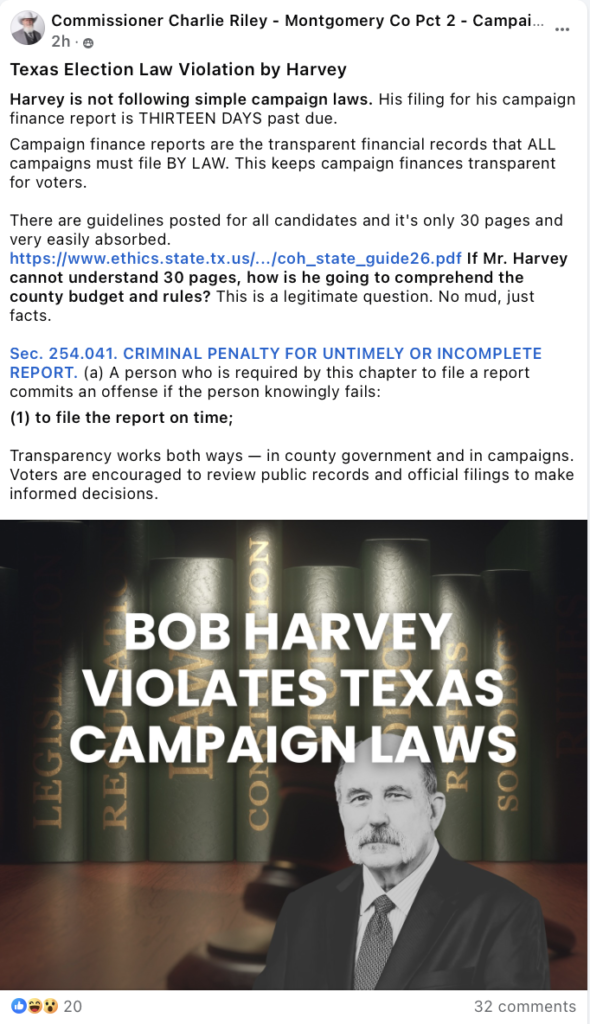
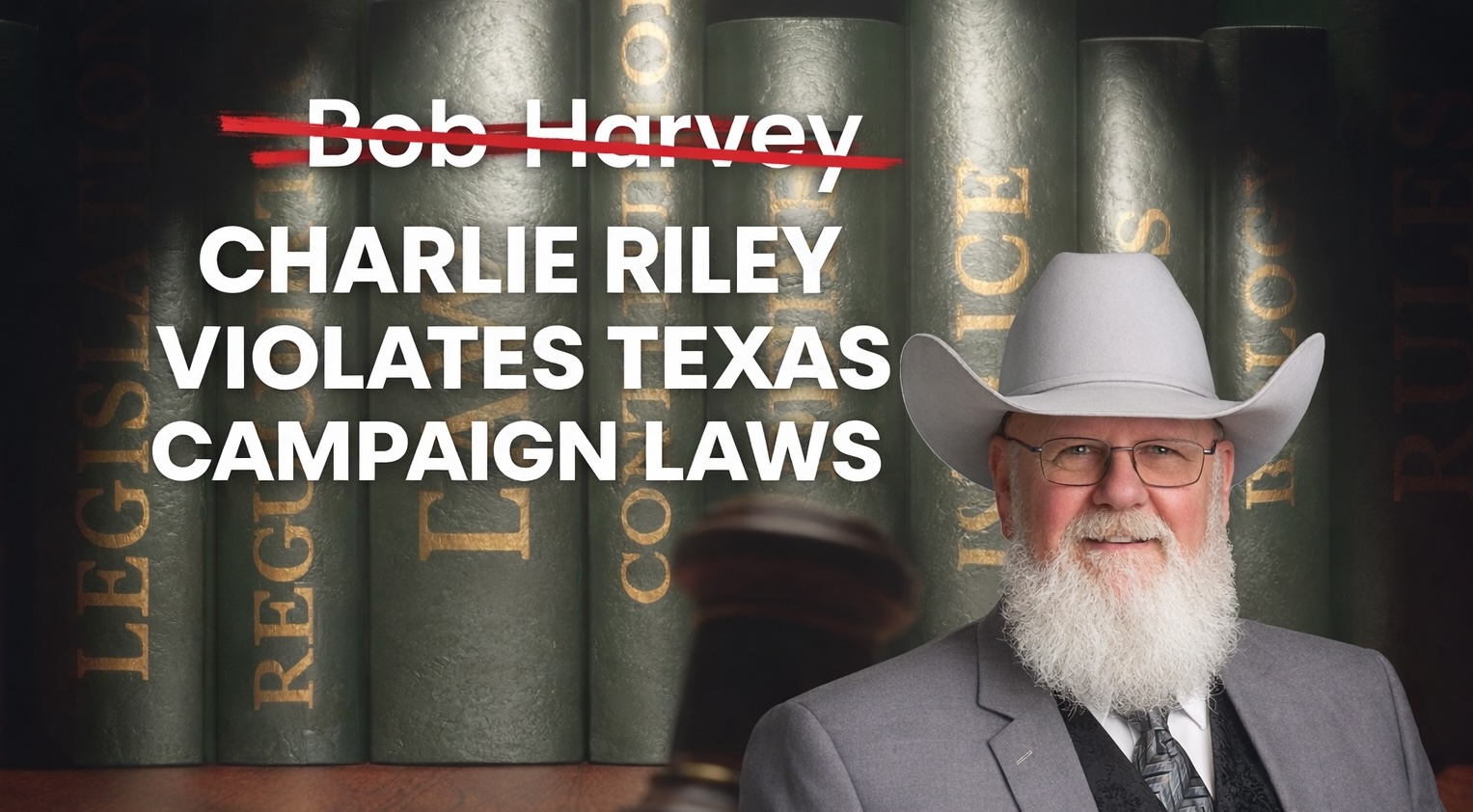
Montgomery County Commissioner Charlie Riley has filed the same semiannual campaign finance report late twice in the past two years.
Twice.
He has served in office for 12 years.
Now his political operation is publicly attacking first-time candidate Bob Harvey for filing one report thirteen days late.
That contrast is not minor.
It is central.
And it raises a serious question:
Is this about accountability — or is this mudslinging?
The Facts — Not the Headlines
Bob Harvey’s campaign finance report was filed thirteen days past deadline.
He acknowledged it immediately.
He told Dock Line:
“The buck stops with me.”
No excuses.
No staff blamed.
No denial.
The document in question is being filed.
The link circulated publicly by his campaign points to the January 15 report he filed on time — not the late report currently at issue.
That filing can be reviewed here: https://elections.mctx.org/Candidate_Filings/Harvey_CFR_10.2025_12.2025.pdf
Harvey has also stated that when the late-filed report is reviewed, voters will see substantially the same donor activity reflected in his January report — including no contributions from engineers, developers, or individuals tied to infrastructure-related special interest groups.
Those records are public.
Voters can verify them for themselves.
The Law — Without Political Spin
Campaign reporting in Texas is governed by the Texas Ethics Commission.
The reporting guide referenced publicly is available here:
https://www.ethics.state.tx.us/forms/coh_state_guide26.pdf
A late filing typically results in a civil administrative penalty.
It does not automatically constitute criminal prosecution.
Section 254.041 of the Texas Election Code addresses knowingly failing to file. Criminal penalties require intent. Administrative delay alone does not equal criminal conduct.
There is a clear difference between:
• Missing a deadline
• Concealing funds
Blurring that distinction may generate headlines. It does not change the legal standard.
The Incumbent’s Record
Commissioner Riley’s own filings show late submission of the same semiannual report twice within the last two years.
Those reports can be reviewed here:
July–December 2023:
https://elections.mctx.org/Candidate_Filings/Riley_CFR_07.2023_12.2023.pdf
January–June 2024:
https://elections.mctx.org/Candidate_Filings/Riley_CFR_01.2024_06.2024.pdf
The second filing notes the delay was attributed to a power outage caused by Hurricane Beryl. 1st report will state not late due to extension for a holiday. However, it is late as law states or should have it been turned in prior?
Regardless of the stated reason, both filings are marked late.
If Commissioner Riley is going to publicly hold others accountable for late filings — and cite criminal statutes in doing so — then the same standard must apply to his own record.
Accountability does not change based on circumstance or incumbency.
This is not speculation. It is public record.
Which leads to a serious question:
Did the Riley campaign know about these late filings when it chose to attack a first-time candidate over one?
If they knew, then this appears to be selective outrage.
If they did not know, that raises concerns about internal campaign oversight.
Either explanation deserves scrutiny.
When Campaigns Shift to Process Attacks
Political campaigns often turn to procedural attacks when polling tightens or momentum shifts.
When debate over policy becomes less favorable, campaigns frequently pivot to technical compliance issues.
Voters have seen this pattern before.
Administrative paperwork becomes a weapon.
Statutes are quoted without context.
And the narrative shifts from governing record to headline creation.
Is that what is happening here?
That is a fair question.
Experience Should Raise the Bar — Not Lower It
Charlie Riley has 12 years in office.
He is not new to reporting requirements.
He understands deadlines.
He has staff and institutional knowledge.
Bob Harvey is a first-time candidate.
If late filing disqualifies someone from understanding public finance, then that standard must apply to a 12-year incumbent who has filed late twice.
If late filing is an administrative error handled through public correction and civil penalty, then that standard must apply equally as well.
Accountability cannot be situational.
Truth. Transparency. Accountability.
At Dock Line, those are not slogans.
Truth means showing the public record — even when it complicates a narrative.
Transparency means publishing the URLs and letting readers review the filings themselves.
Accountability means applying the same standard to every candidate — incumbent or challenger.
The documents are public.
The dates are public.
The voters can decide whether this is a matter of genuine concern — or campaign mudslinging at a time when campaigns feel pressure.
We will continue to report the record.
Consistently.