Amazon May Quadruple Its Middletown Footprint. But Will the Robots Bring the Jobs?
Amazon is advancing plans for two massive fulfillment centers near Middletown's U.S. 301 interchange that could add more than 5 million square feet and roughly 1,500 permanent jobs. The buildings are designed around robots—and that changes the math on what industrial growth delivers.
Amazon is advancing plans for two enormous fulfillment centers near Middletown's U.S. 301 interchange. Together they could add more than 5 million square feet of space and roughly 1,500 permanent jobs—but the buildings are designed around robots, and that changes the math.
The next chapter of Middletown's growth will be measured in millions of square feet—and in how many of those feet a human worker ever needs to touch.
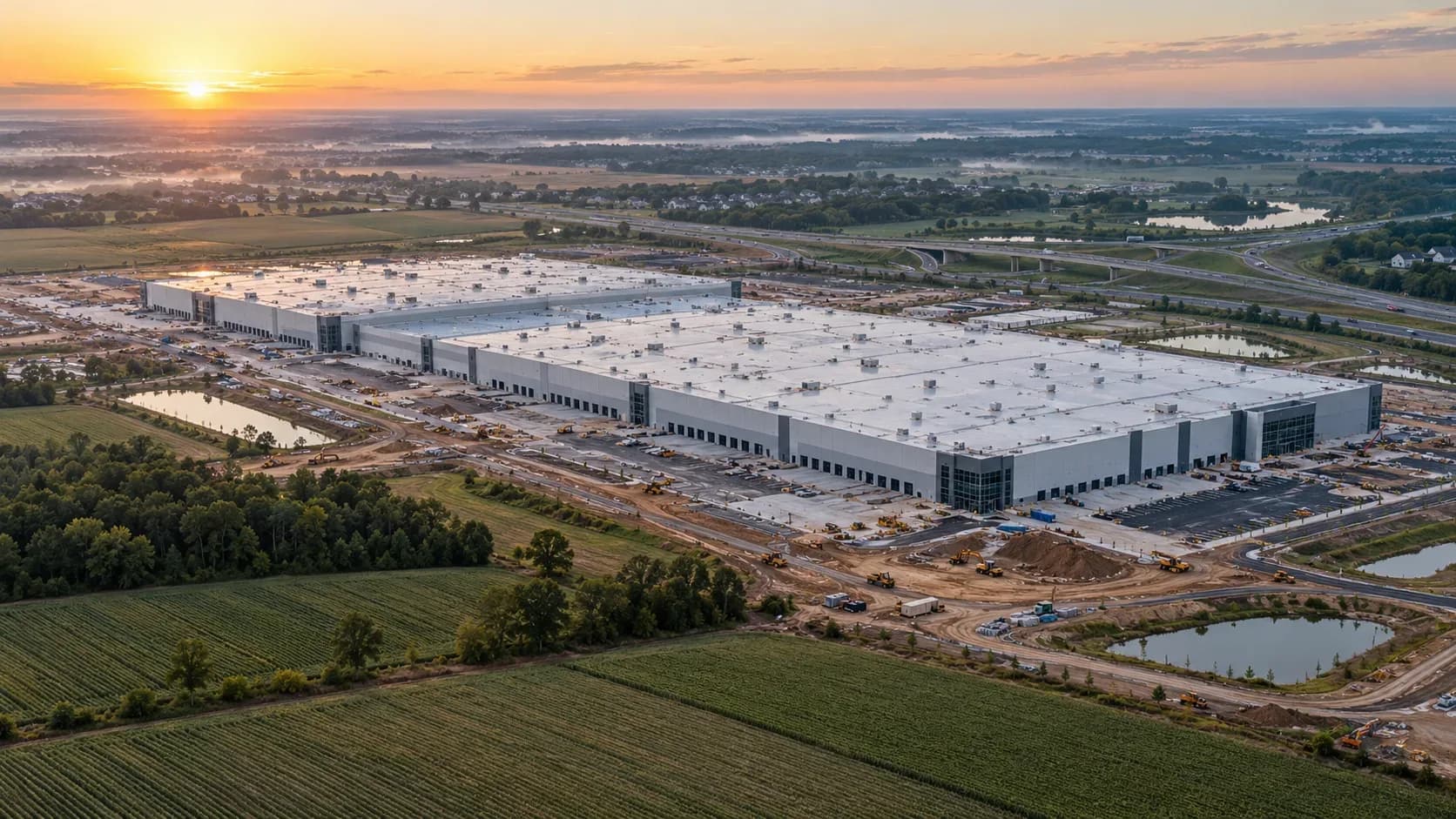
Amazon is advancing plans for two enormous fulfillment centers on opposite sides of Middle Neck Road near the U.S. 301 interchange. Together, the robot-oriented buildings could add more than 5 million square feet of operating space and roughly quadruple the company's footprint in the Middletown area.
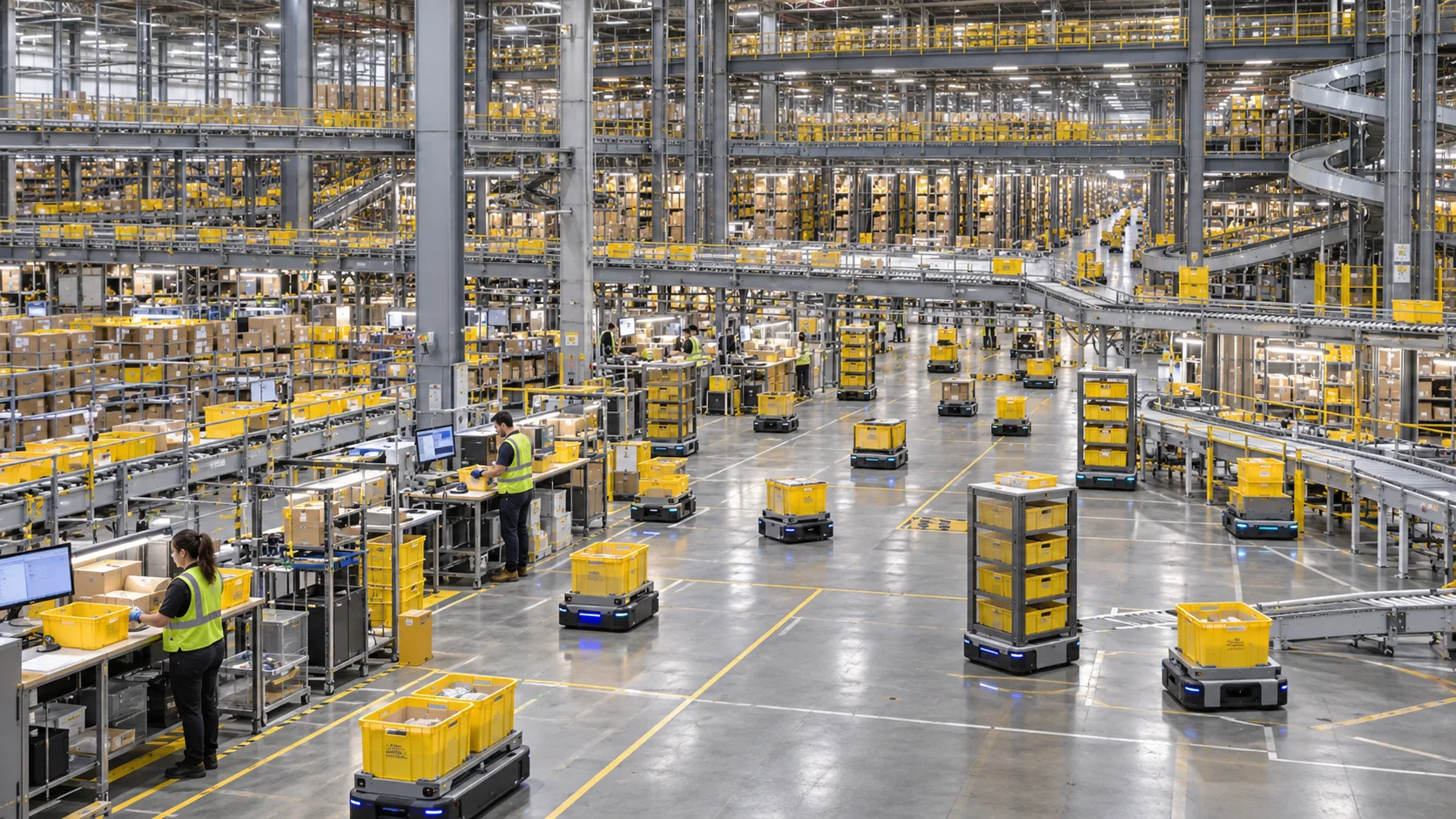
The projects are expected to create real jobs. Town presentations have projected approximately 1,000 to 1,200 permanent positions in one building and at least 500 in the other. The second facility is also expected to employ more than 300 people during construction. But these will not operate like the warehouse many Middletown residents have known since Amazon opened its Merrimac Avenue fulfillment center in 2012. The new buildings are being designed around robotics. People will work inside them, but machines will carry much of the inventory through the vast upper levels and deliver it to employees below.
That creates a question much larger than Amazon: What does a new industrial boom mean when the building grows faster than the workforce?
Two Buildings Large Enough to Change the Horizon
The larger of the two approved projects sits on the north side of Middle Neck Road. Town officials have described it as an approximately 3.2-million-square-foot fulfillment center on about 135 acres. Local projections have placed its future workforce at between 1,000 and 1,200 people, although Amazon has not publicly guaranteed that employment figure or announced an opening date.
Across the road, at 1924 Middle Neck Road, plans for 301 Business Park South changed substantially in September 2026. An earlier plan called for a five-story, 3.9-million-square-foot building reaching 139 feet. The amended plan approved unanimously by Middletown's mayor and council reduced it to two stories, approximately 52 feet high and 1,949,879 square feet on 105.1 acres.
Smaller is a relative term. The approved plan still includes 370 loading spaces for trucks and trailers, 481 vehicle parking spaces and four commercial outparcels along Middle Neck Road. The developer told the town the completed building would add more than $90 million to the local tax base, provide at least 500 permanent full-time jobs averaging $22.50 an hour and support more than 300 construction jobs.
Amazon's land purchase also produced an immediate windfall. The company paid approximately $207 million for two adjoining tracts of former farmland, according to New Castle County property records reviewed by Spotlight Delaware. Middletown receives a 1.5 percent transfer tax on real-estate sales within town limits, making the transactions worth more than $3 million to the town before a package moves through either building.
Why the Warehouse Needs So Much Space
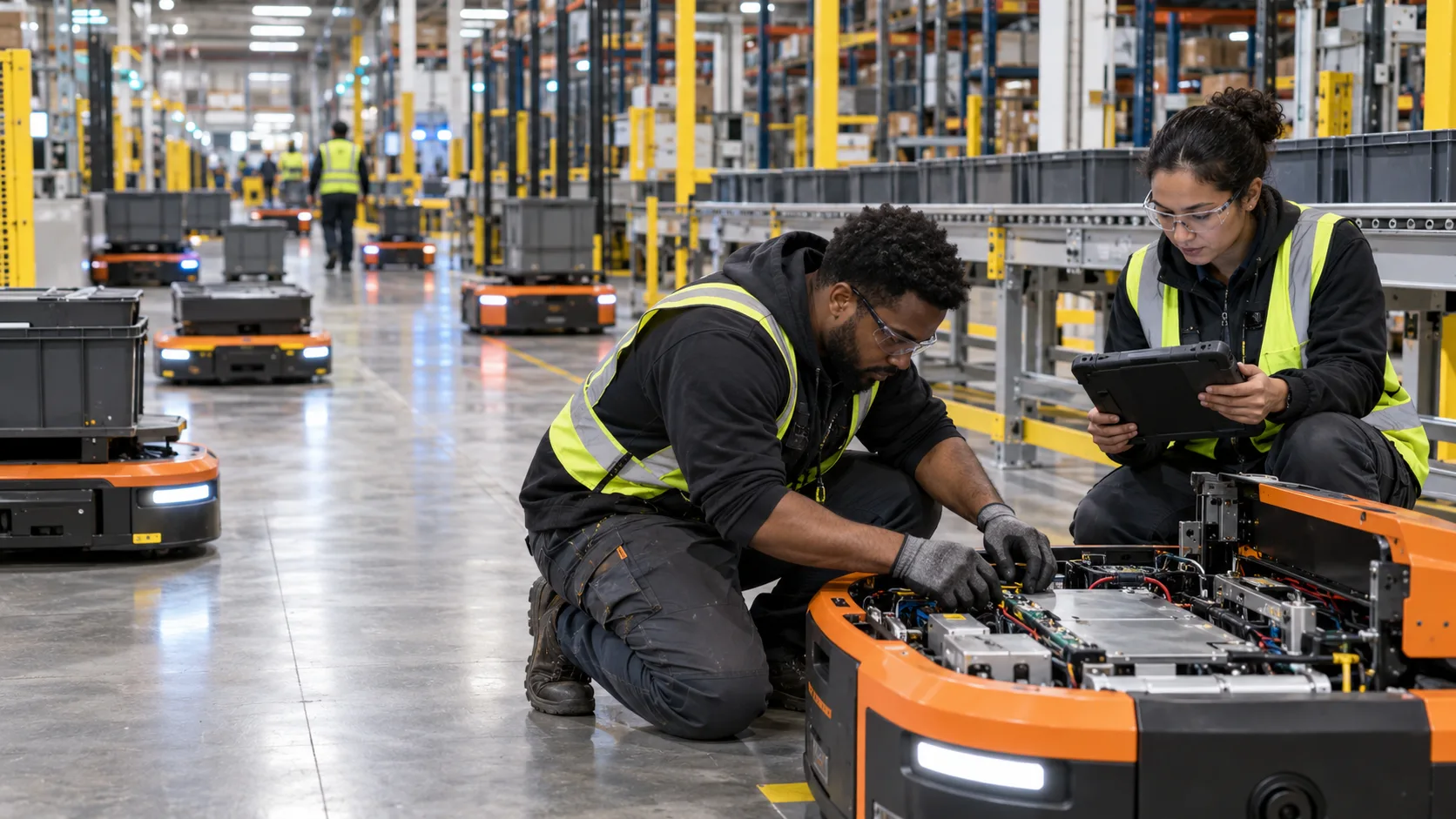
The height and scale make more sense when the robots are added to the picture. During an April 2025 council presentation for the south-side project, the town was told that employees would work primarily on the ground floor while robots traveled through the upper levels, retrieved merchandise and brought it down for shipping.
That description resembles Amazon's newest generation of fulfillment centers. At the company's highly automated facility in Shreveport, Louisiana, thousands of mobile robots and robotic arms move storage containers, sort products, stack packages and bring items to people working at ergonomic stations. The machine does not necessarily replace the person standing at the workstation. It replaces much of the walking, lifting, reaching and searching that once occupied the person's shift.
Amazon says its newer robotics systems can reduce fulfillment-processing time by as much as 25 percent. The company also says its advanced robotic sites require more workers in reliability, maintenance and engineering roles than older facilities. Those claims come from Amazon, and the exact systems intended for Middletown have not been publicly detailed. What the town records establish is that the new buildings were designed around robotic movement from the beginning.
The Jobs Are Real. So Is the Question.
Roughly 1,500 new permanent jobs would matter in any Delaware town. A reported average wage of $22.50 an hour at the south-side building would also put many positions above the current average hourly earnings advertised for warehouse labor around the 301 Business Park.
Robotic buildings create jobs that did not exist in an older warehouse: mechatronics technicians, automation specialists, controls engineers and employees trained to diagnose a machine that has stopped moving. They can also reduce some of the repetitive lifting and long-distance walking that makes warehouse work physically punishing.
But residents are not imagining the other side of the equation. The proposed buildings are several times the size of many traditional distribution centers, yet their projected workforces do not rise at the same rate. A robotic facility can move more packages with fewer people per square foot. Some of the jobs that remain require technical training that an entry-level warehouse employee may not already possess.
That is why the argument cannot be reduced to "robots take jobs" or "robots create jobs." Both statements can be true in different parts of the same building. Automation can eliminate one task, create another and leave a community responsible for helping workers cross the distance between them.
The Road Carries the Cost
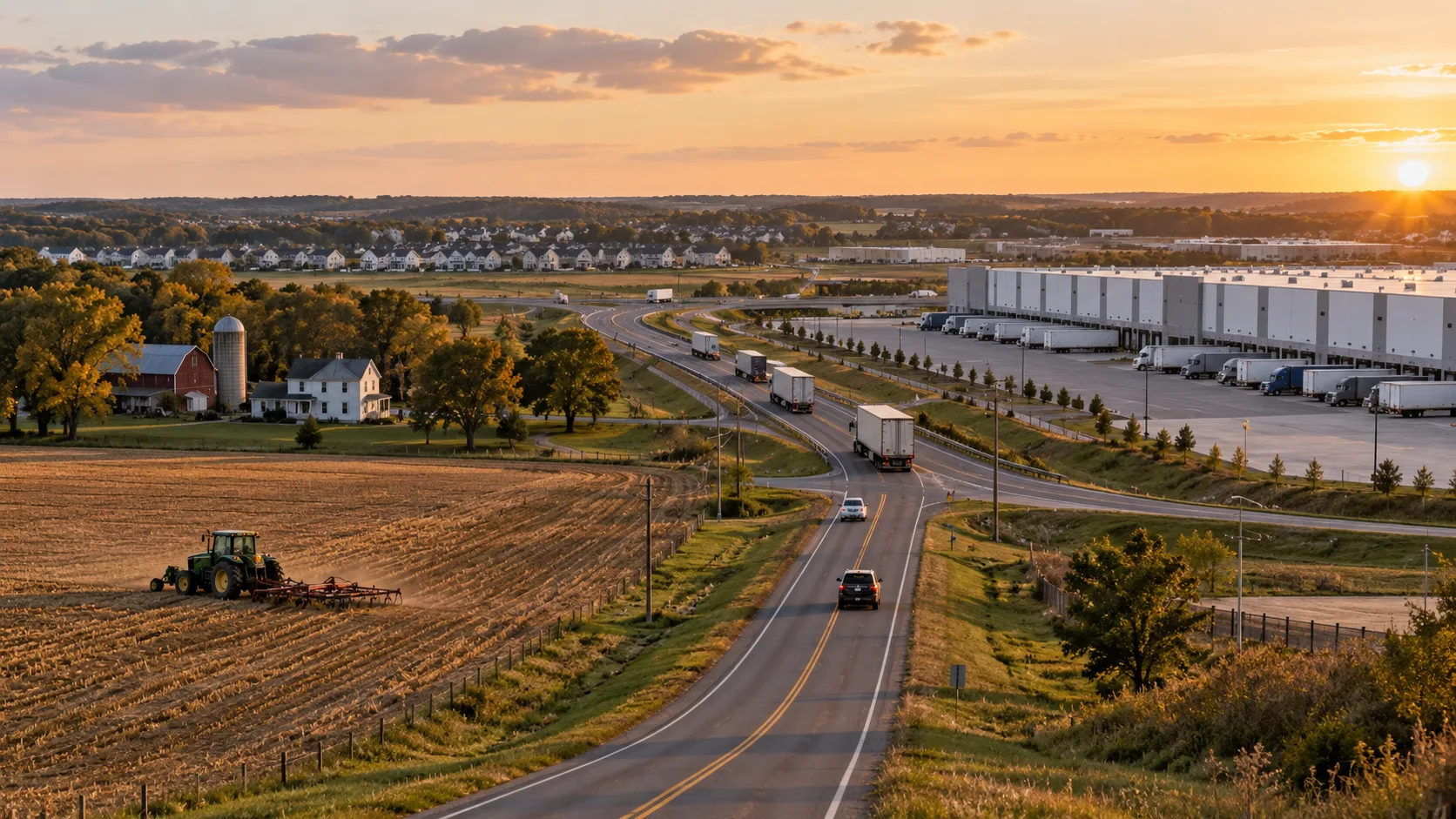
Middletown's concern is not limited to the number of people inside the buildings. Residents will also live with what travels outside them. Town officials say the amended south-side plan produces less traffic than the previously approved manufacturing proposal. The project is positioned near U.S. 301, and the developer said truck movements would avoid the main residential neighborhoods. Existing infrastructure was also planned to serve both large buildings.
Still, 370 loading spaces describe the scale of the operation better than any rendering can. Every truck must reach the site. Every shift change places employees on surrounding roads. Warehouses bring tax revenue and jobs, but they also bring diesel traffic, road maintenance, noise, lighting and pressure to convert additional farmland near the interchange.
That trade is especially visible in Middletown, where agricultural ground, fast-growing subdivisions and industrial projects now meet along the same roads. The town said the developer held a community meeting before the September approval and reported no opposition from the approximately 20 residents who attended. Other Middletown-area residents have continued to raise broader concerns about traffic, infrastructure and the pace of warehouse development. Both facts belong in the story.
Middletown's Next Test
Middletown began as a stopping point halfway between two waterways. Its growth has always been tied to movement—first carts, then railroads, highways and now millions of packages ordered with a tap on a screen. Amazon's expansion could deliver construction work, permanent jobs, millions in tax value and a stronger position for Middletown in the East Coast distribution network. It could also show how quickly the old promise of "a big building means a lot of jobs" is changing.
The buildings are approved, but the most important numbers remain projections. Amazon has not announced construction and opening dates for both facilities, and promised job counts become real only when people are hired and the doors open.
Middletown does not have to choose between welcoming investment and asking hard questions about it. The better question is what the town expects in return for the roads, land and public infrastructure that make the investment possible: how many jobs, what kind of training, what wages, what traffic protections and what plan exists for the workers whose jobs change when the robots arrive.
The packages will move faster. Middletown's decision about what growth should deliver to the people who live there deserves more time.
Sources
Town of Middletown — September 14, 2026 council agenda: 301 Business Park South
Town of Middletown — April 7, 2025 council minutes: original proposal and robotic operations
Delaware Public Media — September approval, revised building size and projected jobs
Spotlight Delaware — Amazon land purchases, expansion plans and community concerns
Amazon — Shreveport fulfillment-center robotics, processing time and skilled jobs