TCEQ Is Still Taking Applications for $16 Million in Hydrogen Vehicle Grants
The Texas Commission on Environmental Quality is accepting competitive applications through 5 p.m. Central Time on Dec. 29 for the Texas Hydrogen Infrastructure, Vehicle, and Equipment Grant Program, with up to $16 million available in the 2026-2027 biennium.
The Texas Commission on Environmental Quality is still accepting applications for competitive grants under the Texas Hydrogen Infrastructure, Vehicle, and Equipment Grant Program, with a deadline of 5 p.m. Central Time on Tuesday, Dec. 29, 2026. A Sept. 30 news release said approximately $16 million is available. The request for grant applications states that the total awarded may not exceed $16 million over the 2026-2027 state fiscal biennium, with up to $8 million available each fiscal year, and that an award depends in part on the availability of funding.
The program, known as THIVE, is run through TCEQ's Texas Emissions Reduction Plan. The program page, last updated Oct. 23, says applications will be awarded competitively under the criteria in the request for applications. The release said the program funds eligible entities that replace, repower or convert older heavy-duty on-road vehicles or selected non-road equipment with hydrogen power, and that it also covers hydrogen refueling infrastructure.
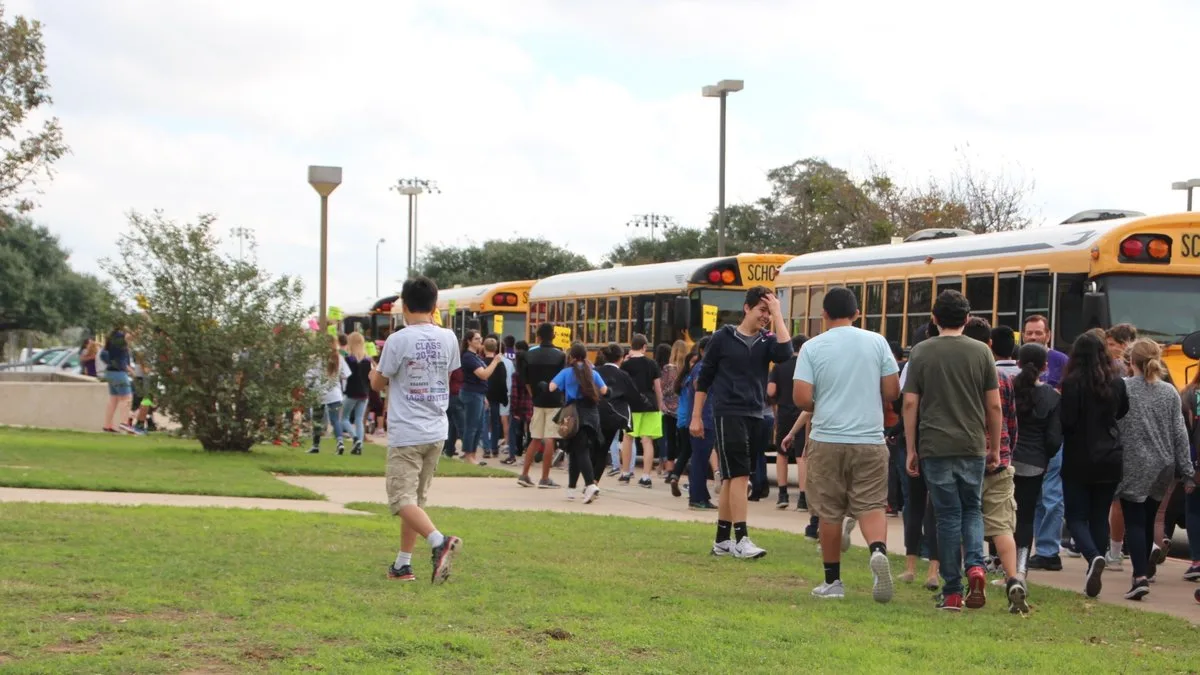
A Round Rock ISD school bus, photographed Nov. 17, 2016. File photo; this is not a THIVE-funded hydrogen vehicle. School buses are among the on-road examples listed on TCEQ's program page, and Williamson County is an eligible Austin-area county. Photo: DFolettoRRISD / Wikimedia Commons, CC BY-SA 4.0.
Who Can Apply and What Qualifies
Eligible applicants, the release and program page say, include individuals, state and local governments, corporations, or any other legal entity. Business entities such as corporations or partnerships must have had an active Texas secretary of state registration by the Sept. 30, 2026, opening date and must keep it during the contract period if they receive a grant. The request for applications lists a reimbursement deadline of April 30, 2029. Costs paid before the opening date are not eligible.
Eligible on-road examples on the program page include transit buses, school buses and haul trucks. Eligible non-road examples include forklifts and cargo-handling equipment. A program summary says replacement on-road vehicles must be heavy-duty, with a gross vehicle weight rating of at least 8,501 pounds, certified to applicable EPA on-road engine standards, and owned, leased and operated in Texas by the applicant for at least two years before the application signature date. Replacement non-road equipment must have an engine rated at least 25 horsepower, be certified to applicable EPA non-road standards, and be owned and operated in Texas by the applicant for the same two-year period.
New or converted vehicles and equipment, the summary says, must be powered by hydrogen or use a hydrogen-powered powertrain, achieve at least a 25% reduction in nitrogen oxides, or NOx, emissions compared with the equipment being replaced, be no more than three model years older than the purchase year, and match the type, weight category and vocational use of the equipment being replaced.
The grant-funded equipment must be used in eligible counties. The summary groups those counties around Austin (Bastrop, Caldwell, Hays, Travis and Williamson); Beaumont-Port Arthur (Hardin, Jefferson and Orange); Corpus Christi (Nueces and San Patricio); Dallas-Fort Worth (Collin, Dallas, Denton, Ellis, Henderson, Hood, Hunt, Johnson, Kaufman, Parker, Rockwall, Tarrant and Wise); El Paso; Houston-Galveston-Brazoria (Brazoria, Chambers, Fort Bend, Galveston, Harris, Liberty, Montgomery and Waller); San Antonio (Bexar, Comal, Guadalupe and Wilson); and Tyler-Longview (Gregg, Harrison, Rusk, Smith and Upshur), plus Anderson, Freestone, Howard, Hutchinson, Navarro and Titus. The Sept. 30 release said grant-funded equipment must be operated primarily within eligible nonattainment areas or affected counties.
How Much Can Be Requested
For replacement projects, applicants may request up to 100% of the incremental cost, which the request for applications defines as the cost to buy the replacement equipment minus a default scrap value of $1,000. Repower or conversion projects may also request up to 100% of the eligible incremental cost of the engine and related work. Refueling infrastructure projects may request up to 50% of the eligible costs to buy and install the station and associated equipment.
For new purchases, the original request for applications measured incremental cost as the difference between a TCEQ-established diesel baseline and the hydrogen vehicle or equipment. Addendum No. 1, dated Oct. 22, 2026, revises that definition. Applicants may still request up to 100% of the incremental cost, now described as the difference between the manufacturer's suggested retail price, a documented dealer price, or another appropriate TCEQ baseline cost listed in Appendix C for diesel equipment, and a qualifying hydrogen-powered equivalent. In every category, the incremental cost must be reduced by other public financial incentives that directly lower the project cost, including tax credits or deductions and other grants.
If a grant is awarded, the request for applications requires the grantee to operate the funded vehicles or equipment for a five-year activity life. For on-road replacement or purchase projects, that obligation ends at the earlier of the fifth anniversary or 400,000 miles. During those five years, the equipment must be operated at least 55% of its total annual usage in one or more eligible counties. Applicants may commit to as much as 95% usage in those counties for additional grant funds, the document says, and falling short may require repayment. Refueling infrastructure must be operated by the grantee in an eligible county for a three-year operation period.
How Applications Will Be Scored
The request for applications says TCEQ gives no assurance that a project will be awarded a grant, and that purchases made before a contract is signed are at the applicant's own risk. Eligible projects will be scored and ranked competitively. Replacement of on-road heavy-duty vehicles with newer on-road hydrogen vehicles is the first priority, followed by purchase, lease, repower or conversion of on-road heavy-duty vehicles to a hydrogen powertrain, then public hydrogen refueling infrastructure open at least eight hours a day, between 8 a.m. and 6 p.m., at least five days a week. Cost-effectiveness, measured as cost per ton of NOx reduced, can account for up to 50 points.
Applications may be submitted through TCEQ's secure upload site or by mail to the Air Grants Division, P.O. Box 13087, Austin, TX 78711-3087, or by express mail to 12100 Park 35 Circle. Questions may be directed to the TERP team at 800-919-TERP (8377) or [email protected]. An informational webinar was held Sept. 16, 2026, and can be viewed on the THIVE page, the request for applications says. This article does not score projects or estimate uncommitted funds.