Corsicana Went Looking for Water in 1894. It Found the Start of Texas Oil.
Texas' first important oil field was found by accident in Corsicana in 1894, by drillers looking for city water. Here is how a small town changed the state.
Most Texans know about Spindletop, discovered south of Beaumont on Jan. 10, 1901, which the Handbook of Texas says marked the birth of the modern petroleum industry. Fewer know that the first Texas field to produce oil in important quantities was found seven years earlier in Corsicana, in a well that was supposed to produce drinking water.
The story is told in the Texas State Historical Association's Handbook of Texas entry on the Corsicana oilfield, by Julia Cauble Smith. It calls Corsicana "the first Texas field to produce oil and gas in important quantities."
A town that needed water
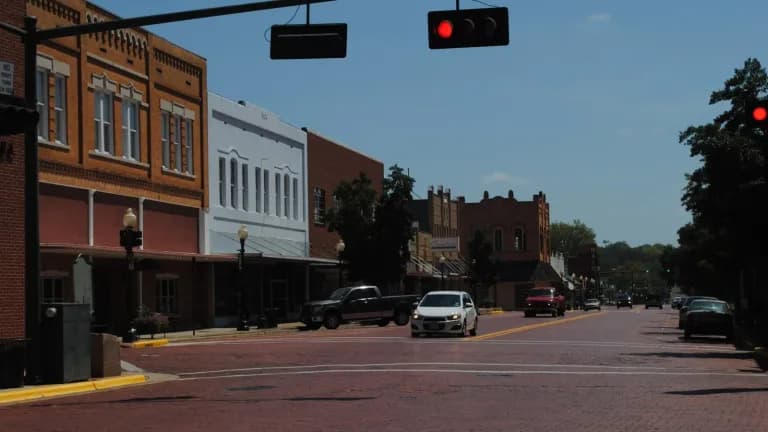
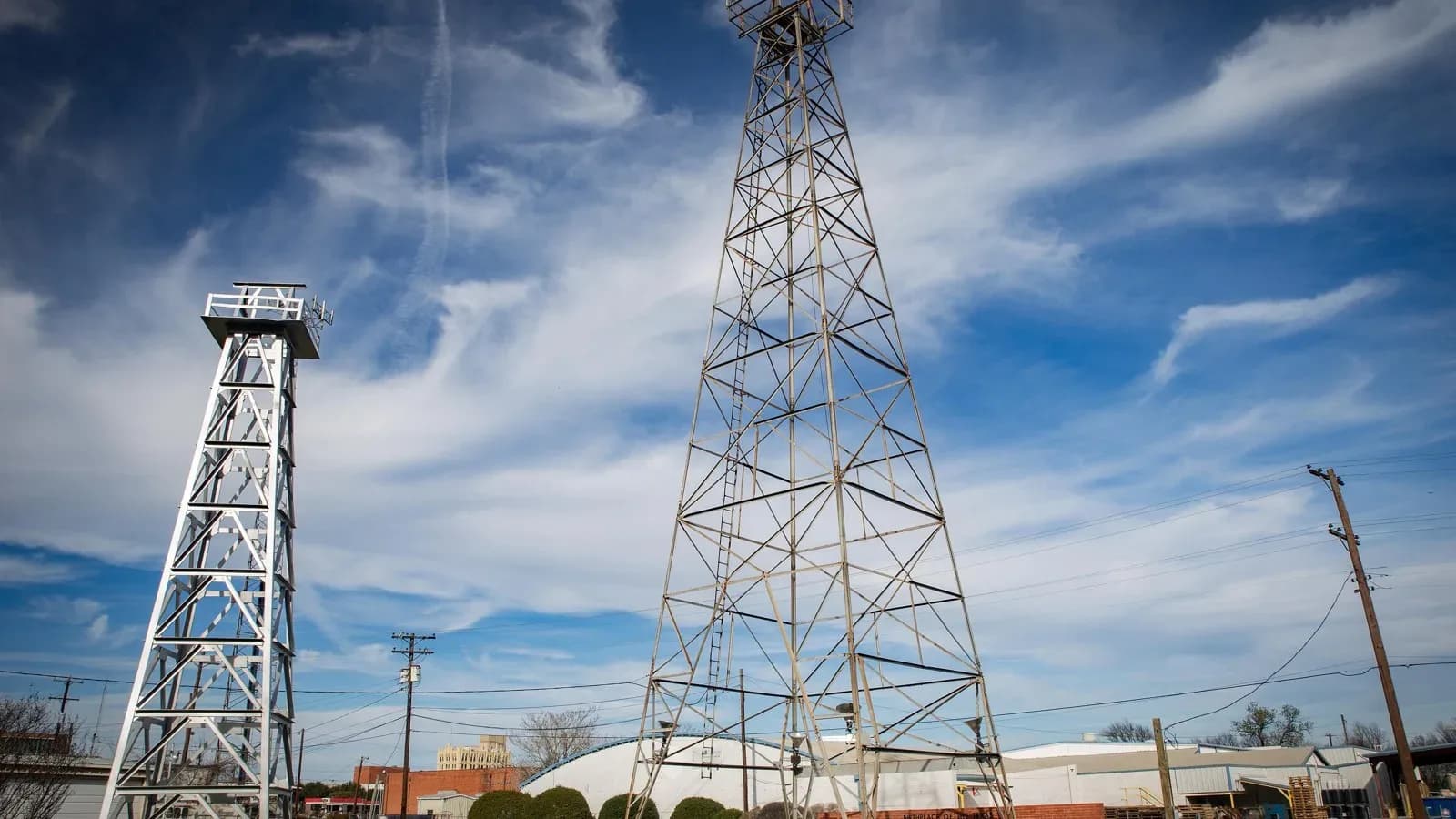
In 1893, Corsicana's civic leaders wanted a reliable water supply to help the town grow. They hired American Well and Prospecting Company, run by H. G. Johnston, Elmer Akins and Charles Rittersbacher, to drill three water wells. On June 9, 1894, the first well reached 1,027 feet and hit oil. The drillers cased it off, but oil kept rising to the surface outside the pipe.
Townspeople took notice. That September, local men Ralph Beaton and H. G. Damon joined Pennsylvania oilman John Davidson to form the Corsicana Oil Development Company. Their first well, staked 200 feet from the water well, was finished on Oct. 15, 1895. It flowed two and a half barrels a day. By the end of 1896 the field reported 1,450 barrels for the year.
Too much oil, and the first rules
Drillers sank so many wells that Corsicana oil flooded a small Texas market. With the state's only refinery at Sour Lake, operators sometimes had no buyer and poured surplus oil on the ground. That waste led to the first Texas law regulating how oil and gas wells were drilled, cased, plugged and abandoned, passed March 29, 1899.
Town leaders also went looking for help. In 1897, Mayor James E. Whitesell and others invited Pennsylvania oilman Joseph S. Cullinan to advise them. He agreed to buy 150,000 barrels at 50 cents a barrel and to build lines, tanks and a refinery. When his local backers lost faith, he raised the $150,000 from outside the state. The refinery's first shipment left on Feb. 24, 1899, and the price of Corsicana crude rose to $1.10 a barrel by May 1900.
A field that kept going
Production peaked in 1900 at 839,554 barrels. Until 1909, most of the gas sold in Texas for homes and industry came from Corsicana. Later, mergers with two nearby fields and water-flood projects starting in 1950 brought the old field back, and in 1965 it produced 1,611,055 barrels. Through 1993, the latest figures in the Handbook, the field had produced nearly 44 million barrels of oil between 1896 and Jan. 1, 1993.
Why it is worth remembering
Corsicana's leaders were not chasing a fortune. They were trying to provide water so their town could grow. They found something else and made the most of it, and when waste got out of hand, Texas responded with sensible rules. Even after more than a century, the story still holds up: work hard on the job in front of you, take what Providence puts in your path, and take care of it.
Hero photo: Renelibrary via Wikimedia Commons, CC BY-SA 4.0, cropped and resized.