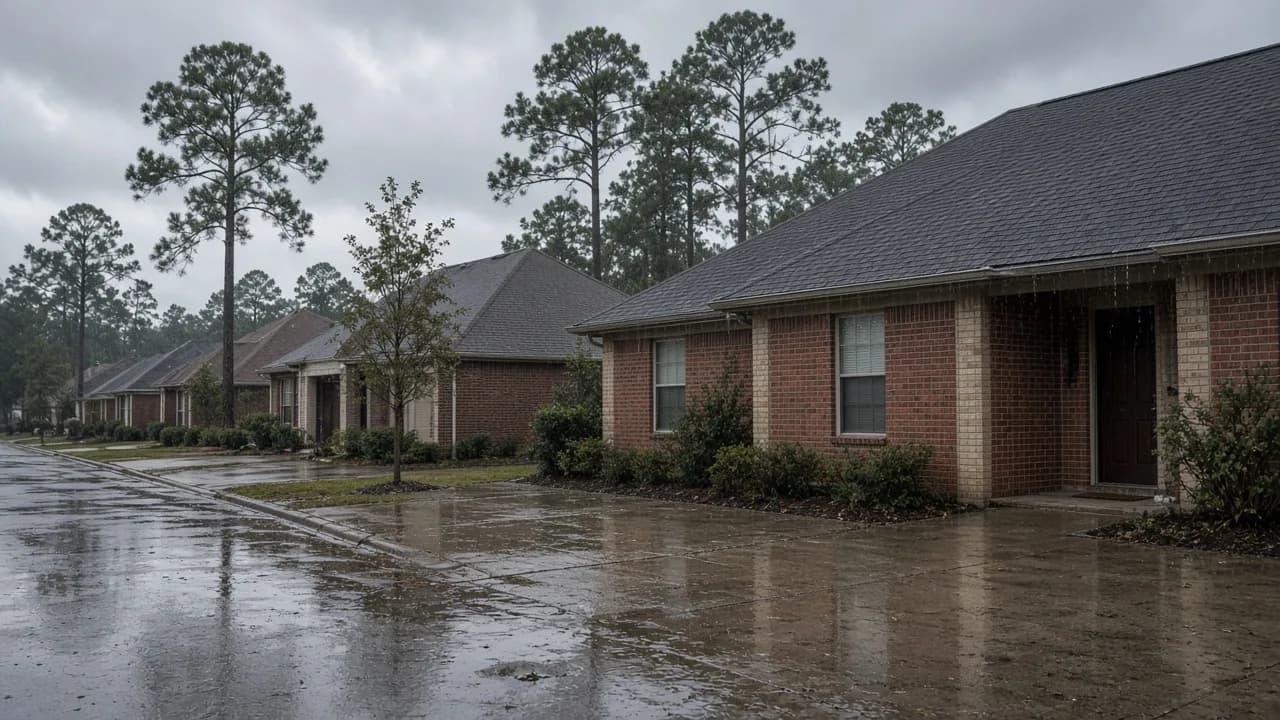
After Thursday night’s Houston storms, how to check a roof for leaks
Thursday night’s storms dropped 3 to 6 inches from Katy through The Woodlands, and more than 8 inches near Magnolia. Here is how to spot a roof leak before more rain arrives.
Thursday night’s storms were a rain test, not a hailstorm. From south of Katy north through Cypress and The Woodlands, a slow-moving line dropped 3 to 6 inches. Parts of western Montgomery County near Magnolia picked up more than 8 inches, Space City Weather reported Friday morning. Most creeks and bayous stayed in their banks. The question on a wet roof this morning is whether that much water found an opening.
Space City Weather had put a Stage 1 flood alert on areas along and west of Highway 59/I-69 Thursday evening, after the storms pushed farther east than forecast. By 8:15 p.m. the line ran roughly from Katy to The Woodlands. Cypress and Waller were already near 4 inches, and western Montgomery County was at 4 to 6 inches, with more still falling. Street flooding was the threat they named. By Friday morning the radar over that corridor had quieted.
More showers and thunderstorms are still possible across the region through about 7 to 9 p.m. Friday, and the weekend rain focus shifts toward the coast and areas east of Houston. Neighborhoods that took the heaviest rain Thursday night are likely to see less of the next round. A leak that started overnight can still spread if another cell sits on the house. The useful window is this morning, while the ceiling stain is new and the attic is still wet enough to trace.
Check from the ground first
A soaked shingle roof is a bad place to walk. Start inside and from the yard.
Look at ceilings under roof valleys, around bathrooms, and along exterior walls. A yellow ring can show up hours after the rain stops, because water travels along a rafter before it drips. In the attic, use a flashlight and stay on the decking joists. Fresh drips, dark sheathing, and wet insulation are the marks that matter. Insulation can hide a small leak until the next storm, so pull a damp patch aside and look at the wood.
Outside, look for shingles in the yard or caught in shrubs, granules piled in the gutter, and a valley packed with leaves. Pipe boots, chimney flashing, and the metal edge along a dormer are the usual failures when several inches fall in a few hours. A lifted shingle tab can look fine from the street and still let water underneath.
Core Four Roofing, the Tomball shop at 22955 State Highway 249, Suite 26, publishes a Houston homeowner storm checklist that walks through the same interior and exterior checks. Their leak-repair page describes tracing moisture back to the opening instead of patching the stain on the ceiling.
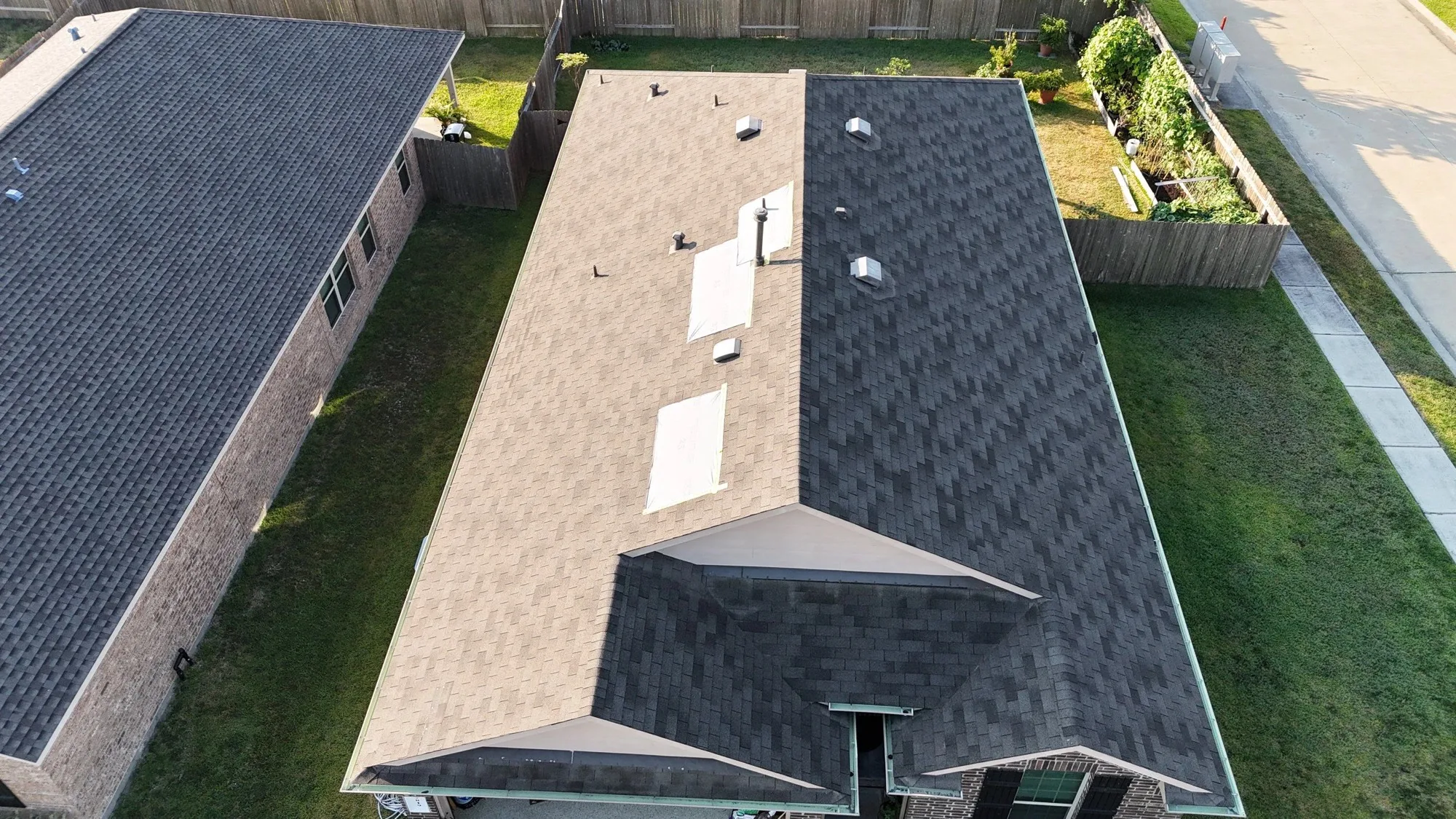
Core Four Roofing photo of temporary coverings on a shingle roof. A tarp is for stopping water today, not for leaving through the next storm season.
If water is already inside
Move furniture, catch the drip, and photograph the ceiling, the attic, and the wet belongings before anything is thrown out. Insurers expect a homeowner to limit further damage. That usually means a tarp or a temporary dry-in, not a full replacement decided from the driveway.
Core Four’s storm desk says it runs 24/7 emergency tarping for houses and commercial buildings, then a photo inspection if the roof is actually damaged. The company says the tarp is also how a policyholder shows the carrier that the property was protected from a second round of water. The local number is (281) 541-0027.
Do not let a contractor tell you the deductible disappears. Under Texas Insurance Code Chapter 707, a contractor paid from a property claim commits a crime by waiving, absorbing, or rebating the deductible unless the insurer agrees. The carrier can also hold back replacement-cost money until there is proof the deductible was paid. A financing contract can count as that proof. Get the scope in writing, and pay the deductible to the party the policy requires.
Core Four’s insurance page says the company documents shingles, vents, flashing, gutters, and siding, then meets the adjuster on the roof. That is the company’s description of its own process. An adjuster still works for the insurance company. A photo file helps because a hard rain often leaves damage that is easy to miss from the yard: a split boot, a nail pop, a valley that only leaks when water is sheeted across it.
The neighborhoods that took the water
The heaviest band Thursday night sat on the northwest side of Houston, which is the same corridor Core Four works from its Highway 249 shop.
South of Katy through Cypress, totals landed in that 3-to-6-inch range Space City Weather described for the broad area up to The Woodlands. Homes there are mostly architectural shingles on relatively new decks. The failure after a night like this is usually a flashing detail or a clogged valley, not a roof that has reached the end of a 20-year life. Core Four’s pages for Katy and Cypress cover repair and replacement on those roofs.
The Woodlands and southern Montgomery County were on the north end of the line. Older sections mix dimensional shingles with tile and heavier profiles that HOAs often require. Water that gets under tile can travel a long way before it stains a ceiling. The company’s Woodlands roofing page is the one written for that housing stock.
Western Montgomery County, including spots near Magnolia, took the highest totals, more than 8 inches in places. Tomball sits between that rain and The Woodlands. Core Four’s Tomball page is the home-base listing, and the Conroe page covers the lake side of the county, where wind on an open fetch can lift shingles even when the headline threat was rain. Thursday night’s verified story is the rainfall. Small hail was possible in the strongest cells, and it was not the event forecasters were warning about.
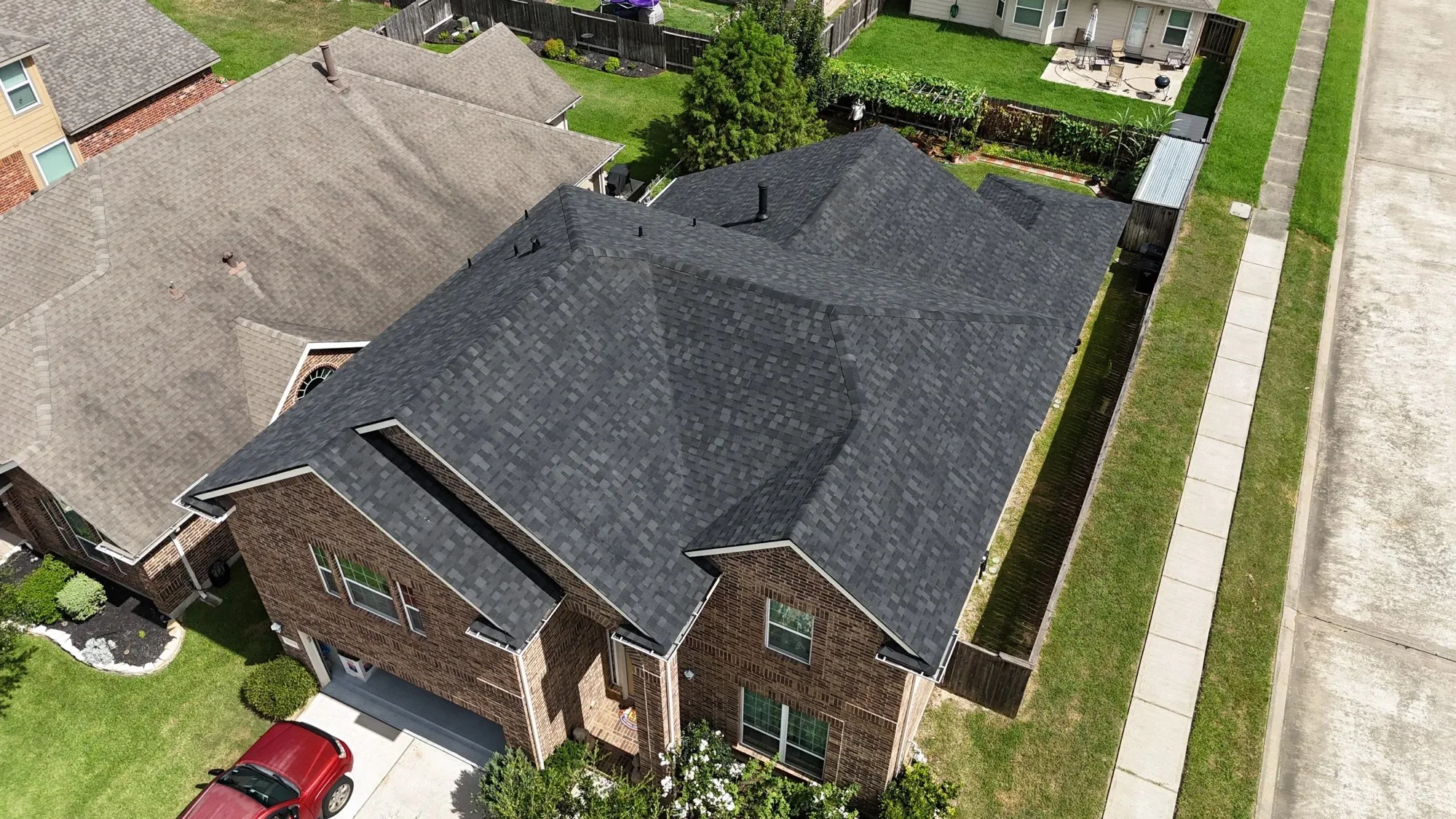
A finished Core Four Roofing shingle replacement. Thursday night’s job, for most houses, is finding out whether a repair is enough.
Repair, or a claim for more
A single lifted shingle or a cracked pipe boot is a repair. Widespread missing shingles, soft decking, or stains in several rooms are the cases where a carrier and a roofer start talking about a larger scope. Age matters. A roof that was already losing granules will leak in a 4-inch rain that a newer roof sheds.
Core Four’s residential roofing overview separates storm tarping and insurance work from ordinary repairs and full replacements. The company says a typical residential replacement on its schedule runs one to three days once materials and weather line up. That is their timeline, not a promise that every Thursday-night leak becomes a new roof.
Commercial buildings in the same band have a different failure. A flat or low-slope membrane ponds water, and a seam that was tight in August can open after a night of runoff. Core Four lists commercial crews for Cypress, Katy, and Conroe.
If the ceiling is dry, the attic is dry, and the yard is free of shingles, you likely rode the night out. Check again after the weekend rain, especially if a valley was already holding leaves. If water is in the house, call a roofer who will document it and tarp it before the next cell. Core Four takes that call at (281) 541-0027, or through its Tomball office form.