NASA Went Looking for Mars. Brewers Got Better Beer.
Technology designed around a Mars problem found an unexpected home in craft breweries, where carbon dioxide from fermentation can be captured, cleaned and used again.
Technology designed around a Mars problem found an unexpected home in craft breweries, where carbon dioxide from fermentation can be captured, cleaned and used again.
Somewhere between Mars and a pint glass, an engineering problem took a very unexpected turn.
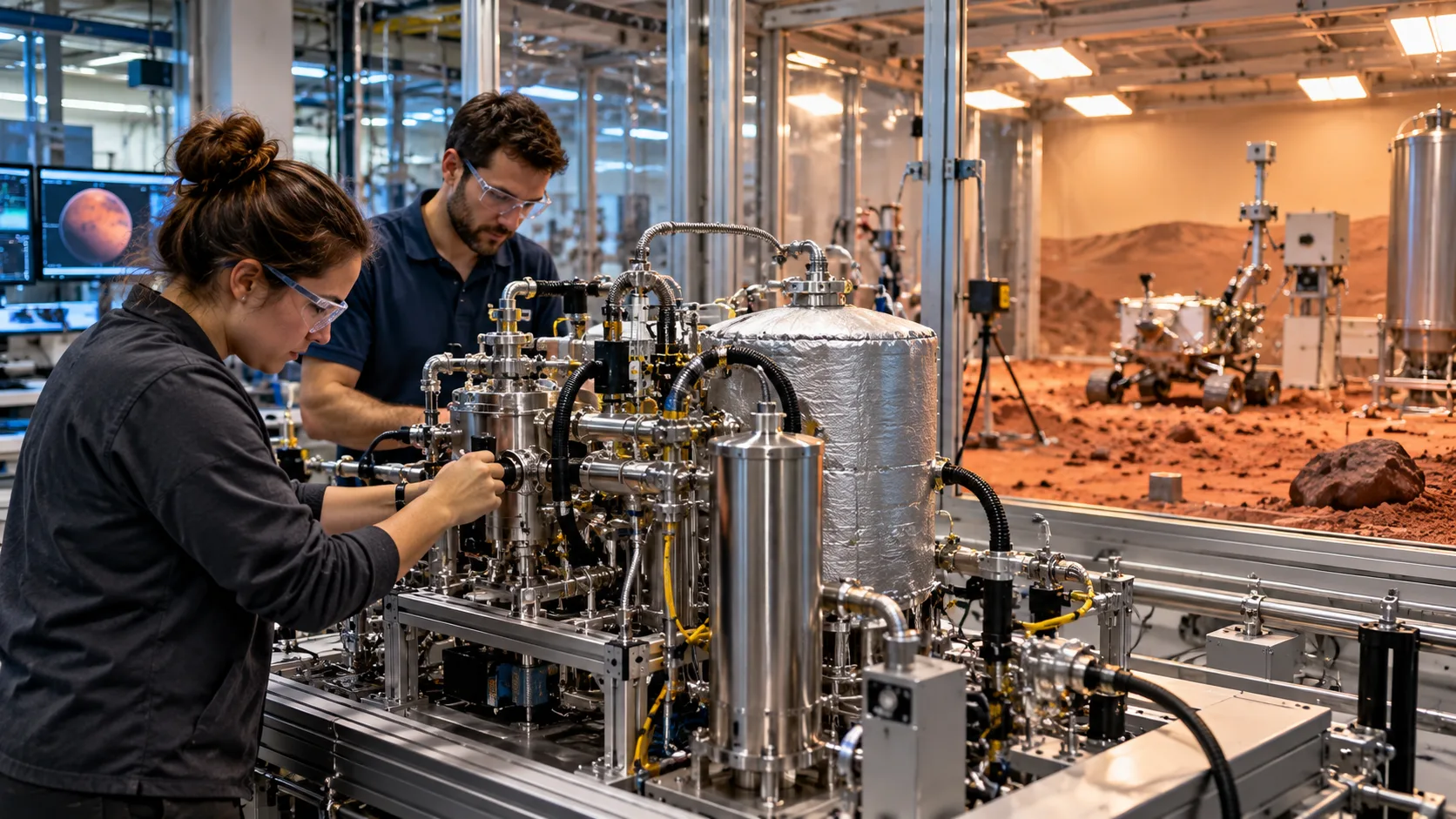
If people are ever going to live and work on Mars for long periods, they cannot afford to haul every useful resource from Earth. That is why NASA has spent decades exploring in-situ resource utilization — the idea of using what is already available at the destination. On Mars, one of the most abundant things available is carbon dioxide.
Beginning in the 1990s, Pioneer Astronautics received multiple NASA Small Business Innovation Research contracts from Johnson Space Center in Houston to develop compact, efficient, and automated systems that could capture and process Martian carbon dioxide. The larger goal was serious spaceflight business: turn local resources into things future crews might need, including water, oxygen, and methane rocket fuel.
Then someone noticed that a brewery has its own carbon dioxide problem — except the gas is not floating around Mars. It is bubbling out of the beer.
The Gas Brewers Were Throwing Away
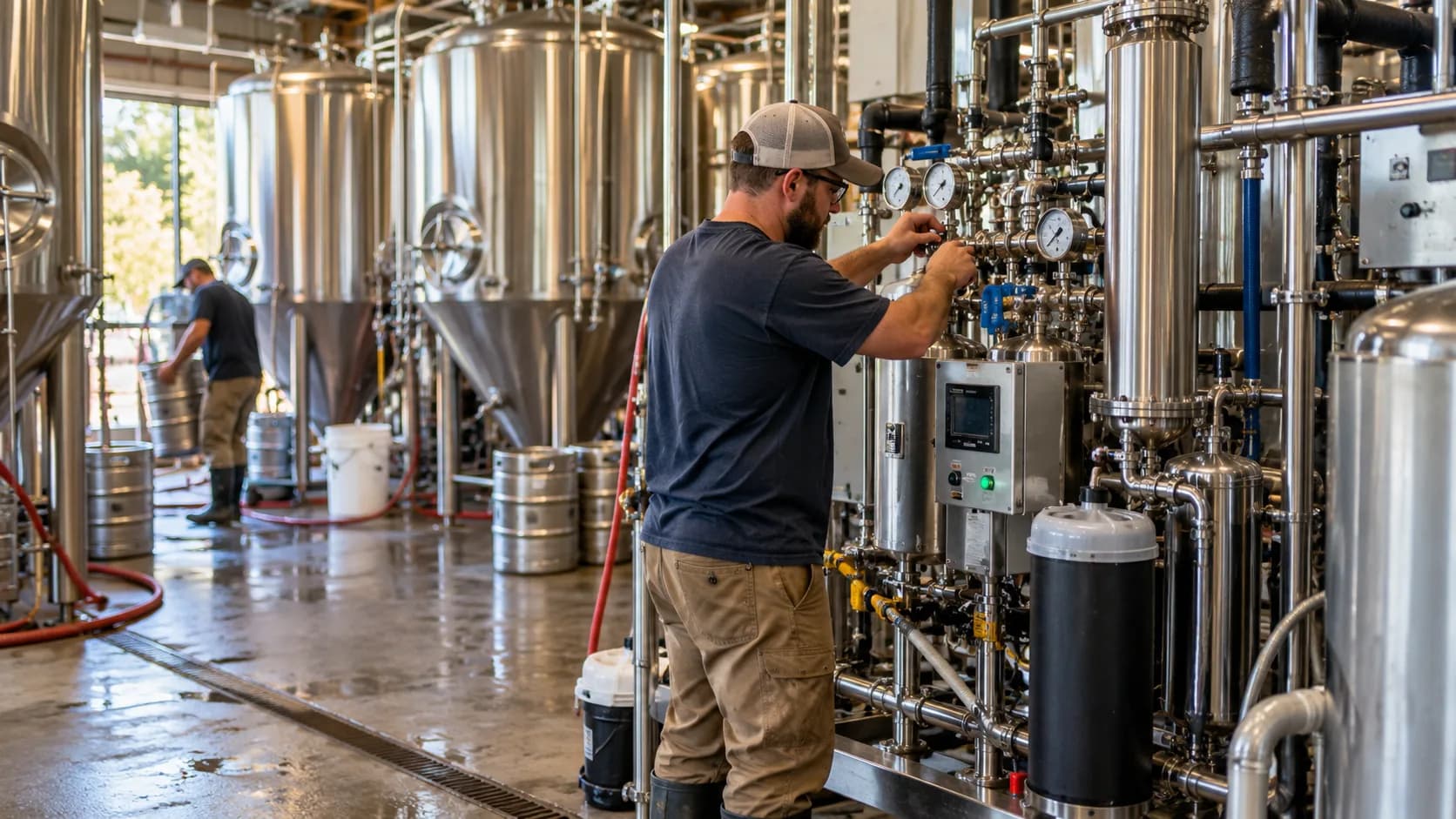
Fermentation naturally produces carbon dioxide. Big breweries have long had expensive equipment that can capture that gas, purify it, and use it again. Smaller craft breweries usually did not. They would vent much of the CO2 produced during fermentation, then later buy carbon dioxide from a supplier for carbonation, packaging, and other brewery operations.
That is the kind of problem engineers love once somebody points it out: the brewery already has a resource it needs. It is just letting that resource escape.
Robert Zubrin, founder of Pioneer Astronautics and later Pioneer Energy, realized that some of the same gas-handling ideas developed through Mars resource work could be rearranged for breweries. The systems had to capture carbon dioxide, clean it, pressurize it, liquefy it, and store it — jobs that sound a lot less exotic inside a brewery than on another planet, but rely on some of the same engineering skills. By late 2015, Pioneer Energy had a Craft Brewery Recovery System in production for smaller brewers.
Then Austin Stepped In
In 2016, Amy George founded Earthly Labs in Austin to pursue small-scale carbon capture. NASA says she discovered Pioneer Energy's brewery recovery system and obtained an exclusive license. Earthly Labs packaged the technology under the name CiCi and helped push small-scale carbon recovery into breweries and other businesses that had been too small for the giant systems used by major industrial operations.
That Texas thread is hard to miss. The earlier Mars-resource work was supported through NASA's Johnson Space Center in Houston. Years later, an Austin company helped turn the brewery application into a broader commercial product. Earthly Labs was acquired by Chart Industries in 2021, and the technology has continued expanding beyond beer into wineries, distilleries, energy projects, and other industries that either produce carbon dioxide or need to separate and purify gases.
A Shortage Made the Idea Much Less Theoretical
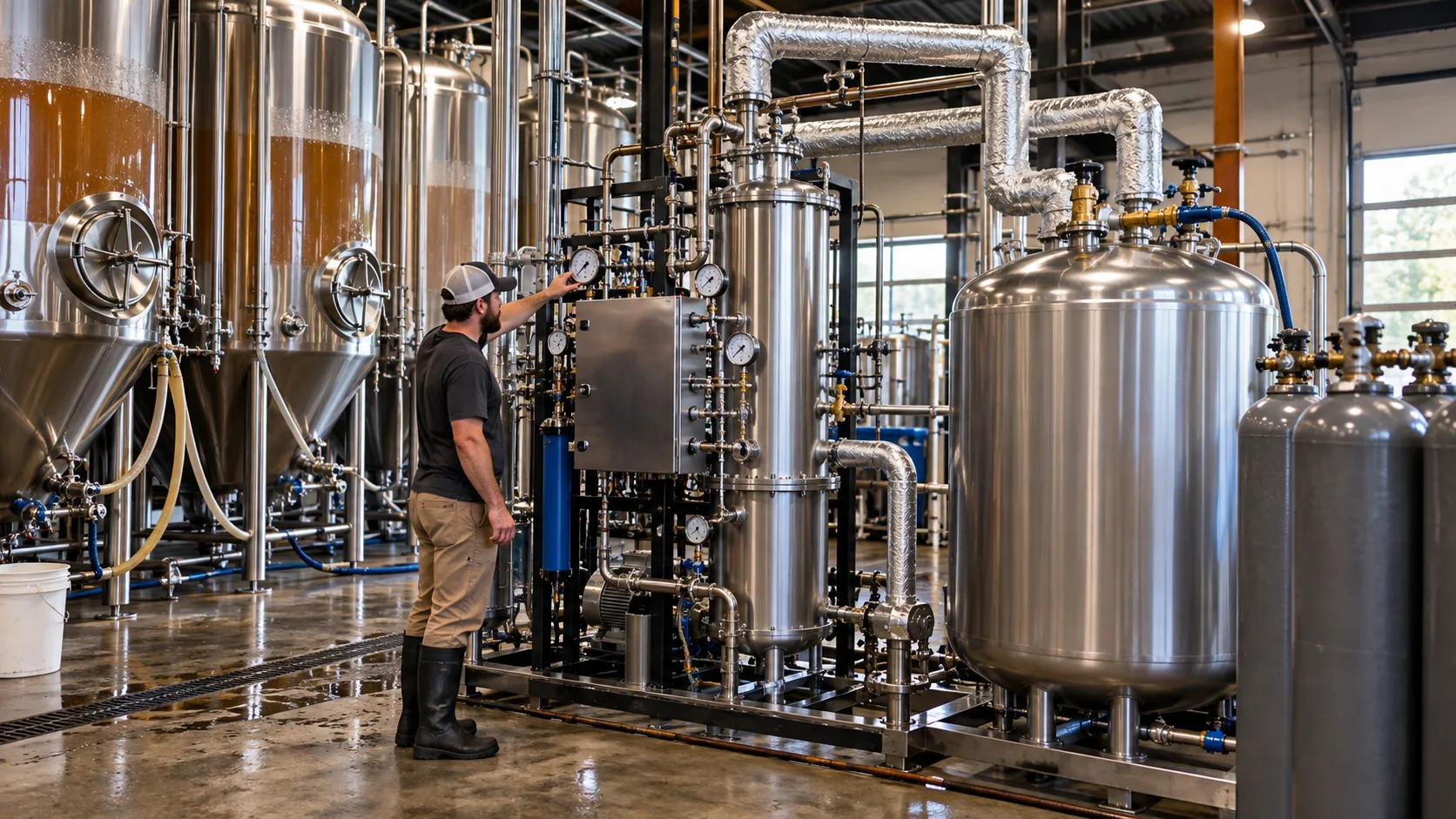
Maine Beer Company got a lesson in why that matters when its carbon dioxide supplier ran short in 2021. Brewery sustainability manager Dave Love told NASA that the shortage created the possibility of beer going stale in tanks because the brewery depended on CO2 for bottling, kegging, and centrifuge operations.
The brewery acquired an Earthly Labs carbon-capture unit in 2022. NASA reports that the recovered gas supplies less than half of Maine Beer Company's total carbon dioxide needs, but it has been enough to help the brewery ride through later supplier shortages without stopping production.
That changes the story. Capturing fermentation CO2 is not only about reducing waste or emissions. For a smaller producer, it can also mean having part of a critical ingredient under its own roof instead of depending entirely on trucks arriving from somewhere else.
So Did NASA Really Make Better Beer?
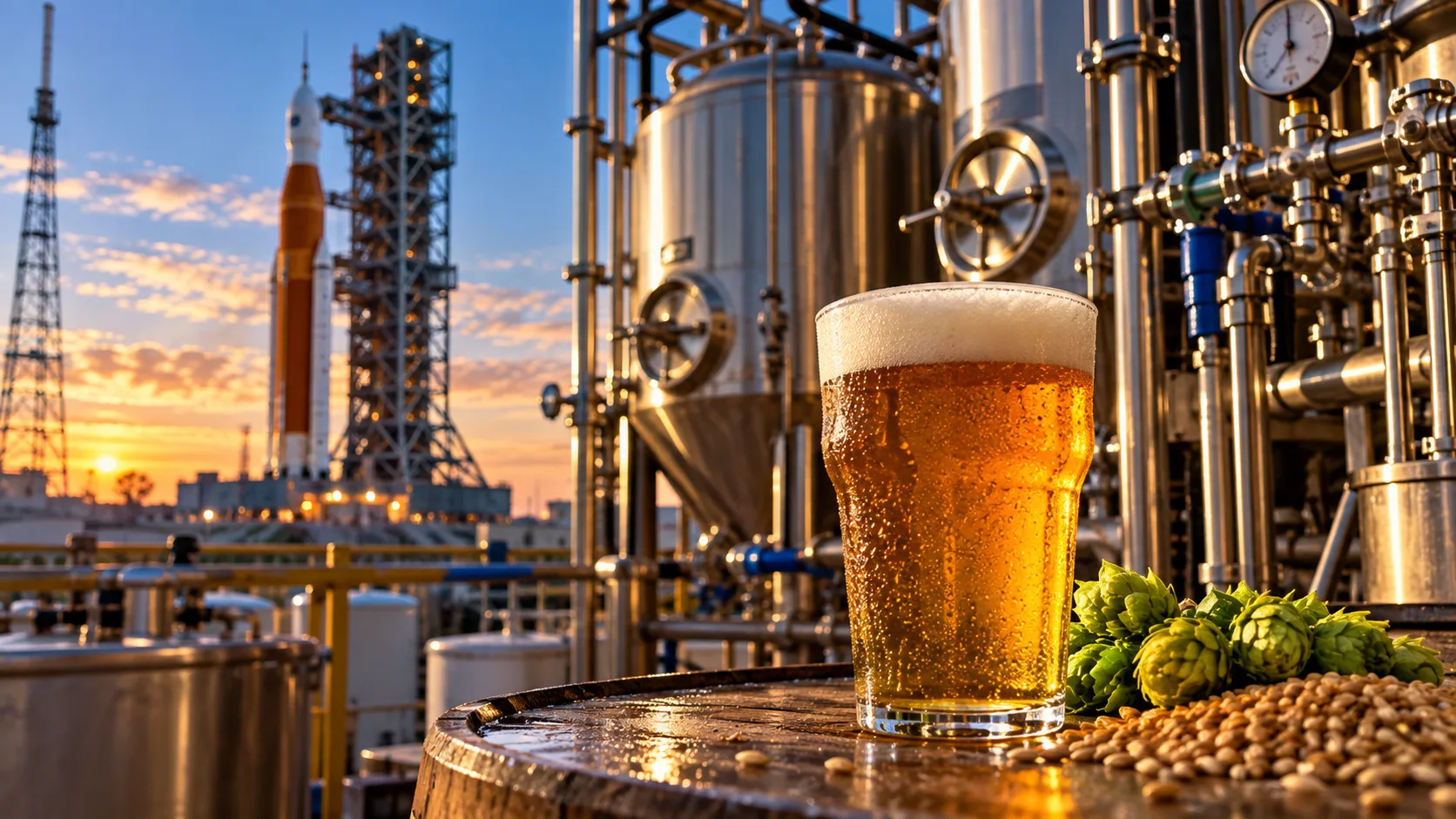
Not quite — and the real story is more interesting than that. NASA did not set out to improve a pint, and the technology does not magically make beer taste better. What NASA helped fund was the engineering work behind compact, automated systems for manipulating gases in places where efficiency, reliability, and using local resources matter enormously.
Pioneer adapted some of that know-how to breweries. Earthly Labs helped commercialize and scale the idea. For a brewer, "better" can mean less waste, more control over carbon dioxide supply, and a little more protection when the outside supply chain coughs.
And that is where Mars and beer really meet. The same basic question sits underneath both problems: Why haul in something you desperately need if you can capture, clean, and reuse what is already right in front of you? On Mars, that question could help future explorers make fuel, water, and oxygen. In a brewery on Earth, it can help keep the taps pouring.
Sometimes space technology does not come back to Earth looking like a spaceship. Sometimes it comes back with bubbles.