Nocona, Texas: Cattle, a Railroad and the Boot Town on Highway 82
From a 1870s cattle ranch to Justin boots and Enid Justin's Nocona Boot Company, here is how this Montague County town got its name and its fame.
Drive into Nocona on U.S. Highway 82 and you are rolling into a North Texas boot town that grew up around cattle, a railroad spur and a family leather shop that made the place famous.
According to the Handbook of Texas, settlement began in the 1870s when William Broaddus and D. C. Jordan moved 15,000 cattle into Montague County and started a ranch near the present townsite. In 1887, surveyors for the Gainesville, Henrietta and Western Railway came through. Jordan persuaded them to run the line across his land and pledged land for a townsite. Construction of the railroad and the town followed.
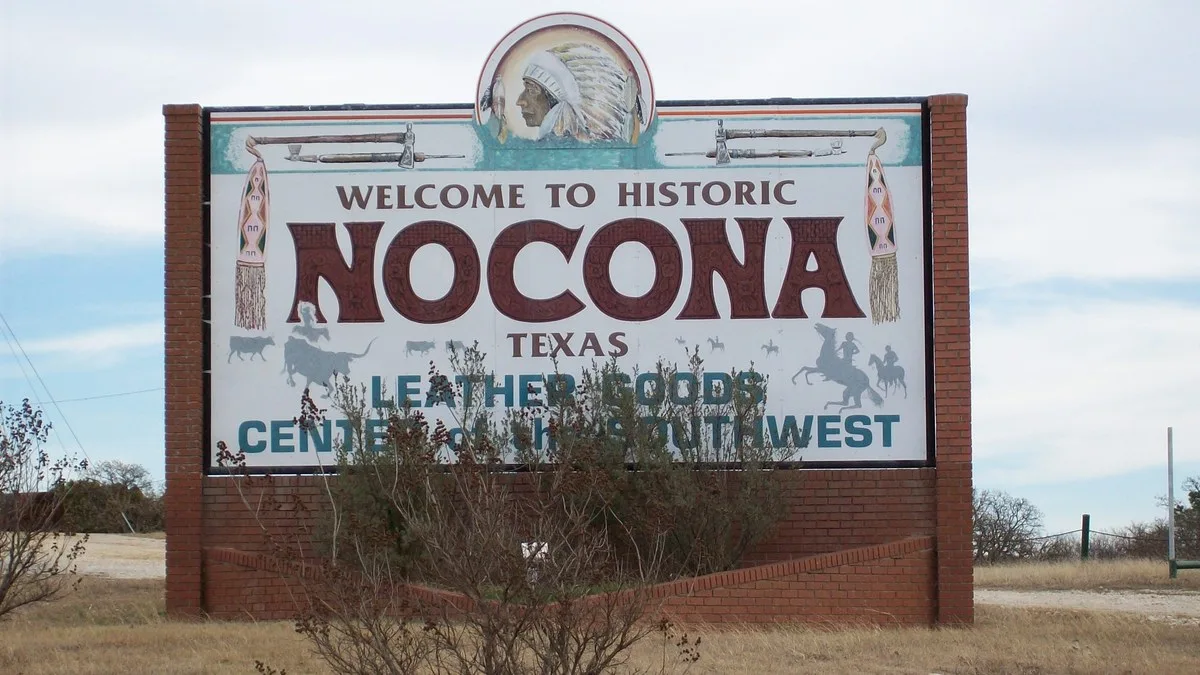
Welcome sign at Nocona, Texas. Photo: Chetblong / Wikimedia Commons, CC BY 3.0.
How the town got its name
The Handbook says the new community was first called Jordanville. That name was rejected. A Texas Ranger suggested Nocona, in memory of Peta Nocona, a Comanche chief and husband of Cynthia Ann Parker. Postal service began in 1887. That same year Herman J. Justin moved his boot factory to town to use the shipping facilities. The first newspaper started weekly publication in 1889, and the town's first bank, chartered at $50,000, opened in 1890. Residents voted to incorporate on July 30, 1891. By 1900 Nocona had about 900 people. By 1910 it had a dozen cotton-purchasing companies.
Boots that put Nocona on the map
In 1919 a second leather-goods business opened. In 1925, when Justin's two sons moved their late father's business to Fort Worth, their sister Enid Justin opened the Nocona Boot Company. The Handbook says that at the time the town had about 100 businesses, two banks, a high school and 20 to 30 shallow oil wells nearby.
By 1930 more than 2,000 people lived in Nocona. By the mid-1940s the count was more than 2,600. Oil-equipment companies, clothing factories and the success of Nocona Boots helped the economy grow. By the 1960s the Handbook lists 3,375 residents and 147 businesses. The 2020 population count in the entry is 3,002.
The old Nocona Boot Company plant still stands as a local landmark. A public photograph of the closed factory building is kept on Wikimedia Commons for anyone who wants to see what the brick plant looked like after operations ended.
City Hall today
City Hall is at 102 Clay St., Nocona, Texas 76255, according to the city's administration page. Hours are Monday through Friday, 8:00 a.m. to 4:45 p.m. The main phone is (940) 825-3282. City Manager Lynn Henley and Secretary Revell Hardison are listed there, and the page points residents to the Montague County Appraisal District for property-tax questions.
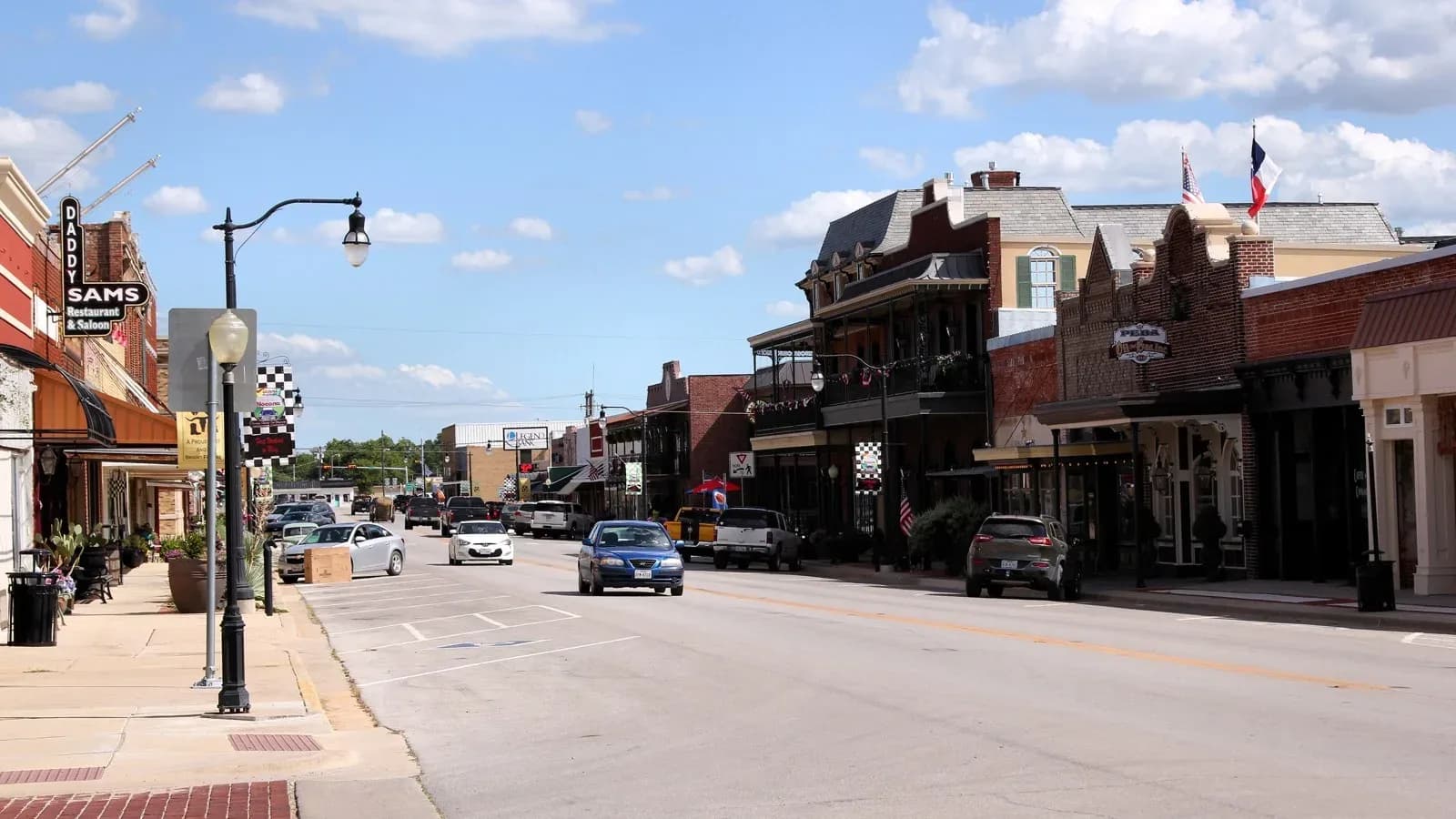
Clay Street remains the downtown spine. Brick storefronts still face the street that once carried cattlemen, cotton buyers and boot shoppers through town.
Our view
Nocona did not invent Texas ranching or Texas boots, but it put both to work in one small place. A town that grew from a cattle trail and a rail spur, then kept its name and its leather trade, is worth a stop on Highway 82. Hard work and a family name still leave a mark.
Hero photo: The 300 block of Clay Street in downtown Nocona, June 2018. Photo: Larry D. Moore / Wikimedia Commons, CC BY 4.0.