Port Lavaca: The Bay Town That Outlasted Indianola
The Handbook of Texas traces Port Lavaca from a refuge after the 1840 Linnville raid to the Calhoun County seat that outlasted Indianola and grew around seafood and industry.
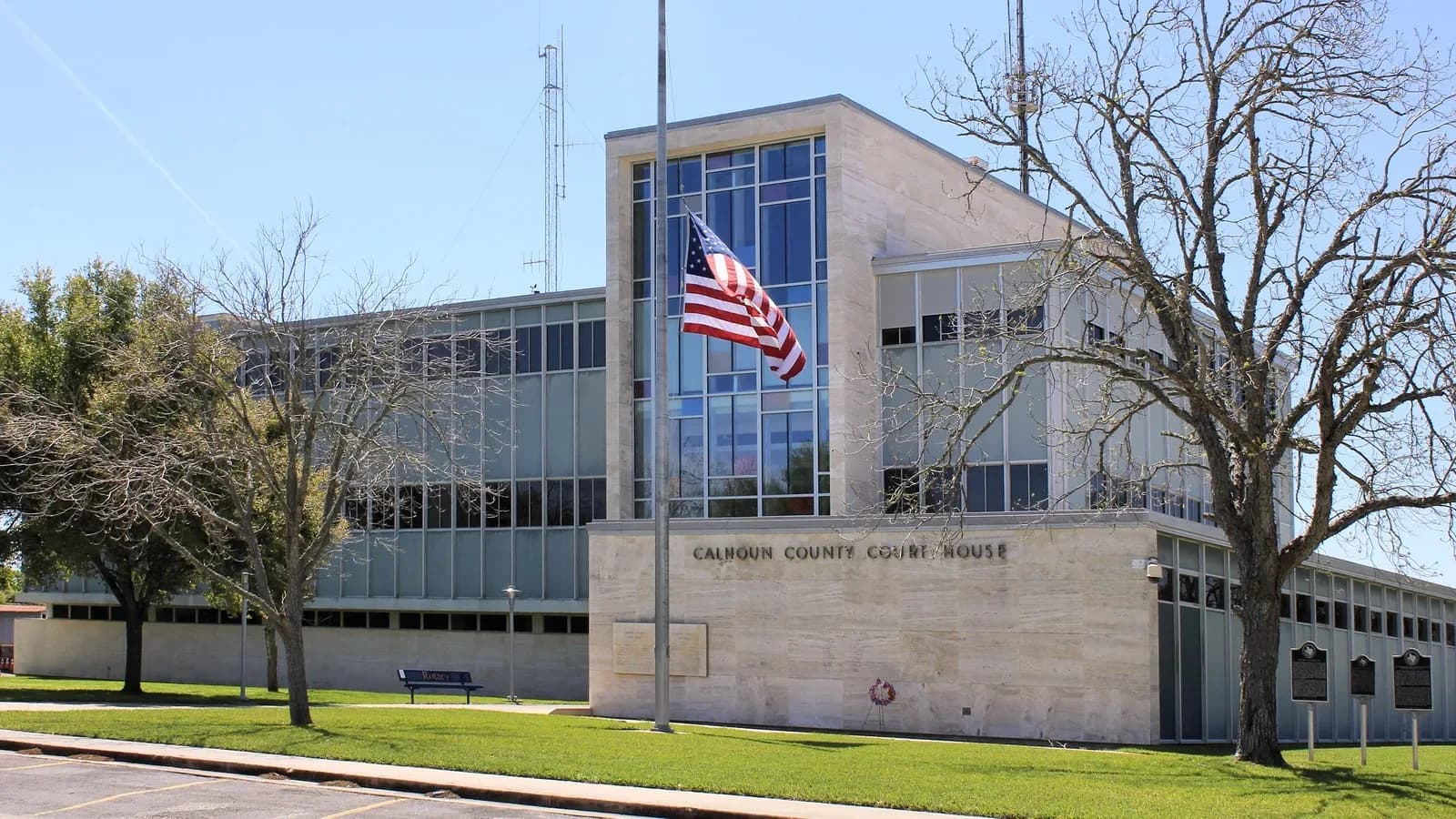
Port Lavaca is the county seat of Calhoun County, on the west side of Lavaca Bay. Its beginnings, according to the Handbook of Texas entry by Lonnie Ficklen Maywald, last revised Jan. 7, 2021, were not a planned founding so much as a retreat.
In 1840, the Handbook says, a Comanche raid known as the Linnville raid tore through Victoria, about 25 miles northwest, and burned Linnville, 3½ miles northeast of the later townsite. People fleeing that fire settled on a bluff 15 to 20 feet above the bay. Thomas McConnell, whose house in Victoria had been lost in the same raid, acquired the land from Isidro Benavides, a member of De León’s colony. The settlement took the name La Vaca — “the cow” — in 1841 and had a street plan by 1842. In the Republic years it replaced Linnville as the busiest harbor on the linked Matagorda and Lavaca bays.
The county seat followed the deeper water, then the storms
Calhoun County was organized in 1846, and Lavaca became the first county seat and received a post office. The Morgan steamship line made it a terminus in 1847, and a stage line to Victoria began that November. Two years later the town raised docking fees to pay for better wharves. Charles Morgan soon sent his vessels instead to the mouth of Powderhorn Bayou, near Indianola. The Handbook notes that sandbars in Lavaca Bay, which obliged ships to use lighters, may have encouraged that shift.
Indianola, with deeper water, took the county seat in 1852. By 1860, the Handbook gives Lavaca a White population of 526 and Indianola 1,150. In the Civil War, Federal gunboats shelled the port on Oct. 31 and Nov. 1, 1862. Two batteries on the waterfront held, the Handbook says, and the boats pulled away. Federal soldiers occupied Lavaca in December 1863. Voters returned the county seat from Indianola in April 1864, the entry says, after some officials there had taken a Union oath. Indianola received the seat again in September 1865. Confederate authorities had already ordered the town’s wharves and railroad destroyed in the winter of 1862–63; the railroad was rebuilt in 1866.
The 1875 hurricane wrecked so much of the rail line that the track from Lavaca to Lavaca Junction was pulled up. The Handbook puts the population at 100 in 1880 and 70 in 1884. The 1886 hurricane ended Indianola. Lavaca became the county seat again in November 1886, restored its rail connection to Victoria in 1887, and around then came to be called Port Lavaca.
Seafood, a dredged channel, and a pier built from a wrecked causeway
Cattle shipping never returned to its earlier importance, the Handbook says. Seafood and weekend visitors did. The town incorporated under general-law rules in 1909 and promptly created an independent school district. A federal channel from Pass Cavallo reached the harbor in 1910, and a stretch of the Gulf Intracoastal Waterway south of Galveston opened in 1913. The city government failed in bankruptcy in November 1916 and was incorporated again in November 1919. A seawall was finished in 1920. Shrimp grew into a major business in the 1920s, and in 1928, the Handbook says, Port Lavaca led the country in the volume of seafood it shipped.
After World War II, plants including Aluminum Company of America, Union Carbide, Du Pont and Formosa, in Point Comfort and other nearby towns, added jobs and population. The Matagorda Ship Channel was finished in 1965 as far as Point Comfort, with side channels to Port Lavaca. In 1963 the Port of Port Lavaca-Point Comfort was named a U.S. customs port of entry.
Hurricane Carla in 1961 badly damaged the original causeway to Point Comfort. Part of that span was later turned into the 3,200-foot Port Lavaca State Fishing Pier. Lighthouse Park stands at the foot of the pier, with Half Moon Reef Lighthouse, first built on Matagorda Island in 1858. Writing as of 1991, the Handbook called it one of three lighthouses still standing in Texas.
The entry’s population table lists 2,069 residents in 1940, 5,599 in 1950, 8,864 in 1960, 12,035 in 2000, 12,248 in 2010 and 11,557 in 2020. The narrative’s 1950 figure of 5,062 does not match that table; the table is the figure used here. By 1992, the Handbook says, Port Lavaca was a home-rule city under a charter adopted in 1956 and later amended, with a mayor, city council and city manager.
The official Calhoun County Appraisal District, which lists the City of Port Lavaca among the county’s taxing entities, gives its physical address as 426 W. Main St., Port Lavaca, Texas 77979, on its public website.
Related reading: LaVaca BBQ Review 2026: What to Order in Port Lavaca.