The Dog Who Keeps Track of You
Why some dogs follow us everywhere—and why we secretly love it.
Why some dogs follow us everywhere—and why we secretly love it.
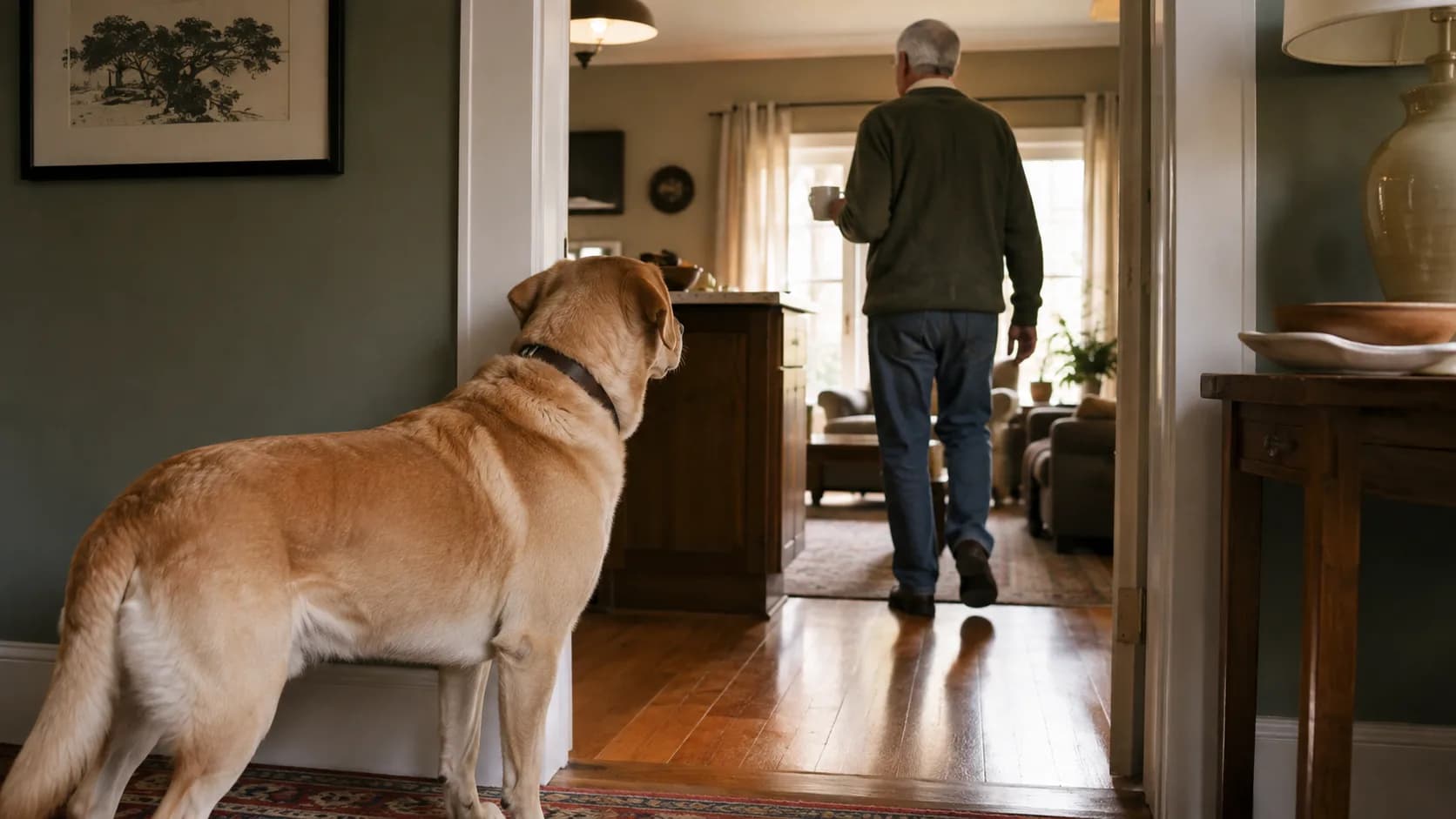
You can get up to pour a cup of coffee, head toward the kitchen, step onto the porch, or make a quick trip to the back door.
Before long, you hear it: the quiet sound of paws behind you. Around my house, those paws belong to Shelby, who does not let me out of her sight for very long.
Some dogs do not let their people out of sight for very long. They move from room to room as if they have been assigned the job of personal supervision. Sit down, and they settle nearby. Stand up, and they rise too. Head outside, and there they are again, making sure the operation remains under proper canine control.
Dog owners know exactly what this looks like. At times, it feels like devotion. At other times, it feels like surveillance.
Either way, it is hard not to smile.
More Than Just Following
When a dog keeps track of you, it is usually not random behavior.

Part of it is simple: you are connected to nearly everything important in the dog’s day. Food, walks, treats, car rides, scratches behind the ears, and the general management of household business all tend to begin with a human getting up and moving somewhere.
If something interesting is about to happen, odds are good it is happening wherever you are.
But it is often deeper than that. Dogs learn our habits in a way that can feel almost spooky. They recognize the sound of our footsteps, the way we move when we are heading to the kitchen versus the way we move when we are leaving the house, and the difference between ‘just walking through the room’ and ‘about to do something worth investigating.’
To a dog, following is not always clinginess. Sometimes it is curiosity. Sometimes it is comfort. Sometimes it is loyalty. And sometimes it is simply their way of saying, ‘Wherever this day is going, I’m going too.’
The Routine They Learn
Dogs are creatures of pattern, and most of them quickly learn ours.

They know when we usually wake up. They know the times meals tend to happen. They know when the keys come out. They know what real leaving looks like compared with stepping outside for a minute.
That is why a dog who appears to be sound asleep can suddenly materialize the moment you touch the leash, open a particular cabinet, or put on the shoes associated with a walk.
They are paying attention far more closely than we realize.
Some owners call these constant companions ‘Velcro dogs’ because they seem attached at the hip. In many homes, that behavior is not a problem at all. It is simply part of the relationship. The dog has decided that your routine is worth monitoring, and you have accepted that privacy is no longer included in the agreement.
Dogs Read More Than Words
Dogs do not need a detailed explanation to know that something is happening. They watch posture, direction, facial expression, tone of voice, and the small preparations that come before familiar events.
A person may think they have quietly decided to take a drive, but the dog has already noticed the different shoes, the keys in hand, and the glance toward the door. By the time the decision feels official to us, the dog may have been following the evidence for several minutes.
That attention can extend to mood as well. Dogs often react when our voices, movements, or routines change. They may not understand the reason for a difficult day, but they can recognize that the day feels different. Staying close may be one of the few responses they know how to offer.
Perhaps that is another reason their presence matters. They do not always solve the problem. They simply notice that we are carrying one.
Comfort, Trust, and a Little Protection
Dogs tend to stay near the people they trust. That may be the nicest part of the whole thing.
A dog that follows you from room to room is often showing comfort in your presence. You are familiar. You are safe. You are home. The world makes more sense when you are in it.
Some dogs also seem to take their role as guardians seriously, even when their security work mostly involves inspecting the backyard, studying the hallway, and making certain you do not attempt to use the bathroom without an escort.
That can be funny, but it also says something meaningful about the bond between people and dogs. They do not always love with distance. Many of them love by staying close.
Over time, owners become accustomed to that steady companionship. We may not fully notice it until the dog is asleep in another room and the house suddenly feels a little too quiet.
Following Is Not Always Anxiety
A dog that enjoys staying nearby is not automatically a dog with separation anxiety.
A close-following dog may prefer your company yet still settle calmly when you leave. Separation-related distress is different. It may involve panic, pacing, vocalizing, destructive behavior, escape attempts, or other signs that appear when the owner prepares to leave or shortly after departure.
The difference matters because affection does not need to be treated like an illness. At the same time, genuine distress deserves patience and professional guidance rather than punishment.
The goal is not to make a loving dog less attached. It is to help the dog feel secure both when the household is together and when ordinary life requires a little time apart.
A Good Shadow Still Needs Confidence
There is nothing wrong with a dog wanting to be near its person. Constant companionship is one of the reasons many people bring a dog into the family in the first place.
Still, a dog benefits from knowing how to relax without following every movement. A comfortable bed, regular exercise, mental stimulation, predictable routines, and simple cues such as ‘stay’ or ‘place’ can help a dog learn that a few feet of distance does not mean abandonment.
Healthy independence is not rejection. It gives the dog confidence and makes the bond easier on both sides. The best arrangement may be a companion who chooses to follow—but does not panic when the person walks out the door.
When a Change Deserves Attention
Most of the time, a dog keeping track of you is simply part of a familiar attachment. But a sudden change is worth noticing.
If a dog becomes much clingier than usual, seems unable to settle, appears confused, or develops new anxiety, something may have changed. Stress, a disrupted routine, pain, illness, or age-related changes in hearing or vision can all affect behavior.
That does not mean every extra trip down the hallway requires a medical investigation. It means owners know their dogs well enough to recognize when familiar companionship has become something different.
Sometimes the best form of love we can offer back is simply paying attention.

Why Owners Secretly Love It
Let’s be honest. Most dog owners pretend to be mildly inconvenienced by all this supervision, but deep down, we like it.
We laugh when the dog follows us to the porch. We roll our eyes when the dog appears outside the bathroom door. We joke that the dog never lets us out of sight.
But what we are really describing is constant companionship.
There is something comforting about being someone’s person in such a complete and uncomplicated way. Dogs do not care whether we had a productive day, whether our hair looks bad, whether the news is irritating, or whether the world feels a little off.
If we get up and walk into the next room, they often think that is reason enough to come too.
It is a simple kind of loyalty, and maybe that is why it feels so powerful.
The Sound Behind Us
One day, we realize that the little things were never very little.
The sound of paws on the floor. The shadow in the doorway. The familiar face checking to see where we went. The quiet presence nearby while life goes on.
A dog that keeps track of you may be following because of routine, affection, comfort, curiosity, or trust. Probably all of the above.
Whatever the reason, it becomes part of the rhythm of home.
And if we are lucky, that rhythm stays with us long enough to teach us what it means: sometimes love does not say much. Sometimes it simply gets up and follows us into the next room.
Dock Line tip: Enjoy the companionship, but pay attention to sudden changes. New anxiety, confusion, or unusual clinginess may be worth discussing with a veterinarian.
Sources
This article is general-interest lifestyle journalism, not veterinary diagnosis. Sudden behavior changes should be evaluated by a qualified veterinarian.