The People Who Keep America Running While We Sleep
Hospitals, highways, power plants, bakeries and emergency lines do not close at bedtime. Millions of Americans work through the night so the rest of us can wake to a country already moving.
Hospitals, highways, power plants, bakeries and emergency lines do not close at bedtime. Millions of Americans work through the night so the rest of us can wake to a country already moving.
“By the time the rest of us wake, much of the work that makes morning possible has already been done.”
At 2:37 in the morning, America looks quiet from a bedroom window.
The street is mostly empty. Porch lights glow over parked cars. A traffic signal changes for nobody. From inside the house, it may seem as though the country has finally shut down for the night.
It has not.
A nurse is checking a patient whose breathing has changed. A truck driver is carrying groceries toward a distribution center. A dispatcher is talking a frightened caller through the first minutes of an emergency. A power-system operator is watching the electric grid for a problem most people will never know occurred. A baker is pulling the first bread from an oven so the shelves will be ready before breakfast.
By the time the rest of us wake, much of the work that makes morning possible has already been done.
America After Midnight
The overnight workforce is larger than the few people visible beneath gas-station lights.

The National Institute for Occupational Safety and Health says approximately 15 million Americans work full time on evening, night, rotating or other irregular schedules. They are found in nearly every part of the economy: healthcare, transportation, utilities, manufacturing, public safety, food production, communications, agriculture, cleaning and security.
Some people choose nights because the schedule fits their family, education or personality. Others receive additional pay for difficult hours. Many simply work when the job exists.
Whatever brought them there, their work fills the gap between the country we imagine closes at 5 p.m. and the country that actually operates 24 hours a day.
The Jobs That Cannot Wait Until Morning
A hospital cannot tell a patient to postpone a heart attack until the daytime staff arrives. Registered nurses held about 3.4 million jobs in 2024, and nurses in hospitals and nursing facilities commonly work nights, weekends and holidays to provide continuous care.
Emergency lines must remain open for the same reason. More than 105,000 public safety telecommunicators worked in the United States in 2024. Many spend 8 to 12 hours answering calls, calming people they cannot see and guiding them until police officers, firefighters or paramedics arrive.
The electric grid also has no closing time. Power plant operators and system dispatchers work rotating shifts while monitoring voltage, generation, transmission lines and equipment failures. Their best nights are the ones nobody notices, because the lights remain on and the refrigerator keeps humming.
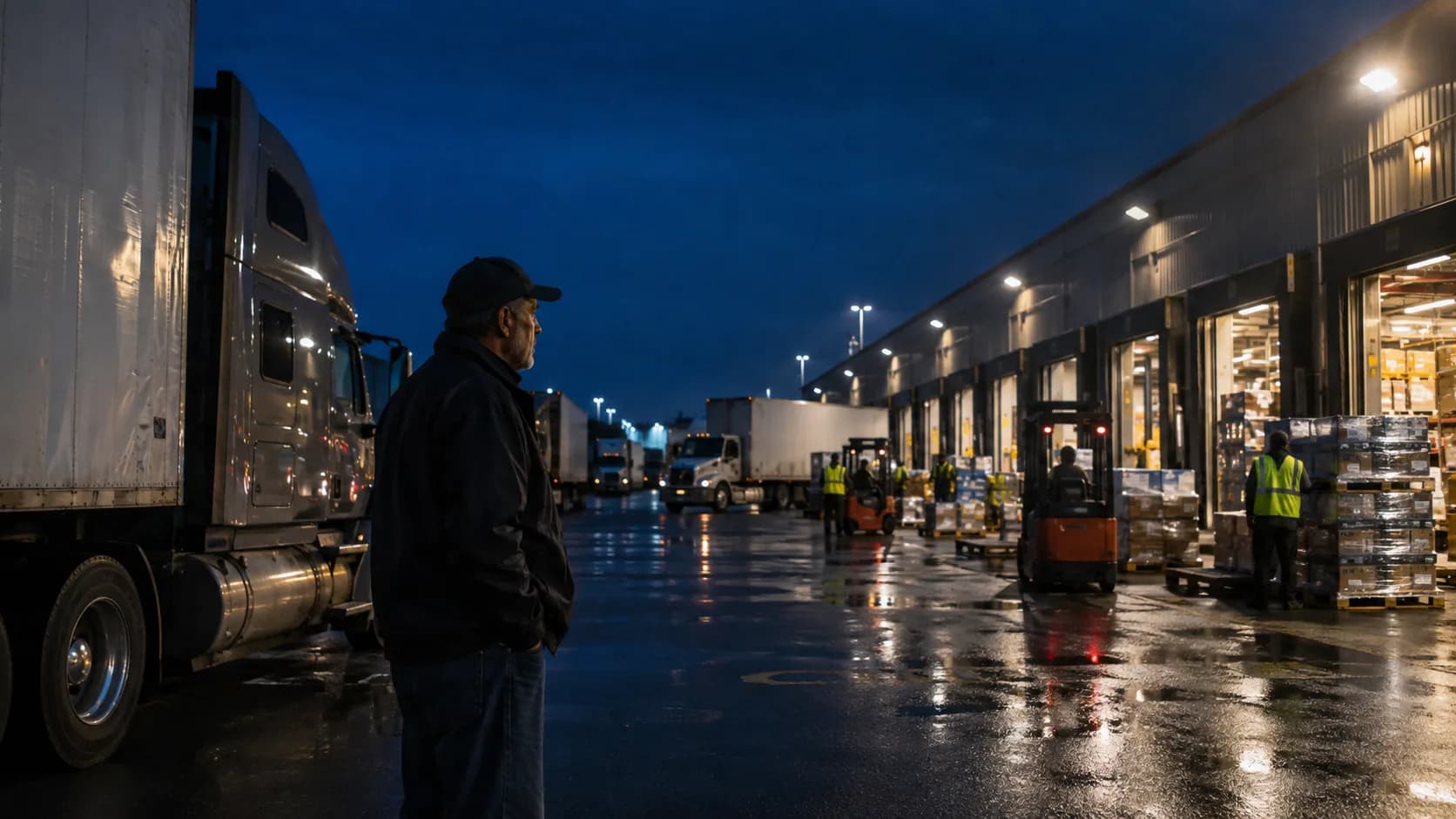
Transportation moves on a similar clock. The country employed about 2.2 million heavy and tractor-trailer truck drivers in 2024. Some drive through the night to avoid traffic, meet delivery windows or place products at warehouses before the next day begins. Railroad workers, air traffic controllers, delivery drivers and dock crews also keep freight and people moving while most offices are dark.
Then there are the jobs that make ordinary mornings feel ordinary. Bakers begin early or work overnight. Janitors clean schools, hospitals and offices after the crowds leave. Food-processing workers, maintenance crews, security guards and telecommunications technicians use the quiet hours to produce, repair, protect and prepare.
We notice many of these people only when the work is not done.
The Cost of Working Against the Clock
Night work is necessary, but the human body did not evolve around a factory whistle or a hospital schedule.

Our internal clock expects darkness to mean sleep. Working through the night and trying to rest during daylight can shorten sleep, disturb concentration and make recovery more difficult. NIOSH warns that work-related fatigue can slow reaction time, reduce attention, limit short-term memory and impair judgment.
That matters in any occupation. It matters even more when the worker is driving an 80,000-pound truck, adjusting the flow of electricity, giving medication, landing an aircraft or answering a 911 call.
The strain does not always end when the shift does. The drive home may occur when a worker is at the lowest point of alertness. A dark, quiet bedroom may not stay dark or quiet once children, lawn equipment, deliveries and daytime appointments begin. Friends meet for dinner while the night worker is getting dressed for work. Family holidays may happen during what is effectively the middle of that worker's night.
The country receives the benefit of a 24-hour economy, but the worker and the worker's family often absorb much of the cost.
Not Every Night Job Is the Same
There is a temptation to describe every overnight worker as exhausted and unhappy. That would be no more accurate than pretending the schedule is easy.
Some people prefer the quieter pace, smaller crews or freedom from daytime traffic. Some families arrange childcare around opposite shifts. Some workers value a night differential or use the schedule to attend school. Experienced night crews often develop a strong sense of teamwork because fewer people are available when something goes wrong.
The problem is not simply that work happens at night. The bigger problems are unpredictable schedules, rapid switching between days and nights, mandatory overtime, understaffing and too little recovery between shifts.
A steady night schedule that a family can plan around is one thing. Being moved from days to nights and back again with little warning is something else.
Respect Requires More Than a Thank-You
Americans are generous with praise during emergencies. We call workers essential, post signs and thank them for keeping services available.
The harder question comes after the applause: Are their schedules designed as though sleep matters?
NIOSH recommends that employers consider adequate recovery time, predictable scheduling, reasonable shift lengths and regular breaks. Those ideas sound simple, but they require enough employees to cover the work without depending on constant overtime.
Respect also means making the workplace function at night. A hospital cafeteria that closes before the overnight staff arrives, a supervisor who is never present during the shift, a training program offered only at 10 a.m. or a childcare system built entirely around daytime hours sends a quiet message about whose schedule is considered normal.
Night workers do not need to be treated as heroes every evening. They need safe staffing, fair compensation, dependable schedules, access to the same services as daytime employees and permission to report fatigue before it becomes a mistake.
The Country We Wake Up To
Most of us experience overnight work as a finished result.

The emergency room was ready. The shelves were stocked. The road had been cleared. The bread was baked. The computer network stayed connected. The lights came on when we touched the switch.
We rarely see the hours behind those results because the work is designed to disappear into normal life.
There is dignity in that kind of labor. It does not always produce a ribbon cutting, a company announcement or a photograph in the newspaper. It produces continuity. It keeps one day connected to the next.
Tonight, while most of America sleeps, millions of people will step into hospitals, trucks, control rooms, kitchens, warehouses, stations and empty buildings. They will do the work that cannot wait for daylight.
Tomorrow morning will seem to arrive on its own.
It never does.
WHAT RESPECT LOOKS LIKE AFTER MIDNIGHT
• Predictable schedules and adequate time between shifts
• Enough staffing to reduce forced overtime and unsafe fatigue
• Fair pay for difficult hours and access to overnight services
• Training, supervision and workplace support available on every shift
• A culture that lets workers report fatigue before it becomes an error
NIGHT SHIFT BY THE NUMBERS
15 million
Americans working full time on evening, night, rotating or other irregular schedules
3.4 million
Registered-nurse jobs in 2024
2.2 million
Heavy and tractor-trailer truck-driver jobs in 2024
2.4 million
Janitor and building-cleaner jobs in 2024