What Did You Mean by That?
How regional sayings reveal where we come from—and occasionally get us into trouble.
How regional sayings reveal where we come from—and occasionally get us into trouble.
Americans can cross a state line without changing countries, currency, or language—and still discover that they have no idea what somebody just said.
Ask for a carbonated drink and you may hear soda, pop, Coke, or soft drink. Ask how far away something is and one person may say, “just down the road,” meaning three blocks. Another may use the same words for a trip that deserves a full tank of gas and a sandwich.
Then there are expressions that appear simple until tone gets involved. “Bless your heart” can offer sympathy, affection, gentle teasing, or a beautifully wrapped insult. The words stay the same. The meaning changes with the voice, the face, and everything that happened five minutes earlier.
Americans share a language, but we do not always share the same dictionary. Regional sayings carry history, work, weather, family habits, and local humor. They also prove that understanding the words is not always the same as understanding what was said.
The Same Language, Several Dictionaries
Linguists have spent decades documenting the differences. The Dictionary of American Regional English records words, phrases, and pronunciations that vary across the United States. Its original fieldwork reached more than a thousand communities in all fifty states, and the project continues to update the record.
That work challenges the idea that television, travel, and the internet have made everybody sound alike. People move. Sayings travel. Accents soften. Yet thousands of regional differences remain.
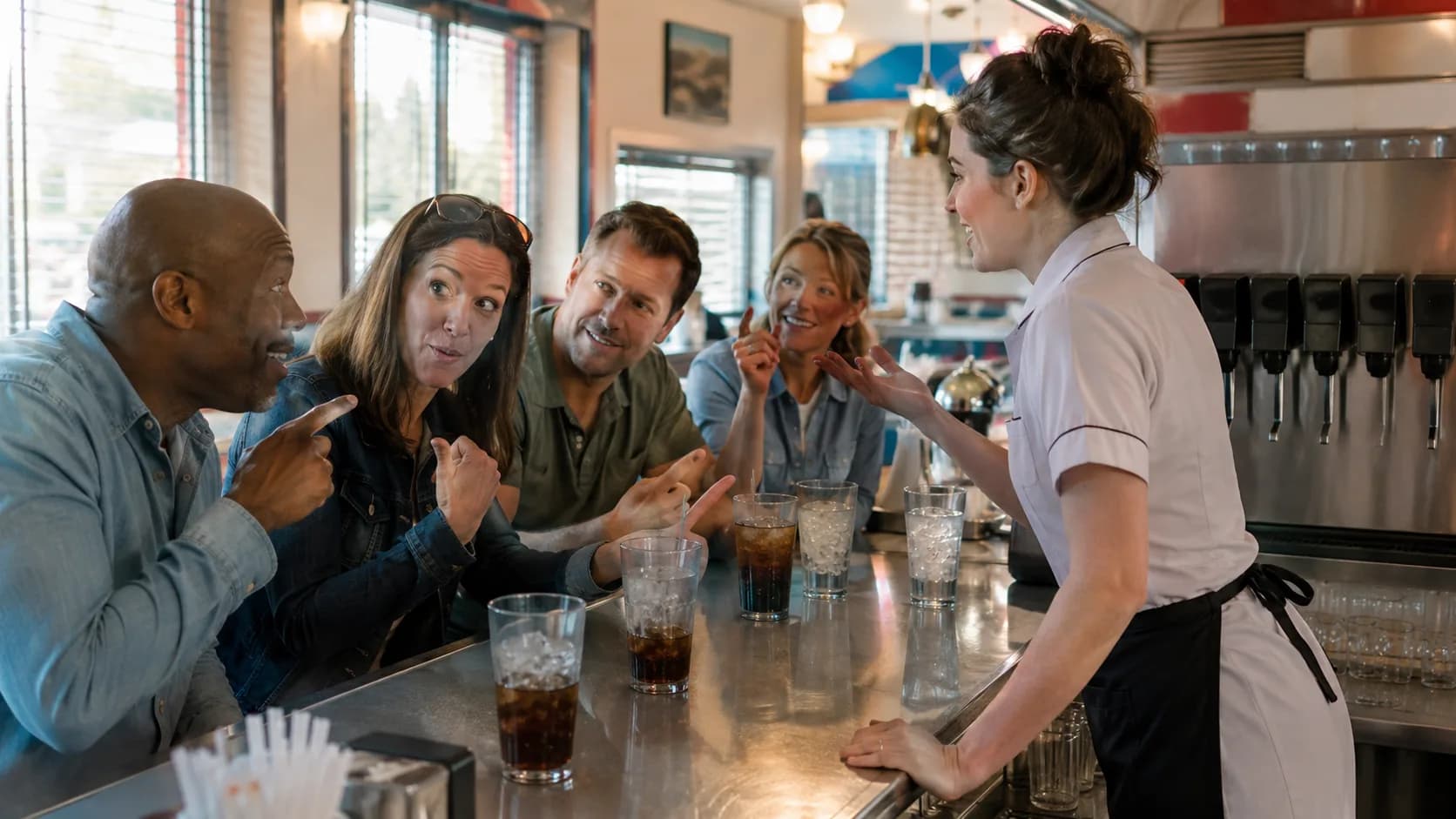
Some differences are easy to recognize. One area says soda while another prefers pop. Some Southerners use Coke as a general category before asking which kind. People may address a group as y’all, you guys, you all, or something more local still.
Other differences hide inside ordinary sentences. A phrase that sounds perfectly natural in one part of the country may make a visitor pause and quietly begin diagramming the conversation.
“Bless Your Heart” Is Not a Complete Translation
Few expressions demonstrate the importance of context better than “bless your heart.” Language researchers note that it can express fondness or sympathy, while certain situations add a layer of condescension.

That definition is accurate, but anyone who grew up hearing the phrase knows the translation still depends on delivery.
Said softly to someone who has suffered a loss, it may be pure kindness. Said after a child proudly presents a lopsided drawing, it can be affectionate encouragement. Said after a grown adult explains a terrible decision with complete confidence, it may mean the speaker has decided direct language would require bail money.
The phrase is not dishonest. It is efficient. It allows several possible messages to travel under one polite roof. The listener’s job is to inspect the weather.
A Small American Translation Guide
Regional speech is full of expressions that carry more information than their individual words suggest.
“I’m fixin’ to” does not mean something is broken. It usually means the speaker is preparing to do something—although the exact starting time may remain negotiable.
“Over yonder” identifies a place that is visible, known, or understood without burdening the conversation with unnecessary measurements.
“You betcha” can provide agreement, reassurance, enthusiasm, or the verbal equivalent of a friendly nod.
In some Midwestern speech, “Are you coming with?” makes perfect sense without adding “us.” Elsewhere, people may wait for the sentence to finish.
The Yale Grammatical Diversity Project documents constructions such as “Alls I want” in parts of the Midwest and expressions such as “I’ll either quit or be fired, one” in Southern and Appalachian speech. These are not random mistakes. They are patterned features used and understood within speech communities.
A phrase can sound unusual to an outsider while doing its job perfectly among the people who share it.
The Land Helps Write the Language
Sayings often grow from the lives people lived where they lived them.

Farming communities created comparisons involving rain, livestock, fences, mud, tools, and harvests because those were the things people knew. Coastal communities borrowed from boats, tides, storms, and fishing. Mining towns, factory cities, ranch country, and mountain settlements developed their own shorthand.
Even directions reveal geography. “Down the road” means something different where houses sit twenty feet apart than it does where the next mailbox appears after several miles. “Across town” in a small community may take six minutes. In a major city, it may require snacks, patience, and a revised opinion of humanity.
The Dictionary of American Regional English lists “bar ditch” as chiefly associated with Oklahoma and Texas. To people who know the term, it is simply the drainage ditch beside a road. To others, it sounds like a place where somebody made a very unfortunate decision after closing time.
Language grows around what a community repeatedly needs to describe. That is why sayings often tell us as much about a place as its architecture or food.
When the Same Words Carry Different Weight
Misunderstandings do not always come from unfamiliar vocabulary. Sometimes both people know every word and assign the sentence a different purpose.
A blunt answer may sound rude to someone from a culture that values indirect politeness. A carefully softened answer may sound evasive to someone accustomed to direct speech. One person believes honesty means getting to the point. Another believes respect means circling the point without running over anybody on the way.
Neither approach automatically makes the speaker kinder, smarter, or more truthful. They are social habits—ways communities teach people to disagree, warn, invite, tease, and complain.
Trouble begins when we mistake our own habit for the only normal one. The visitor decides the locals are unfriendly. The locals decide the visitor talks too much. Everybody understood the dictionary and missed the conversation.
Regional Does Not Mean Wrong
People often treat regional grammar as evidence that somebody is uneducated. Linguists see something different: systems with patterns, histories, and rules.
Yale’s Grammatical Diversity Project makes an important point about so-called standard English. It is the variety commonly taught in schools and used in formal settings, but it is not the language spoken naturally by one perfect region, nor is it automatically the best or most correct form of every conversation.
That does not mean spelling and grammar never matter. A legal contract, medical instruction, school essay, and national news report need language that travels clearly across regions. Shared standards help strangers understand one another.
But formal writing and everyday speech perform different jobs. Telling a story on a porch should not sound like filing a tax return. A regional expression may carry warmth, humor, precision, and belonging that disappears when every sentence is scrubbed into the same neutral voice.
Correctness matters. So does character.

The Great American Mixing Bowl
Americans move constantly, and their words move with them.
A family leaves Texas for Michigan and takes y’all north. A Midwesterner moves south and keeps saying pop until the new neighbors finally wear them down. Children hear one vocabulary at home, another at school, and a third online. Couples combine sayings from different families until their household develops a dialect unavailable anywhere else.
The internet accelerates the process. A regional expression can appear in a video, become a joke, and travel across the country before breakfast. Some sayings lose their geographic boundaries. Others remain powerful markers of home.
That mixing does not necessarily erase regional speech. It creates new layers. A person may use one voice at work, another with old friends, and another when talking to family. The childhood accent may nearly disappear until a trip home—or one telephone call with a cousin—brings it back at full strength.
We do not carry only one way of speaking. We carry rooms, relationships, and places inside our voices.
Listen Before You Translate
Regional sayings are funny because misunderstanding them is usually harmless. Someone orders pop, another asks what kind of soda they want, and the nation survives.
But the lesson reaches beyond amusing phrases. We often react to how people speak before considering what they mean. We hear an accent and make assumptions about intelligence, education, politics, friendliness, or trustworthiness. Sometimes we decide who a person is before the person finishes the sentence.
Listening well requires more than recognizing words. It means noticing context, asking questions, and allowing the possibility that another person’s normal may not sound like ours.
The safest response to a strange expression may be the simplest one: “What did you mean by that?” Not as an accusation. As an honest question.
The answer may teach us a new phrase. It may reveal a family story, an old occupation, or a place we have never visited. It may also save us from spending the rest of the day offended by something that was intended as kindness.
The Words That Know Us
Regional sayings are small pieces of inheritance. We pick them up before we know they are regional. They come from parents, grandparents, neighbors, coworkers, schoolyards, kitchens, fields, factories, churches, and front porches.
Years later, one of those phrases slips out in another part of the country and somebody asks where we are from.
The words answered before we did.
Maybe that is why these expressions matter. They are not merely colorful ways to say ordinary things. They remind us that language is not produced by a machine and issued equally to every town. It grows among people. It collects local weather. It learns the roads. It remembers who taught us to speak.
Americans share a language. The interesting part is everything we have done to it since.
And if any of that sounds confusing—bless your heart.
Sources
Regional labels describe patterns and tendencies, not every individual speaker.