Miley Cyrus Sings 'Jolene' for Dolly Parton and Says, 'I'm Gonna See Her Again.' Dolly Knew Why.
Miley Cyrus honored her late godmother Dolly Parton with 'Jolene' at the Hollywood Bowl and said she would see her again. Parton's faith explains that hope.
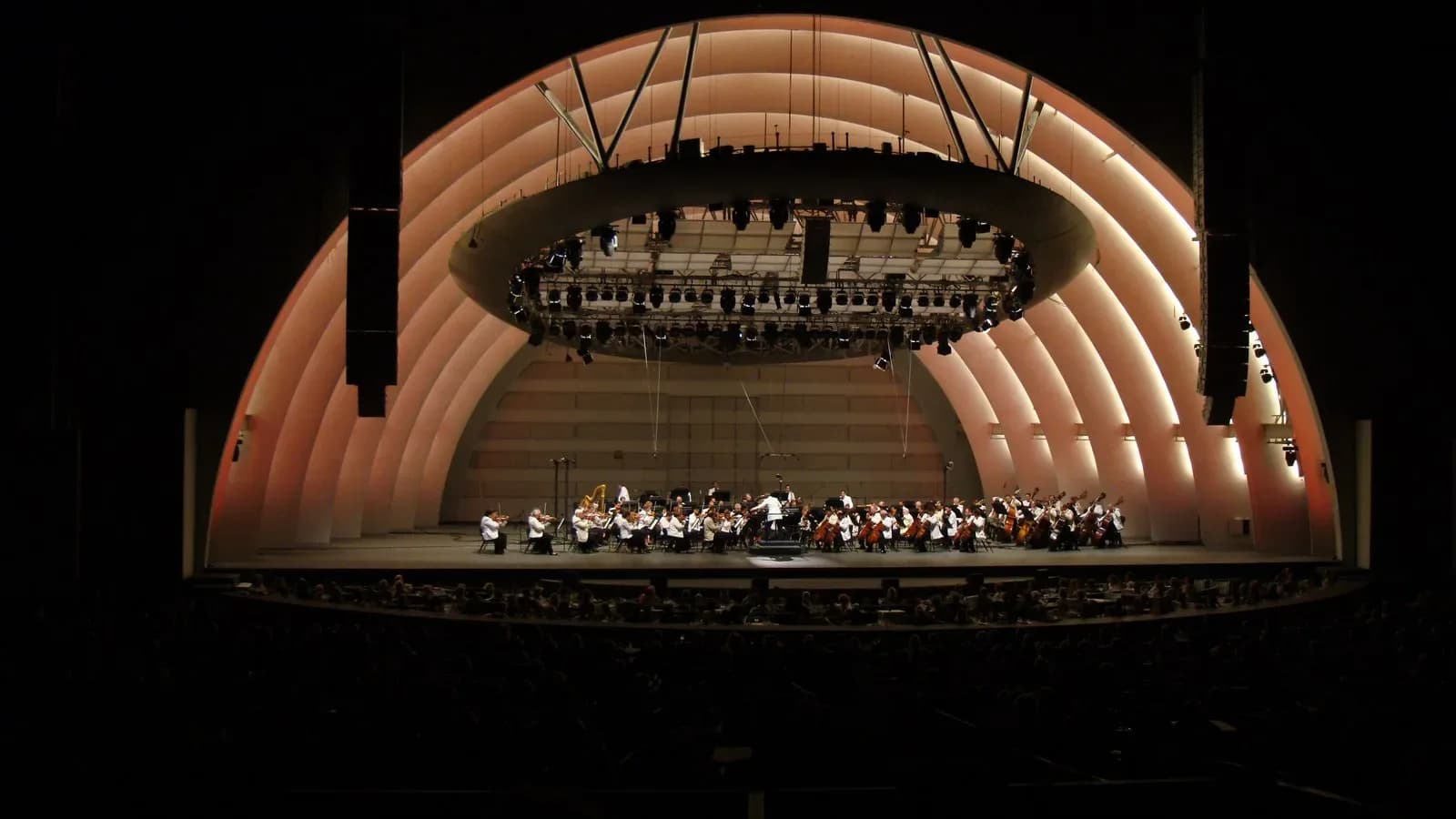
Miley Cyrus sat down on the edge of the Hollywood Bowl stage Friday night, wiped away tears and talked about her godmother.
Dolly Parton died Aug. 25 at 80, People reported. At the first show of her Hollywood Bowl run on Oct. 16, Cyrus, 33, told the crowd that the only time she ever saw Parton perform live was at that same venue. Then she sang "Jolene."
"Me and Dolly, we are eternal. Nothing in this life could ever tear us apart," Cyrus said, according to Rolling Stone. "And I'm gonna see her again." She added, with a profanity, that she could not wait because she missed her.
A night she wanted to remember
Cyrus explained that whenever Parton played a show, she usually wanted her goddaughter standing right beside her onstage. But for that night at the Bowl, Cyrus asked to sit in the audience. "I would love a night where I could just experience you, I could just enjoy you like the rest of the world," she recalled telling Parton, Deadline reported. Knowing Cyrus was watching, Parton opened that show with the theme song from "Hannah Montana," the Disney series that made Cyrus famous.
"This memory is gold to me," Cyrus said Friday.
The bond went back to Cyrus' birth. Parton grew close to Cyrus' father, Billy Ray Cyrus, after they toured together in the 1990s, and he and his then-wife Tish asked Parton to be Miley's godmother when she was born in 1992, People reported. Cyrus called her "Aunt Dolly."
After Parton's death, Cyrus wrote on Instagram that "Dolly would want me to feel it, write a song about it, and then continue on and be strong."
The hope behind the words
"I'm gonna see her again" is one of the most human things a grieving person can say. It is also one of the most important questions a person can ask: will I?
Parton had an answer, and she was not shy about it. Behind the rhinestones was a Christian faith she considered more basic to her identity than fame, Religion Unplugged reported after her death. "A belief in God is essential," she once said. "You have to believe in something bigger than yourself. We grew up believing that through God all things are possible." She began singing hymns at her grandfather's little mountain church in East Tennessee when she was 6, and of her faith she said, "That's who I am. That's what keeps me going."
Christians share Cyrus' longing, but our hope does not rest on the strength of a bond between two people, however real it is. It rests on a risen Savior. Jesus told a grieving Martha, "I am the resurrection, and the life: he that believeth in me, though he were dead, yet shall he live" (John 11:25).
Paul wrote to grieving believers so that they would "sorrow not, even as others which have no hope" (1 Thessalonians 4:13). Christians grieve. But they grieve with a promise that death does not get the last word.
A crowd that understood
Cyrus was not the only star to stop a concert to grieve that night. On the same Friday, across the country, Harry Styles sang a song he wrote for Liam Payne at Madison Square Garden. Big crowds go quiet for moments like these because nearly everyone in the seats has lost someone.
The question underneath "I'm gonna see her again" is the right one. Parton spent her life pointing to the answer in her songs and in her own words. Anyone who loved her music could do worse than to take her faith seriously, too.