

Church-State Groups Plan Post-Election Lobbying Push. No Party Owns the Conscience.
National advocacy groups are outlining post-election legislative plans. Their interpretation of the vote is a political claim, not a theological verdict.
The facts come first below. My opinion follows in the section marked as opinion.
National church-state advocacy groups are turning their post-election celebration into plans for lobbying Congress and state lawmakers. Their leaders say the results strengthen their position against what they call Christian nationalism. That is their interpretation of an election, not a finding that voters delivered a theological judgment on Christianity.
USA TODAY's Nov. 7 report interviewed leaders from the Freedom From Religion Foundation, Interfaith Alliance, Americans United for Separation of Church and State and the Secular Coalition for America. The national news is what these organizations say they intend to do next, rather than another tally of election winners.
From celebration to a legislative agenda
Steven Emmert, executive director of the Secular Coalition for America, told USA TODAY that his organization intends to work with new and existing lawmakers to promote separation between church and state. He also wants more lawmakers to join the Congressional Freethought Caucus and wants officials to recognize religiously unaffiliated Americans.
The FFRF Action Fund supplied more specific goals in its Nov. 4 statement. It said it would continue urging state lawmakers to adopt the Keep Proselytizing Out of Public Schools Act and Children Have a Right to Medicine Act. It also said it would work with the Freethought Caucus to seek repeal of the federal voucher tax credit and scrutinize administration activity.
Those are the Action Fund's stated objectives, not enacted changes or promises that Congress will adopt its agenda. Its release describes it as an advocacy organization that also endorses candidates. A campaign group's assessment of its own influence should be reported as that group's assessment, not substituted for an independent analysis of why Americans voted.
What the organizations are claiming
Annie Laurie Gaylor, the Freedom From Religion Foundation's co-founder and co-president, called the result a "huge repudiation of Trump, authoritarianism and Christian nationalism" in USA TODAY's report. That is a broad political claim. The article's interviews do not turn the ballot into a survey measuring every voter's views of religion.
Interfaith Alliance's own Nov. 4 statement, issued by president and CEO the Rev. Paul Brandeis Raushenbush, likewise celebrated the election and said its mobilization would continue expanding. It presented its work as a multi-faith effort, not simply an argument on behalf of people without religious beliefs.
The organizations have overlapping political goals but are not identical institutions. Their public statements show an effort to influence the next stage of policymaking. They do not establish that an election has resolved every dispute about religious liberty, school policy or the proper limits of government.
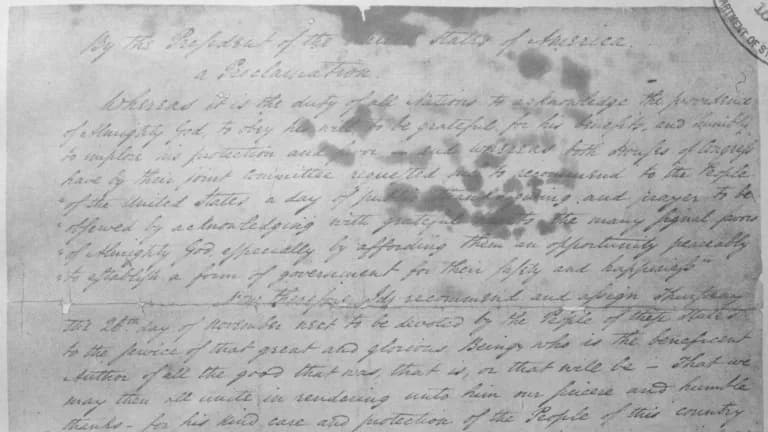
For a separate historical reflection on faith and civic responsibility, see Washington's 1789 Thanksgiving Proclamation Asked for Pardon, Too. Give Thanks Without Boasting.
Opinion: Neither party owns the conscience
Christians should not let an advocacy slogan tell us what Scripture means. An election cannot repeal the Gospel. It also cannot make every policy promoted by a Christian politician wise, lawful or faithful. We should resist both errors.
Religious liberty matters when it protects someone we disagree with, not only when it protects our own church. At the same time, defending freedom of conscience does not require believers to keep their convictions out of public debate. A Christian citizen has as much right to speak as anyone else.
The practical work is to examine actual proposals. Ask what a school measure permits, what it prohibits and whether it treats families honestly. Ask whether government respects parents and protects children. Do not surrender those questions to either a religious campaign brand or a secular lobbying organization.
A church should teach the truth without borrowing its authority from a party's success. Our duty is faithfulness, not winning a competition for ownership of the national conscience. Listen carefully, test claims honestly and refuse to confuse electoral enthusiasm with moral proof.
More Faith Stories
 Today
Washington's 1789 Thanksgiving Proclamation Asked for Pardon, Too. Give Thanks Without Boasting.
 Yesterday
Why Veterans Day Stays on Nov. 11, and Why Its History Includes Prayer. Give Thanks Without Making an Idol.
 Last Week