

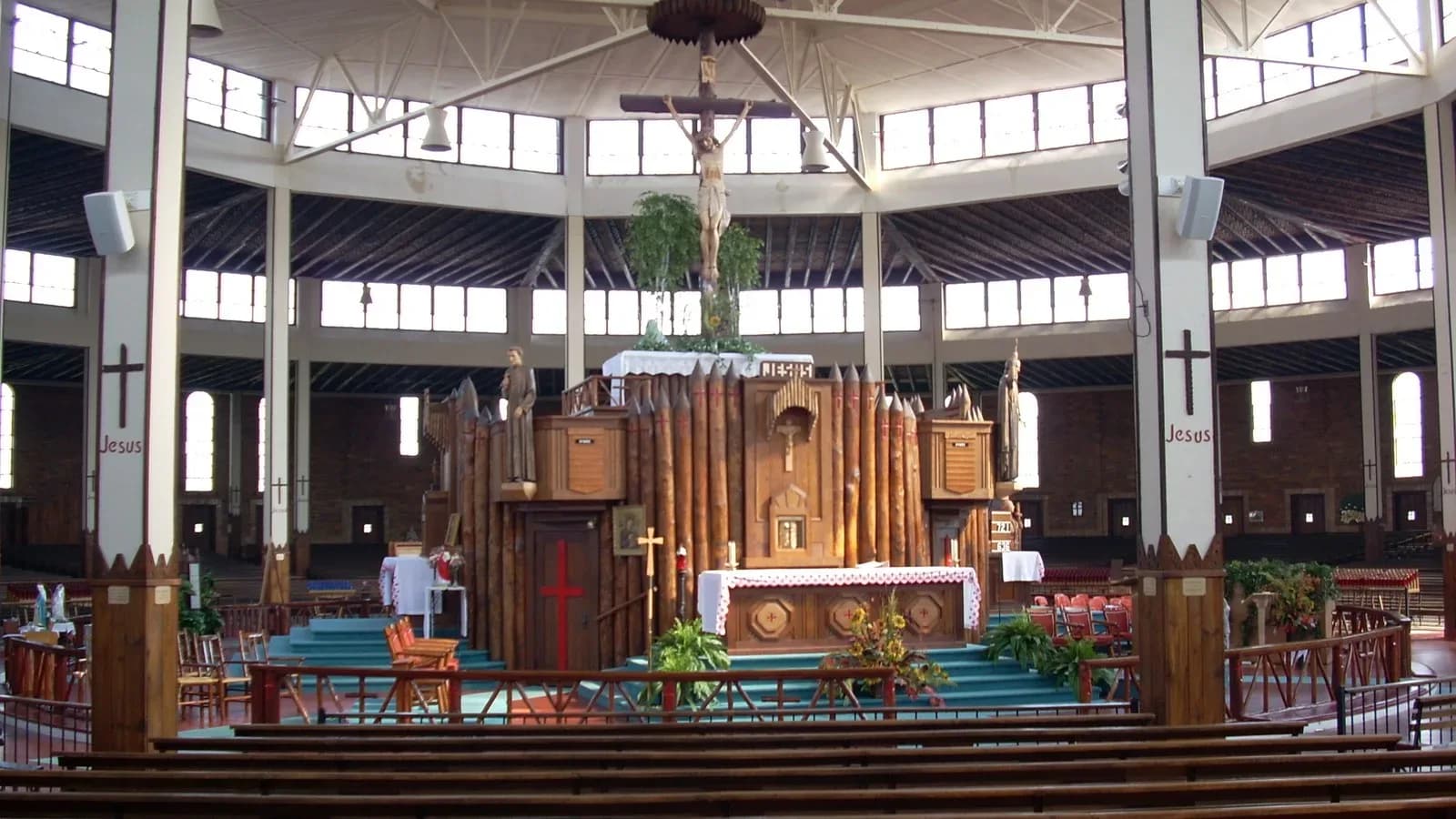
Isaac Jogues Was Killed 380 Years Ago Today. He Had Already Escaped Once, and He Went Back.
On Oct. 18, 1646, Jesuit Isaac Jogues was killed near what is now Auriesville, New York, after returning to the village where he had been held captive.
On Oct. 18, 1646, 380 years ago today, a French Jesuit priest named Isaac Jogues was killed in a Mohawk village called Ossernenon, near what is now Auriesville, New York. He was 39.
Tomorrow, Oct. 19, is his feast day, and Catholics in the United States remember him along with seven other Jesuit missionaries known as the North American Martyrs. Whatever one's church tradition, their story is part of the Christian history of this continent, and it is worth knowing.
A priest who went back
Jogues was born in Orléans, France, in 1607, entered the Jesuits in 1624 and was ordained in 1636, Encyclopaedia Britannica records. He was sent to New France and spent six years among the Wendat, or Huron, people near Georgian Bay, teaching and aiding them.
In 1642, warring Iroquois captured Jogues, a fellow Jesuit named René Goupil and a band of Wendat Christian converts near Montreal. They were taken to Ossernenon and beaten. Goupil was killed. Jogues was held about 13 months. His hands were mutilated and he lost several fingers.
The Dutch at nearby Fort Orange, today's Albany, ransomed and helped him. He escaped down the Hudson River and became the first priest to visit New Amsterdam, the settlement that became New York City. He reached France on Christmas 1643, where he had been presumed dead.
Most people would have stayed home. Jogues was eager to go back. In 1645 and 1646 the French government sent him to Ossernenon to make peace between the French and the Mohawk. The Mohawk had recently suffered another deadly outbreak of European diseases, Britannica notes. They accused Jogues of witchcraft, and they killed him and his companion.
Eight men, one witness
The others remembered with him include Jean de Brébeuf, who arrived in New France in 1625 and spent years among the Wendat. He worked to master their language and wrote a Wendat grammar and a translation of the catechism, according to Britannica. In 1649, during war between the Iroquois and Wendat confederacies, he and Gabriel Lalemant were captured and tortured to death along with Native converts.
René Goupil, Jean de la Lande, Antoine Daniel, Charles Garnier and Noël Chabanel complete the list. Pope Pius XI canonized all eight in 1930. Jogues is venerated as a patron saint of North America, and Brébeuf as a patron of Canada. In Canada the group is remembered on Sept. 26.
What their story asks of us
An honest telling has to include hard facts on every side. These missionaries came with a colonial power. The Native nations they served were caught in wars with one another and devastated by diseases Europeans brought. Christians do not need to tidy up that history to learn from it.
What stands out is what these men chose. Jogues had already been tortured. He had already lost his fingers. He had made it home alive. And he went back to the same village, to the same people, to try to make peace.
Jesus said, "Except a corn of wheat fall into the ground and die, it abideth alone: but if it die, it bringeth forth much fruit" (John 12:24). He also said, "Love your enemies, bless them that curse you, do good to them that hate you" (Matthew 5:44). Few people in American history took those words more literally.
Brébeuf's careful work on the Wendat language is a lesson of its own. He did not expect people to come to him on his terms. He learned their speech so the gospel could be heard in it, as the apostles did at Pentecost when every man heard "in his own language" (Acts 2:6).
That same corner of New York would see another turning point more than a century later. Dock Line marked it this week, when Burgoyne surrendered at Saratoga and Congress answered with a call to prayer. American history is full of faith, if we take the time to look.
"Be thou faithful unto death, and I will give thee a crown of life" (Revelation 2:10). Isaac Jogues was faithful unto death 380 years ago today, in what is now upstate New York. His courage, and his willingness to go back, still preach.
More Faith Stories
 Today
An Airman Fell at a Game Meant to Honor the Military. Learn His Name When It Comes, and Pray for His Family.
 Yesterday
A Truck Drove Into a Youth Soccer Game in Wichita. A 6-Year-Old Is Gone. Pray for McPherson.
 Yesterday