Judge Plans to Toss Methodist Suits Against 68 South Carolina Churches. The Fight Isn't Over.
A South Carolina judge says he will dismiss the United Methodist conference's lawsuits against 68 churches seeking to leave with their property. An appeal is planned.
Nearly 70 South Carolina churches that want to leave the United Methodist Church and keep their buildings appear to have won a major round in court.
Circuit Court Judge Brian M. Gibbons intends to dismiss the lawsuits the denomination's South Carolina Conference filed against the churches, the conference announced this week, Christianity Daily reported. The conference learned of the decision Monday, according to the South Carolina United Methodist Advocate, the conference's own newspaper, which called it "a setback."
No order has been signed. The conference's own Oct. 13 litigation update says the judge intends to issue an order dismissing the cases, and The Christian Post also reported the development. "The final orders have not yet been written or entered. Attorneys representing the separating churches have been asked to prepare proposed orders for the judge's consideration and signature," the conference said. It plans to appeal once the order is entered, possibly all the way to the South Carolina Supreme Court.
How the fight started
The consolidated case, The South Carolina Conference of The United Methodist Church, et al. v. Aldersgate Methodist Church of Greenwood, et al., involves 68 churches across the state, the Advocate reported. It began when the churches told the conference in writing that they planned to separate, "mainly over theological differences about human sexuality," and keep their property.
Many churches previously left the UMC through a temporary exit path, Paragraph 2553 of the Book of Discipline, which expired at the end of 2023, according to Christianity Daily. Some South Carolina churches then tried a different route, Paragraph 2549, which lets a conference close a church property that is no longer serving its intended purpose. In October 2024, the denomination's Judicial Council ruled that Paragraph 2549 could not be used by churches leaving over theology.
The conference then sued nearly 70 churches, arguing they were improperly trying to leave with property. It relies on the UMC's trust clause, which holds that local church property is held in trust for the denomination rather than owned by the congregation.
The churches argued the court should not hear the case because it involves internal church matters and religious doctrine, and because the trust clause does not comply with South Carolina law, the Advocate reported. They also argued the conference lacks legal standing.
The conference's response
Conference leaders acknowledged the news would be hard for many. "We recognize that this news may bring disappointment, concern and questions for many across our Connection," the conference said. "In moments such as these, we are reminded that our trust rests not in any single court decision or legal proceeding, but in the God who continues to lead the church through seasons of uncertainty and change."
That is a good word, and it applies to both sides.
Faithfulness has a cost
For those who are not Methodist, the stakes may seem small. They are not. The dispute grew out of longstanding disagreements over theology and LGBT-related issues, according to Christianity Daily. For a congregation, a building is often where members were baptized, married and said goodbye to their parents, paid for with their own offerings. These churches want to keep worshiping where they always have, under the teaching they always believed.
Dock Line has written before that judgment begins at God's house. That cuts in every direction. A denomination that sues its own congregations has to ask whether it is protecting a trust or punishing dissent. Paul rebuked the Corinthians for taking one another to court: "Now therefore there is utterly a fault among you, because ye go to law one with another" (1 Corinthians 6:7). And churches leaving over conviction must leave with grace, not bitterness.
Buildings matter, but they are not the church. If the courts ultimately go the other way, these congregations will still be the church, meeting in a school gym or a storefront if they have to. "Except the LORD build the house, they labour in vain that build it" (Psalm 127:1). Faithfulness to Scripture has always cost something. Many South Carolina Methodists have decided it is worth the price.
The fight is not over. The final order still has to be signed, and the appeal will take time. Pray for all of them, that truth and charity would both survive the process.
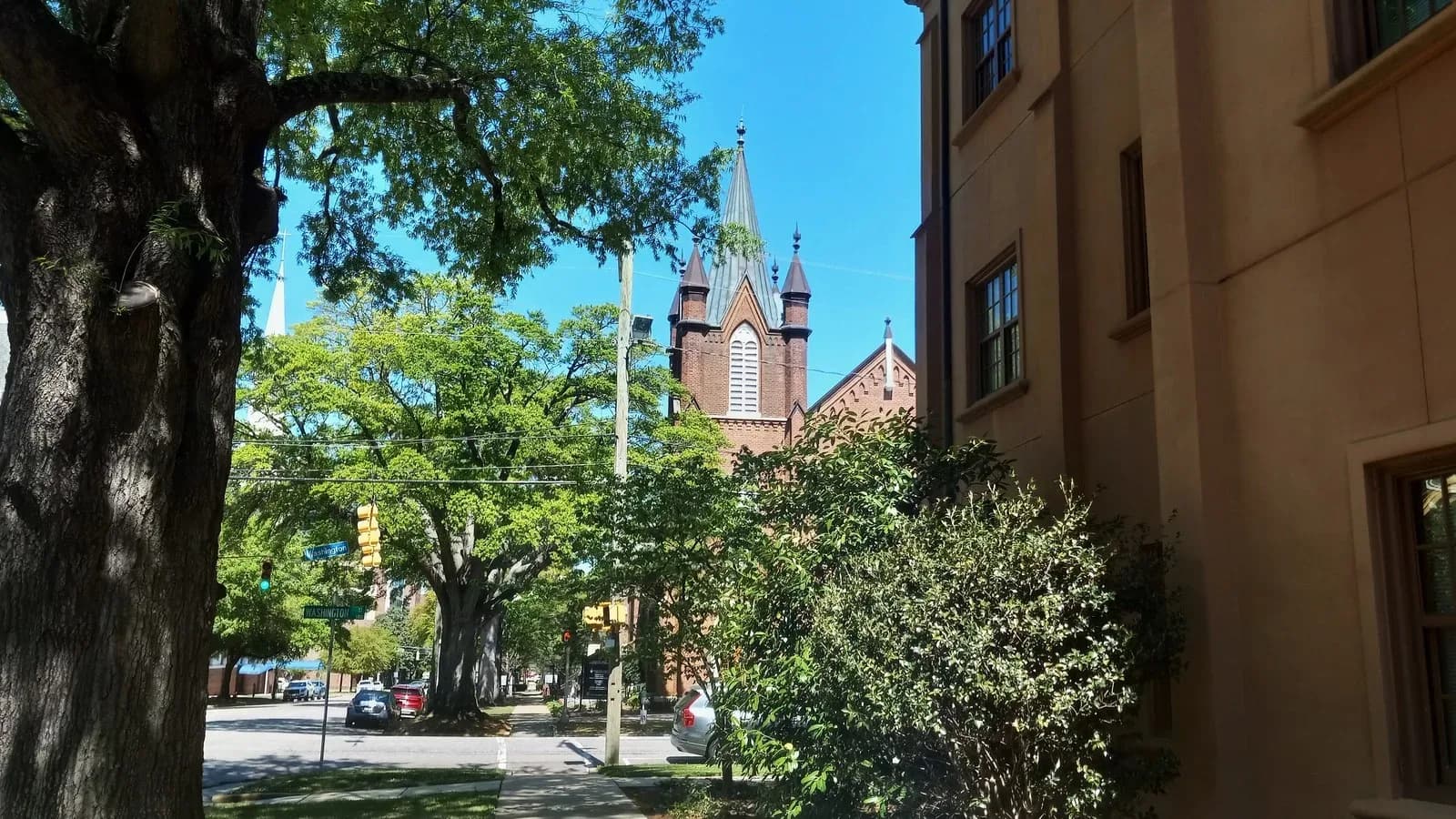
Hero photo: Thomas Kirchel via Wikimedia Commons, CC BY-SA 4.0, cropped and resized.