John Brown Raided Harpers Ferry 167 Years Ago. He Was Right About the Sin and Wrong About the Sword.
On Oct. 16, 1859, John Brown seized the federal armory at Harpers Ferry to start a war on slavery. What Christians can learn from his conviction and his violence.
On the night of Oct. 16, 1859, 167 years ago tomorrow night, John Brown and his men slipped into Harpers Ferry, Virginia, and seized the federal armory there. He meant it as the first blow in a war to destroy American slavery. Thirty-six hours later the raid was over, but the country never fully recovered from it.
Brown is still argued over. To some he is a martyr. To others he was a terrorist. Christians, who share his conviction that slavery was a sin, have a harder question to answer: what do you do when you are right about the evil and wrong about the means?
A man shaped by faith
Brown was born in Torrington, Connecticut, on May 9, 1800, and grew up in Hudson, Ohio, according to the National Park Service. As a boy he saw an enslaved boy who had become his friend badly beaten. That memory, and "his religious belief that slavery was a sin against God," shaped the rest of his life, the Park Service says.
He traveled east in 1816 to study for the ministry but had to give it up because of an eye inflammation and lack of money. In Pennsylvania he built a tannery with a secret room to hide people escaping slavery, organized a church and served as the community's postmaster. Later he moved to North Elba, New York, to help Black farmers settle land donated by the abolitionist Gerrit Smith.
Then came Kansas, where the fight over whether slavery would spread had turned violent. Brown went to help his family there and joined in the bloodshed, a period the Park Service calls "the second most controversial period of his life."
Thirty-six hours
Sources describe the size of his force differently. The Library of Virginia says Brown led 18 men, 13 white and five Black, into town while three others formed a rear guard at a farm in Maryland, according to its account. The Park Service says Brown and 21 followers captured the armory. He had ordered 1,000 pikes from a Connecticut maker to arm the enslaved people he expected to join him. He called the raid a "trumpet blast" that would make "property in slaves insecure," the Park Service says.
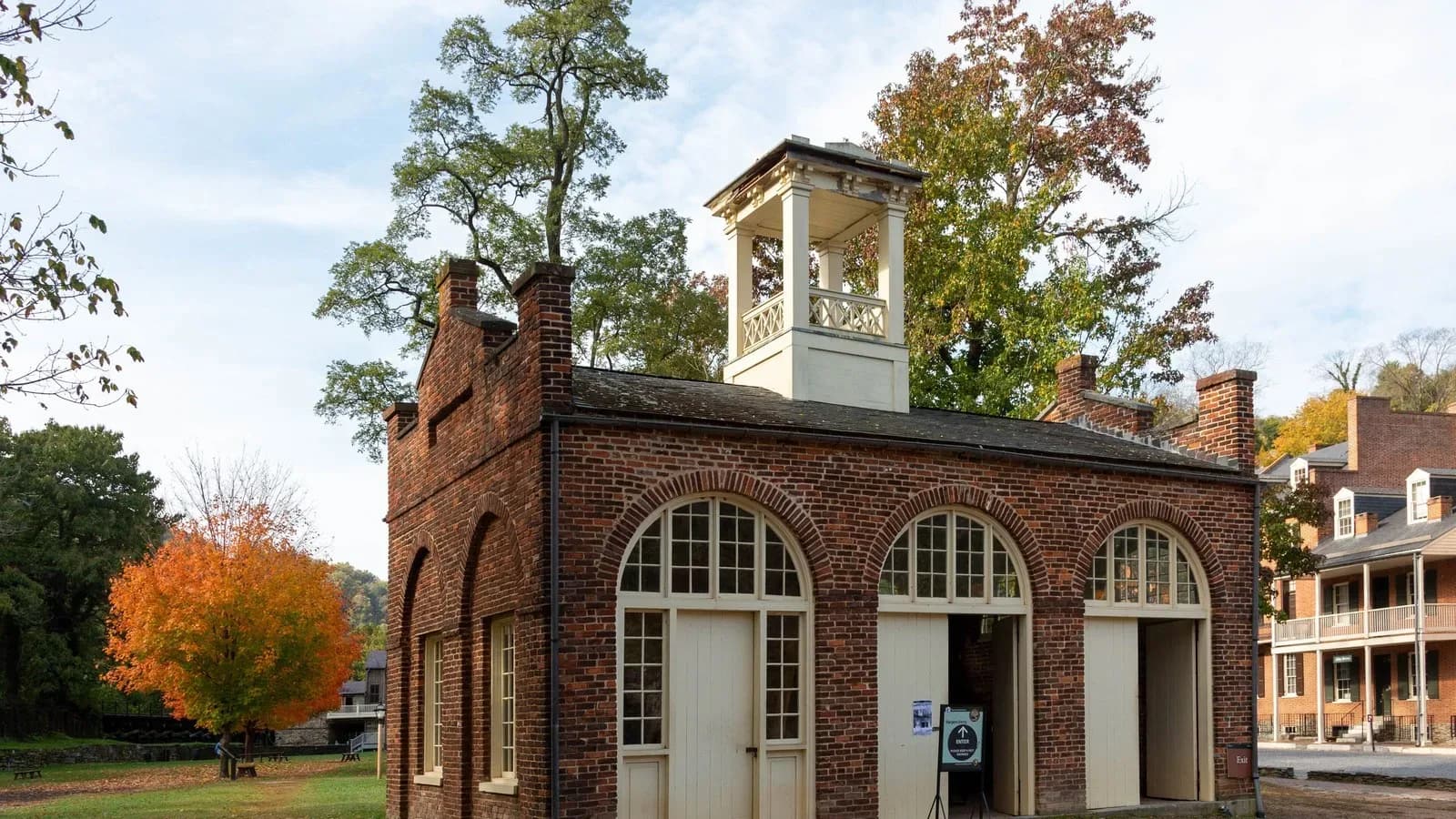
The uprising never came. Townspeople surrounded the armory and exchanged gunfire with the raiders. By the morning of Oct. 18, U.S. Marines under Bvt. Col. Robert E. Lee stormed the engine house and captured Brown and the survivors, the National Archives says. Ten of Brown's men were killed and five escaped, according to the Park Service.
Virginia tried Brown for treason against the commonwealth, murder and conspiring with slaves to rebel. A jury convicted him on Nov. 2, and he "declared that he had acted in accordance with God's commandments," the Library of Virginia says. He was hanged in Charles Town on Dec. 2, 1859.
That morning he wrote what the Park Service calls his last written words: "I, John Brown, am now quite certain that the crimes of this guilty land will never be purged away but with blood. I had, as I now think, vainly flattered myself that without very much blood shed it might be done."
The National Archives says the raid "brought the nation one step closer to civil war." That war erupted in 1861 and, by the Archives' count, cost some 623,000 lives.
Right about the sin
Brown was right that slavery was a great evil. Scripture condemns the man who "stealeth a man, and selleth him" (Exodus 21:16), and Paul lists "menstealers" among the lawless (1 Timothy 1:10). Christians who held the line that every person bears God's image were not fanatics. They were faithful. That same era gave us "In God We Trust," born of a minister's fear that history would judge the nation harshly.
Wrong about the sword
But conviction does not license a private man to take up the sword. Scripture gives the sword to the civil ruler (Romans 13:4) and tells individual believers, "avenge not yourselves… for it is written, Vengeance is mine; I will repay, saith the Lord" (Romans 12:19). Brown was convicted of murder. Many Northerners at the time "condemned Brown's actions but thought him right in his conviction that slavery had to end," the Library of Virginia notes. That judgment still holds up.
The lesson for today is not about 1859 alone. Every generation has people who are certain they are on God's side and decide that certainty excuses any means. Being right about an evil does not make every response to it righteous. The harder path, the one many abolitionists walked, was to preach, write, vote, hide the fugitive and keep pressing the nation's conscience.
Brown was sure only blood could wash the nation's guilt. Christians know of only one blood that cleanses guilt, and it was not shed at Harpers Ferry.
Hero photo: David Brossard via Wikimedia Commons, CC BY-SA 2.0, cropped and resized.