'In God We Trust' Began With a Preacher's Letter in 1861. It Still Asks a Question.
The national motto traces to a Pennsylvania minister's 1861 letter to Treasury Secretary Salmon P. Chase. Here is how "In God We Trust" got onto our coins and currency.
Pull a coin out of your pocket and you will find four words on it: In God We Trust. Most Americans have carried that phrase their whole lives without knowing that it began with a letter from a small-town preacher during the darkest days of the Civil War.
A minister's letter in 1861
According to the U.S. Treasury's own history, Secretary of the Treasury Salmon P. Chase received many appeals from devout Americans urging the nation to recognize God on its coins. The first appeal in Treasury records came in a letter dated Nov. 13, 1861, from the Rev. M. R. Watkinson, a "Minister of the Gospel" from Ridleyville, Pennsylvania.
The country was coming apart, and Watkinson worried about how history would judge it. "Would not the antiquaries of succeeding centuries rightly reason from our past that we were a heathen nation?" he wrote. He proposed a coin bearing the words "GOD, LIBERTY, LAW," which he said "would place us openly under the Divine protection we have personally claimed."
Chase acted within a week. On Nov. 20, 1861, he wrote to James Pollock, director of the Mint in Philadelphia: "No nation can be strong except in the strength of God, or safe except in His defense. The trust of our people in God should be declared on our national coins." He asked for a motto "expressing in the fewest and tersest words possible this national recognition."
From "Our God, Our Country" to four words
There was a catch. An 1837 law fixed the mottoes and designs on American coins, so the Mint could not change them without Congress, the Treasury explains. In December 1863, Pollock submitted designs carrying either "OUR COUNTRY; OUR GOD" or "GOD, OUR TRUST." Chase approved but suggested a change for the coin with the shield, so that it would read: "IN GOD WE TRUST."
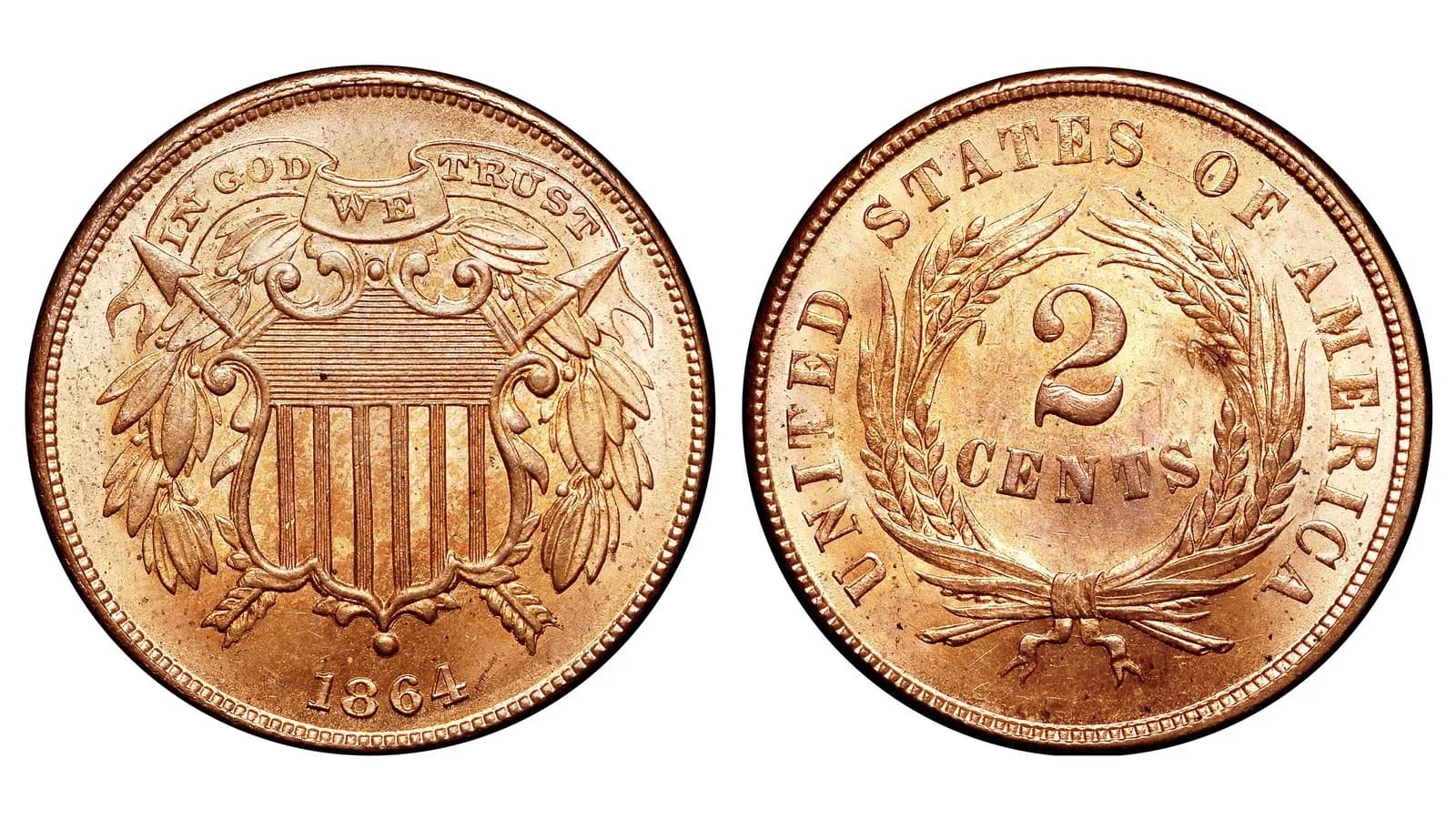
Congress passed the needed law on April 22, 1864, and the motto first appeared that year on the two-cent coin, according to the Treasury and the Smithsonian's National Museum of American History, which says the motto was meant to convey "national reliance upon divine support." An 1865 act allowed it on gold and silver coins as well.
The motto did not have a smooth ride. It vanished from the nickel in 1883 and did not return until the Jefferson nickel in 1938. When it went missing from new gold coins in 1907, the Treasury says, "a general demand" led Congress to restore it by law in 1908. Since 1938, every U.S. coin has carried it.
The national motto
Paper money came much later. Congress passed a law requiring the inscription on all U.S. currency, signed July 11, 1955, according to the congressional record. On July 30, 1956, a joint resolution declared "In God we trust" the national motto of the United States, as the Library of Congress's law library explains. The phrase first appeared on paper money on the one-dollar silver certificate in 1957, according to the Treasury, and was on all currency by 1966, according to the Library of Congress.
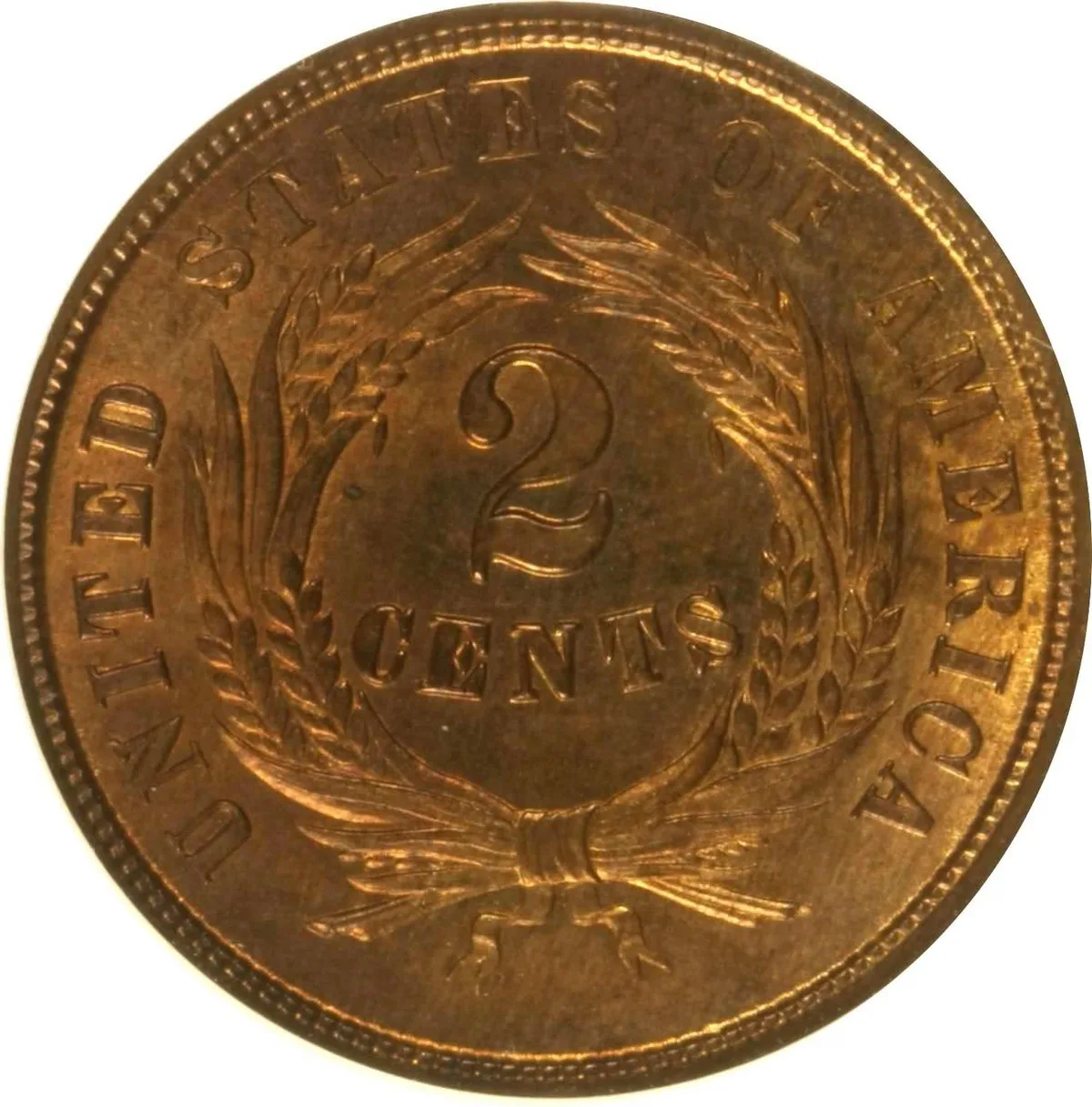
The reverse of an 1864 two-cent coin. Its design was by James B. Longacre. Photo: Lost Dutchman Rare Coins (image) / James B. Longacre (design), via Wikimedia Commons, Public domain.
Words worth meaning
It is worth noticing who started this. Not a politician looking for votes, but a pastor worried that his country had stopped saying out loud what it believed. Watkinson called that silence "our national shame." Chase, a cabinet officer in the middle of a war, agreed that no nation can be strong "except in the strength of God."
The danger with any motto is that it turns into decoration. We can print "In God We Trust" on billions of coins and still trust almost anything else: our savings, our leaders, our armies, ourselves. The psalmist knew the temptation well. "Some trust in chariots, and some in horses: but we will remember the name of the LORD our God" (Psalm 20:7).
The four words were never meant to be a guarantee that God approves of everything America does. They were a confession of dependence, made by a nation in the middle of a war that took hundreds of thousands of lives. That kind of humility is still the right posture for a free people, in good years and hard ones.
The motto is still finding new walls. This week the New Braunfels City Council voted to display "In God We Trust" in its chambers.
So the next time a coin crosses your palm, read it. Then ask whether it is true of you. Dock Line's piece on roadside church signs made the case that a few words can preach. Four words on a two-cent coin have been preaching since 1864.
Photos: 1864 two-cent pieces via Wikimedia Commons (images by Heritage Auctions and Lost Dutchman Rare Coins), public domain.