New Braunfels Will Hang 'In God We Trust' in Its Council Chambers
The New Braunfels City Council approved displaying the national motto in its chambers. Supporters called it unifying. Some residents objected privately.
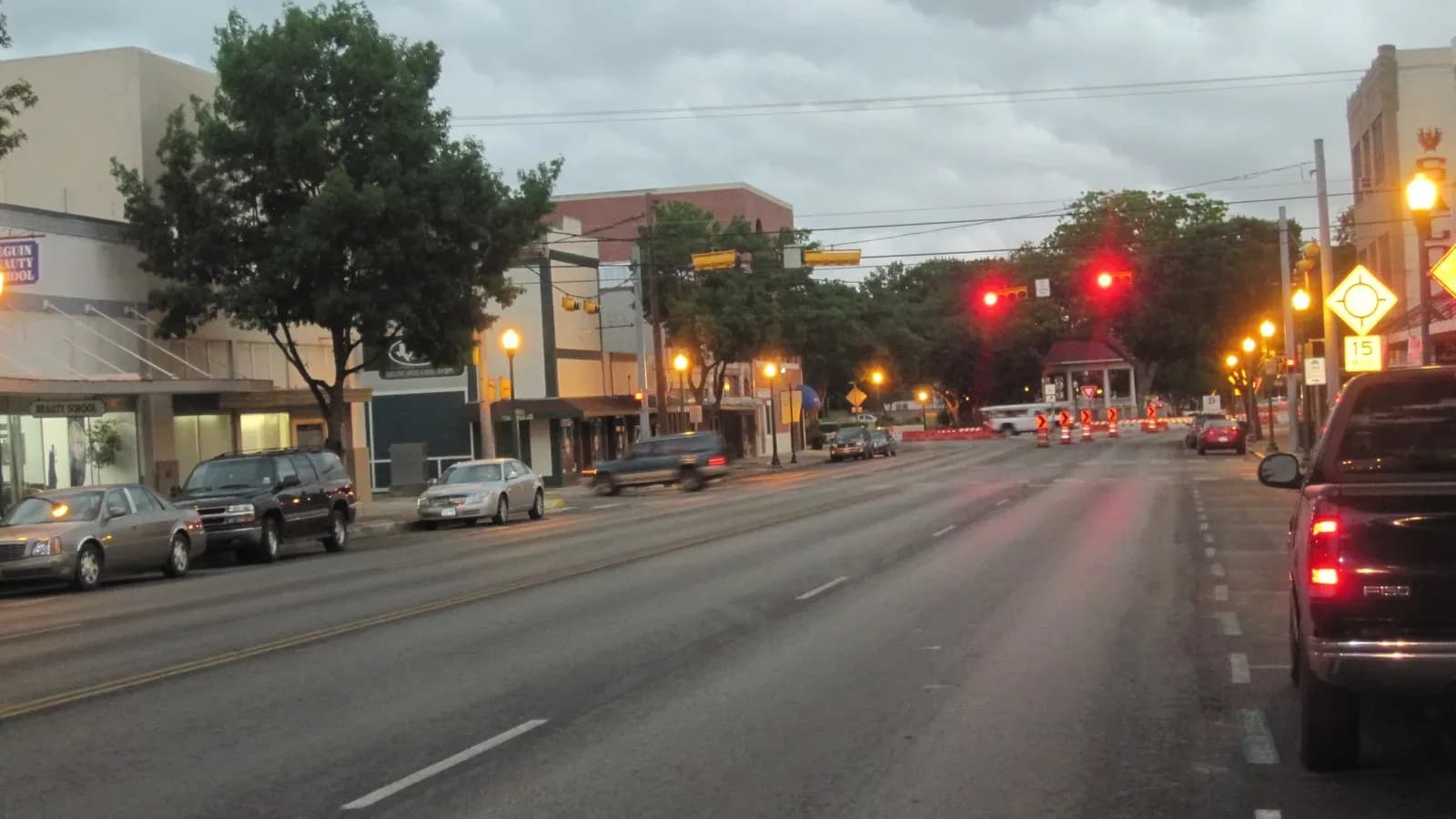
When New Braunfels residents walk into a City Council meeting, they will soon see four words that already sit on every coin in their pockets. The council approved putting the national motto, "In God We Trust," in its chambers at its Oct. 12 meeting, the New Braunfels Herald-Zeitung reported.
It is a small change to a room. It says something larger about what a town is willing to say out loud.
Who asked, and why
Councilmember Nikki Shaw requested the item and said the motto would be a unifying message for City Hall. She noted that Congress adopted it as the national motto in 1956, that it is codified in federal law, and that in July 2000 the House and Senate unanimously encouraged its display in public buildings, according to the Herald-Zeitung.
The law Shaw cited is plain. Title 36 of the U.S. Code, Section 302, reads in full: "'In God we trust' is the national motto."
"Having lived and served in many states and different places, I can tell you that in every federal building I went into, I have seen 'In God We Trust' somewhere in that building, and I think it would be really great for us to come in line as it is encouraged, not just allowed," Shaw said.
Mayor Pro Tem Michael Capizzi pointed to the motto's roots in the Civil War, when it first appeared on American coins. Congress approved putting it on coinage in 1865, the paper reported. Dock Line has traced how the motto got onto American coins, starting with a Pennsylvania minister's 1861 letter.
"Which was incidentally in one of the most divided, controversial times ... in our nation's history, when we were actually fighting at war with one another," Capizzi said. "It was intended, the spirit of it and the intent of it from the very inception, was to be a healing motto, something that would bring us all together. And I don't think anybody can argue with the fact that a little bit of healing and some cohesiveness inside the city of New Braunfels right now is something that would well serve us."
The objections
Not everyone was for it. Councilmember D. Lee Edwards said he had heard privately from residents who opposed the display. He answered them from the bench, saying federal courts have treated the motto as patriotic rather than religious.
"[It is categorized] instead as secular, or a patriotic slogan," Edwards said. "It has historical precedent, and it can be used because it doesn't recognize the God, one God, it says, 'We trust in God.' So even if you're contrary to whatever we're proposing here, the Supreme Court has ruled that it is perfectly within our right and is expected in a number of places."
The federal appeals court for the 9th Circuit has twice upheld the motto against Establishment Clause challenges. In Newdow v. Lefevre (2010), it relied on its 1970 ruling in Aronow v. United States, which held the motto is "of a patriotic or ceremonial character" and has no "theological or ritualistic impact."
The Herald-Zeitung's report did not give a vote count, and it did not say what the display will look like, where in the chambers it will go, or what it will cost. Those are fair questions for residents to ask at the next meeting.
The state already asks schools to do this
New Braunfels is not breaking new ground in Texas. Since 2021, state law has required public schools and colleges to display a donated "In God We Trust" poster or framed copy in a conspicuous place in each building, under Senate Bill 797, which amended Section 1.004 of the Texas Education Code. A city council chamber is simply the next room down the hall of public life.
What it means
There is an honest debate here, and it is worth having without heat. Some Christians will be a little uneasy with the legal argument that saved the motto in court: that it is ceremonial, a slogan whose religious meaning has worn thin with repetition. A believer does not hang those words because they mean nothing. He hangs them because they are true.
But the other half of the argument matters too. The motto does not establish a church, require a prayer or ask anyone to confess anything. It states a conviction that most Americans across most of our history have held, that our rights and our hope do not finally rest on government. Placed over the people who govern, it is less a boast than a reminder of who they answer to.
Capizzi called it a healing motto. The council's job now is to act like it: to listen to residents who disagree, to keep the city's business honest and open, and to remember that trusting God has always meant serving neighbors well.
For more on faith in public life, read Dock Line's piece on Catholic and evangelical leaders speaking with one voice.
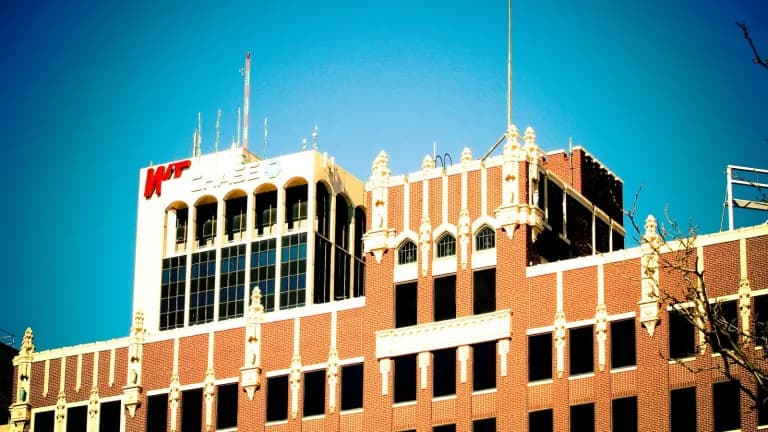
Hero photo: Billy Hathorn via Wikimedia Commons, CC BY-SA 3.0, cropped and resized.